
Presenting Princess Shaw
Updated November 2016 after Netflix acquired the film - clip added, post expanded with details from interviews that followed the theatrical run.
Tonight I attended a festive pre-release screening of "Presenting Princess Shaw" at the Petach Tikva Museum of Art cinematheque.
Remember when I wrote about Thru You Too a year ago and mentioned Princess Shaw? There's a documentary. And it's extraordinary.
The film was first screened at the Jerusalem Film Festival in July, followed by its international premiere at Toronto in September. Tonight was a festive pre-theatrical release screening. Writer and director Ido Haar was there to introduce it and take questions.
The Setup
Ido Haar is a longtime friend of Kutiman. His previous films include 9 Star Hotel (2006), about Palestinians working illegally as construction workers in Israel, which was nominated for a European Film Award.
When Kutiman began assembling Thru You Too, Haar saw an opportunity: document the YouTubers whose clips Kutiman was sampling - people who had no idea their bedroom recordings were being woven into something that would reach millions.
The original plan was a mosaic film following six subjects. But Haar kept returning to one: Samantha Montgomery, a 38-year-old nursing home caregiver in New Orleans who posted vulnerable a cappella songs under the name Princess Shaw. Originally from Chicago, she'd lived in Atlanta before settling in New Orleans. Her videos barely broke a hundred views. She performed at open mic nights to empty rooms. She couldn't afford to fix her car. Her electricity got cut off.
And she had no idea that 7,000 miles away, on Kibbutz Tze'elim in the Negev desert, someone was listening.
Haar contacted her through Facebook. He told her he was making a film about YouTubers - singers and musicians who upload their work hoping something will happen. He never mentioned Kutiman. He never mentioned what was coming.
"In the beginning I thought it was like, yeah, someone else selling me a dream, whatever", Montgomery recalled. "Any opportunity that I have, no matter how small, I'm going to take it."
She was cautious at first. "People fake accents, you know?" she said of her initial suspicion of this Israeli filmmaker who'd appeared out of nowhere. But she took the meeting. She took the chance.
For nine months, Haar flew back and forth between Israel and New Orleans - a one-man crew with a small camera. He filmed Kutiman assembling the track in his desert studio. He filmed Princess Shaw working at the nursing home, singing to patients, auditioning for The Voice, talking to her phone about her life. She'd been molested as a child by her mother's boyfriends - one violent, the other sadistic. She'd learned that crying meant weakness, that vulnerability got you attacked. YouTube became her outlet: "I don't really think I'm a storyteller", she said. "I think I just purge my soul".
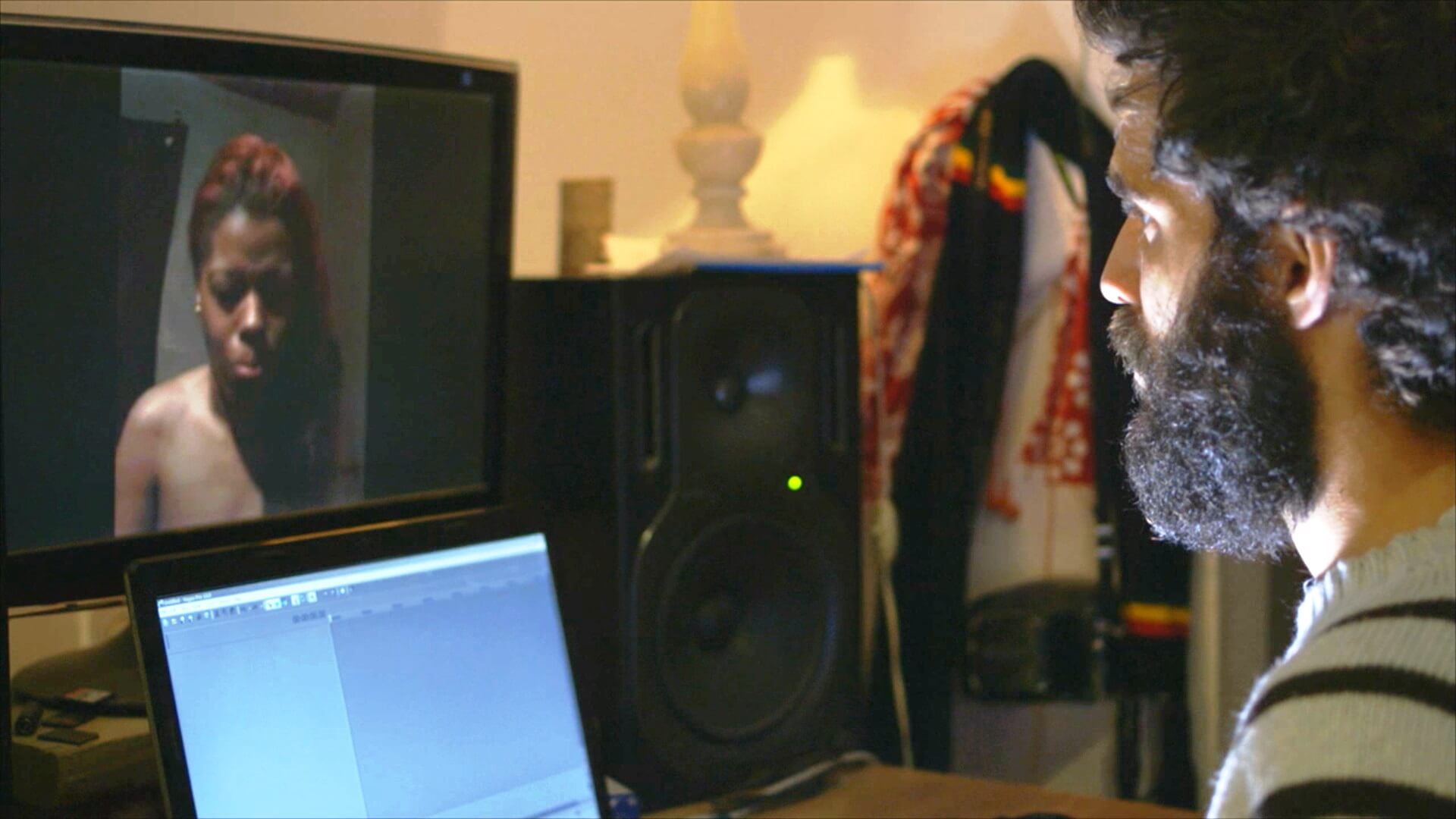
The film crosscuts between them. Kutiman, nearly silent, hunched over his computer, a secluded monk watching the world through his screen. Princess Shaw, almost compulsively talkative, radiating warmth and pain in equal measure. "I strongly sensed loneliness in both of them", Haar explained. "In a way, Samantha is dealing with her loneliness by sharing and talking on YouTube, trying to get a reaction or a response. And Kutiman, the way he works is to work alone for many hours a night. I felt that in some way, through this telling of their story, they complete each other".
Page 36
How did Kutiman find her?
He was deep into a YouTube search. He already had a piano loop and drum pattern assembled. He needed a voice.
He told Wired:
I go through a lot of YouTube videos and somewhere on page 36, she was there.
When I found Princess ... it was just magic.
She was on page 36 of the search results. Page 36. A voice that would reach millions, buried under thousands of videos no one would ever watch.
This is the film's darker undertone. Haar was clear about it: "This film is not only about Samantha. It's also about all the musicians she meets along the way ... There are all these amazing talents and great voices, and there is a good chance that we will never hear about them".
His previous films were dark - illegal workers, military service. "I probably was looking for a little hope", he admitted. But the hope comes with a question that haunts the film: What separates Princess Shaw from the singers on pages 37, 38, 39 - the ones just beyond where he stopped?
Haar told Newsweek:
There is an optimistic side to this: People in different places can share, connect and bring themselves to the light. But there is also some pessimism. There are all those amazing talents that don't have the luck, or the power, or the connections to break through.
The Reveal
Haar's biggest fear was missing the moment.
When Kutiman was ready to publish "Give It Up", Haar flew to Atlanta, where Princess Shaw was visiting family. The plan: be there when she discovered it.
The problem: she wasn't checking her phone.
They went to breakfast at a diner. Kutiman uploaded the video. Her phone buzzed. She glanced at it - "Hmmm" - and put it back. It buzzed again. She texted back. Nothing.
Haar stalled. "Let's get another coffee". Then: "Let's go to the park". By 2pm, she was exhausted. It took five hours.
Finally, in the park, she looked at her phone. Comments were flooding in. Someone mentions a name she doesn't recognize.
"Kauchiman?"
She tries to spell it. Types it into YouTube. Finds the video.
Here's the original - her a cappella, alone in her room, barely anyone watching:
And here's what Kutiman made from it:
And here's what it looks like when she discovers it:
The disbelief. The recognition of her own voice against music she's never heard. The way she mouths her own lyrics, then breaks: "That rocks freaking ass sauce!"
The video had 7,945 views when she found it. Over a thousand likes already. Her friend, watching with her: "This is like history being made".
By the time she called her mother, it had crossed a million. Her mother screamed: "I told you! I told you!" They both cried.
The Ethics
Almost everyone who sees this film walks out with the same question: Was it okay for Haar to deceive her?
He knew what was coming. He filmed her crying about her electricity getting cut off, filmed her stuck roadside when her car broke down, filmed her confessing childhood trauma - all while knowing that in a few months, Kutiman would change her life. Roger Ebert's review put it bluntly:
"What kind of sucker does Ido Haar take me for, anyway?" As an article in The Guardian phrased it, Haar's "filmmaking ethics may lead to healthy post-screening discussions in the lobby." In my book Haar is lucky if that's ALL they lead to.
Haar's defense, which he discussed at the Q&A: he didn't feel like he was hiding a dark secret. Kutiman's work, at its core, is generous. The participants end up proud to be included. There's no exploitation - it's a meeting of mutual interests, a kind of "cyber-socialism" that creates collaborative community around shared content. And Princess Shaw wanted exactly this. She uploaded those songs hoping someone would hear them. She prayed for it: "Please, Lord, I just want to get on the stage. I just want to get on TV and let somebody see me".
"I didn't feel like I was hiding some sort of dark secret," Haar asserts. "I knew that in the base of Kutiman's work, there is something good. And the longer I knew Samantha, the more I saw that she wants people to connect with her and to collaborate with her musically—that's one of the purposes of her uploading all those songs."
The deeper answer: Haar does to documentary footage what Kutiman does to music. He finds raw material, selects, edits, remixes. The timeline in the film isn't strictly faithful to the timeline of shooting. The contrasts - silent Kutiman vs. talkative Princess - are constructed for dramatic effect. This is what filmmaking is. This is what art is.
And Princess Shaw? She found out the truth in layers - "surprise after surprise" as she put it. She wasn't mad that Haar knew the whole time. "I'm just like, 'You! You!' But there was no anger. I was really happy about it."
She's more than fine with it. She calls Haar "Papa Bear". She calls Kutiman "my brother". They taught her to accept touch, she said, because after everything she'd been through, she wasn't comfortable being hugged. "I never had a father figure, somebody that's concerned about you."
The Sound of Her Soul
One detail that stuck with me: Princess Shaw didn't just provide vocals. She wrote the songs. The lyrics, the melodies - they're hers. Kutiman built the arrangement around her, but the emotional core is entirely her creation.
When she heard "Give It Up" for the first time, she wasn't just surprised that someone had discovered her. She was hearing the music she'd always imagined in her head.
"Kuti's sound. He took the music of my soul and transferred it to sound," she said. "His music is what I needed. His music is what my music is starving for."
She's since met some of her involuntary collaborators - the YouTubers whose clips appear alongside hers in Kutiman's arrangement. She met Cody, the double bass player, who flew to Amsterdam and performed "Give It Up" live with them. She met Alma Deutscher, the child pianist prodigy whose hands appear in the video. "She's so dope. She's a smart little girl, she's a prodigy."
Influences
A Noisey interview revealed something I'd wondered about since that Kutiman and DJ Shadow concert: Kutiman was "already a big fan of DJ Shadow, RJD2, Girl Talk" before creating Thru You. The comparison wasn't just critics noticing similarities - it was influence.
The difference: Girl Talk samples famous artists. Kutiman samples unknowns. He's not remixing culture - he's excavating it. Finding voices buried on page 36 and giving them the production they deserve.
What Happened Next
The film won Best Documentary at the Israeli Film Academy Awards and was nominated for Best Music Documentary at the Inaugural Critics Choice Documentary Awards. It played Toronto, SXSW, Hot Docs, Sheffield, Sydney, and dozens of other festivals. Then Netflix acquired it.
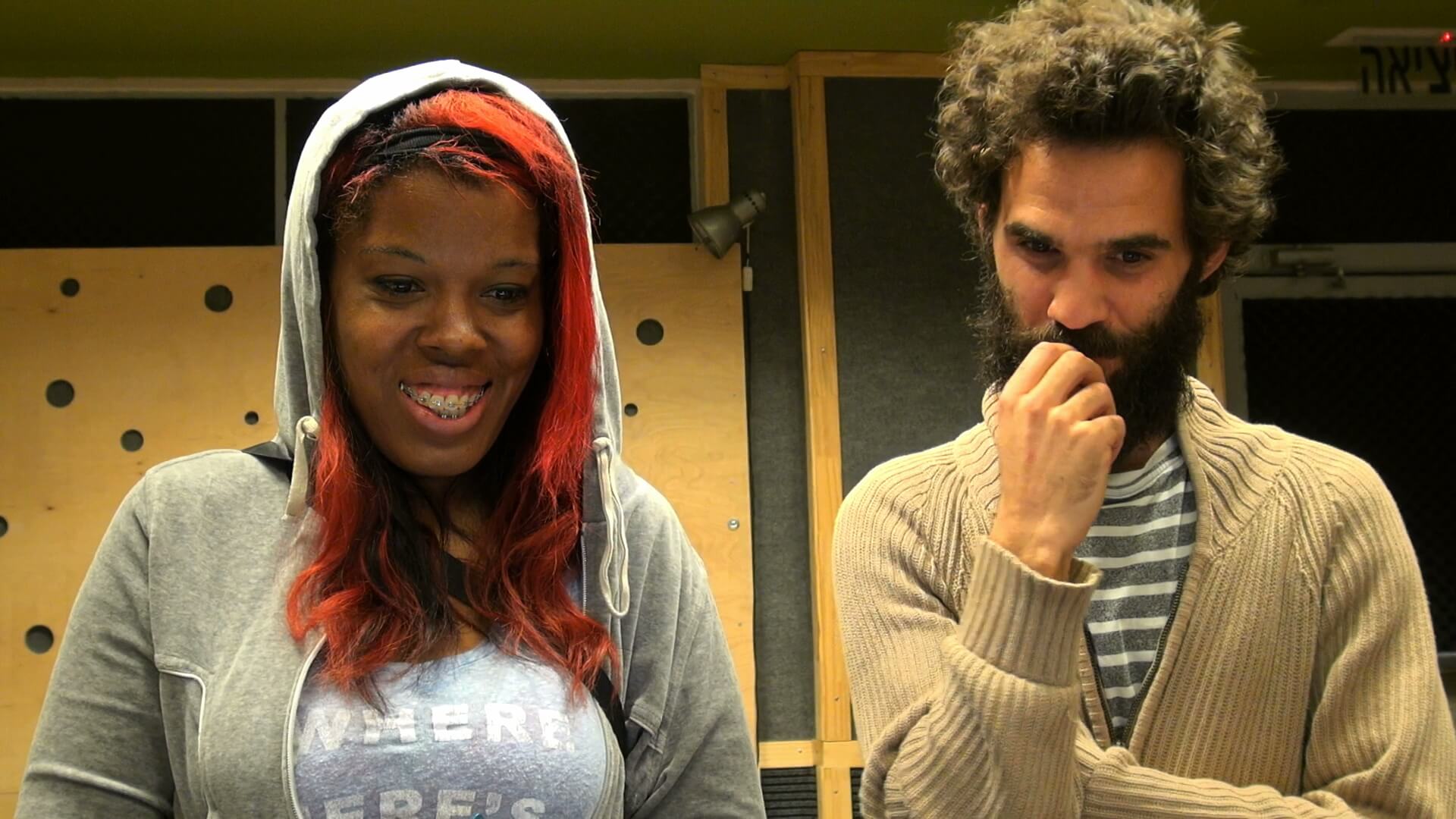
Princess Shaw got her passport for the first time to visit Israel - her first trip outside America. She met Kutiman in person. They performed together. They're working on a full album. She wants to call it Shawdemption - "the redeeming of my soul."
But a year after going viral, she's still a nurse's assistant. She's only watched the documentary twice. "I don't want to see it any more than that."
"The best part about this is when I'm done, I go home to my normal life," she said. "I'm content with my life the way it is. I'm comfortable, even though I'm not, like, a millionaire. I can afford my rent, my lights, and stuff like that. I'm OK."
I hope she stays OK. I hope the album happens. I hope this film - now available to stream - finds the audience it deserves.
And I hope somewhere on YouTube, right now, there's another voice on page 36 waiting to be found.

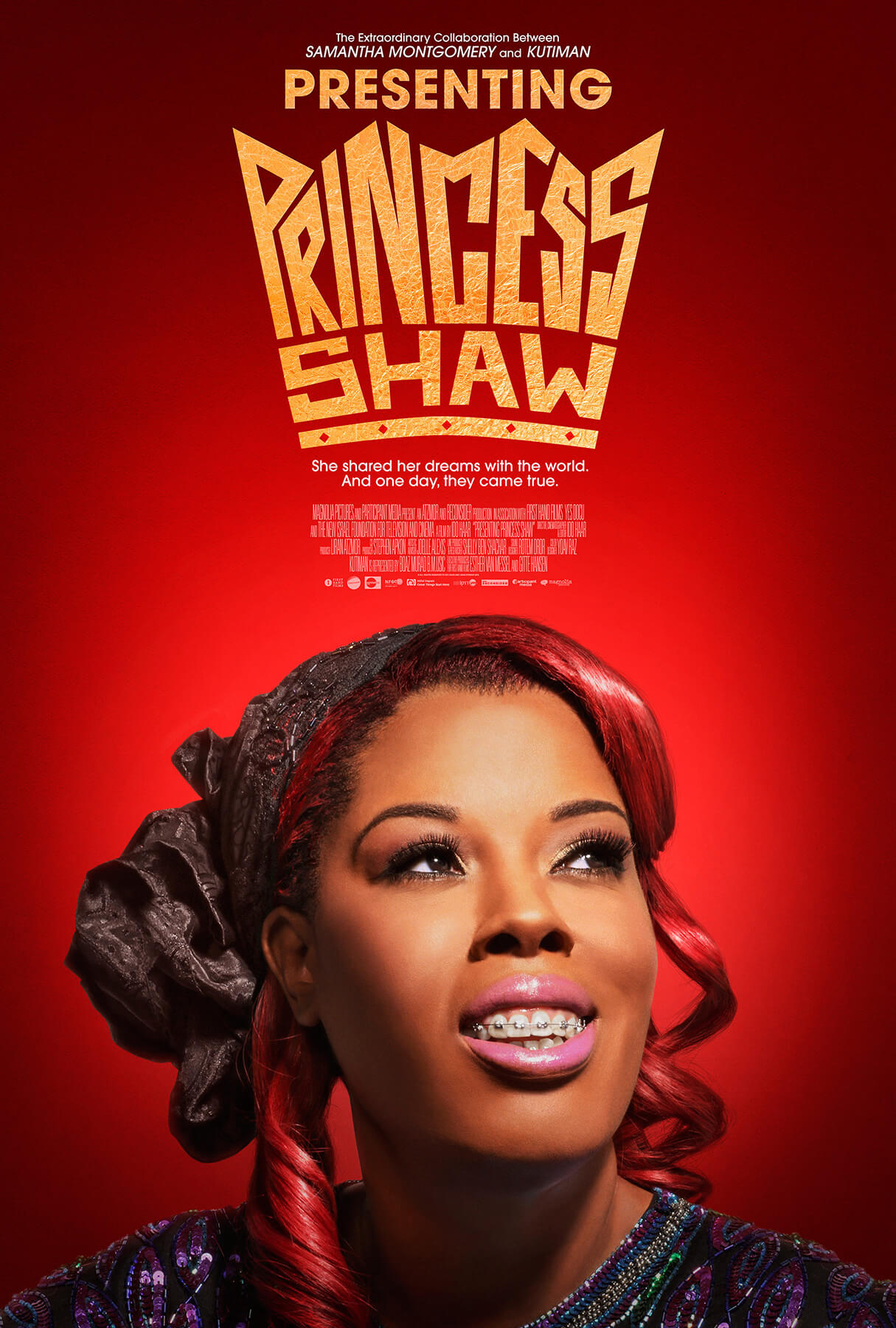

Photos: Magnolia Pictures