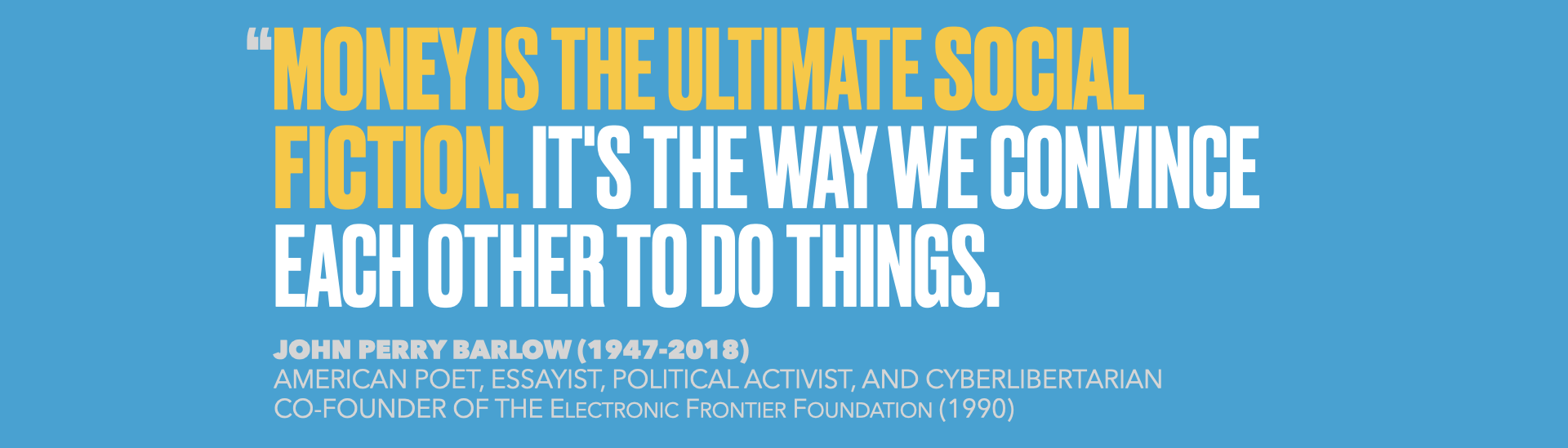
Barlow was a poet, internet freedom advocate, and co-founder of the EFF - basically the guy who made sure you could post memes without being arrested.
His point? Money works because we believe it works. It's a shared illusion - one we all agree to.
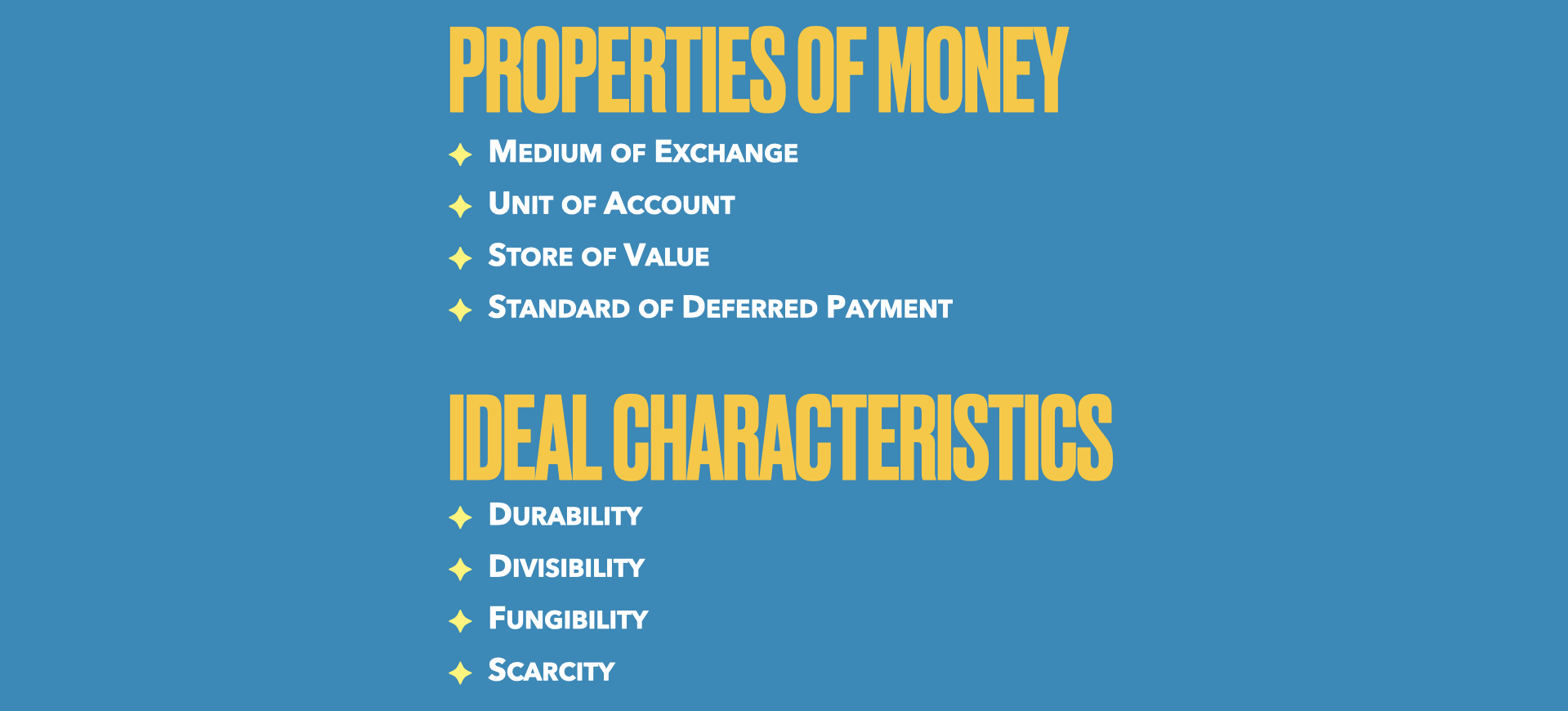
To work well, money has to be durable, divisible, portable, fungible, and recognizable. In plain terms: it shouldn't fall apart, you should be able to split it, carry it, and trust it's real.
These traits make money useful - for trade, saving, and settling debts.
That's why gold and silver worked: hard to destroy, easy to carry, and one coin's as good as another.
Trading Economy
Early economies, since prehistoric times, used barter - direct trade. No money, just stuff.
"No, but I know a guy with clay if you've got spare fish."
And by the end of it, you're stuck with a cracked vase and a grudge against the entire village.
Over time, societies in ancient civilizations adopted commodity money - shells, grain, salt, even metal.
These things had value not just because they were pretty or useful, but because they were hard to get.
Gathering, transporting, and storing them took real effort. In a way, you could say these early forms of money had proof of work baked in - if you had the goods, you'd clearly done the work.
The word salary comes from salarium - a Roman allowance associated with salt (or money for salt).
So even our language today still carries the weight of money's physical roots.
Fun fact: the word soldier is from solidus (a Roman coin). Folk etymology often blends the two: salary is a salt allowance paid to Roman SOLDiers (literally being "worth their salt"). Fun, but untrue.
Since about 5,000 years ago, people eventually moved from bartering and shells to metallic coins - standardized gold and silver pieces that were durable, portable, and a lot easier to count than livestock.
From Mesopotamia to Greece, China to Rome - stamped coins made trade easier.
Coinage didn't arrive everywhere at once - but once it did, money got a lot easier than arguing about chickens and wine.
Eventually, carrying bags of metal got old, and paper money entered the scene, about 1,000 years ago. These were originally representative notes - claims you could redeem for metal coin.
The idea started around the 11th century in China during the Song dynasty. Merchants used paper certificates to avoid hauling heavy coins around. The government soon stepped in and made it official, issuing what's considered the first real paper currency, Jiaozi.
Over time, the concept spread and evolved - from warehouse receipts to government-backed banknotes - eventually becoming the paper money we're familiar with today.
Fiat Money
After centuries of tying money to shiny metals, governments tried something more... imaginative: fiat money.
"Fiat" means let it be done - as in, this has value because we say so. Just trust in central banks to keep things under control. (What could go wrong?)
China tested fiat in the 10th century, but it wasn't until the 20th that most countries fully embraced it.
The U.S. created the Federal Reserve in 1913, and others followed with central banks of their own.
Today, nearly all money is fiat - and mostly digital, floating around in banks, apps, and spreadsheets, backed by trust, law, and not much else.
For centuries, money was backed by gold. But starting in WW-I (1914), that link began to unravel.
Fast forward to 1971 - inflation was rising, and the U.S. couldn't keep up with gold redemptions. So Nixon pulled the plug. No more gold standard. That's the Nixon Shock.
From then on, we entered the fiat era - money backed by trust, not metal - and currencies began to float in value.
After ditching gold, the U.S. needed a new way to keep the dollar on top. So they made a deal with oil-producing nations: oil would be sold only in dollars. That's the petrodollar.
The result? The world got its cheap oil, the U.S. kept its power, and the people of the region - on all sides - were left to endure the fallout.
Hard Money vs. Fiat
Here's where we land: Hard money vs. Fiat.
Hard money earns its value the hard way - it's scarce, limited, and costly to produce. Think gold - you don't print it, you dig for it.
Fiat is easier. It's backed by nothing physical - just government decree and public trust. That makes it flexible in a crisis - and dangerously easy to inflate.
One is slow, heavy, and hard to mess with.
The other is fast, light, and very easy to abuse.
And that trade-off sits at the heart of today's economic tensions.
Gold?
Gold is money. Everything else is credit.
J.P. Morgan (1837-1913) an American financier and investment banker
Sure, gold sounds pure and incorruptible - the original hard money.
Until you remember we dig it out of the ground, melt it down, dig another hole, bury it again, and pay people to stand around guarding it.
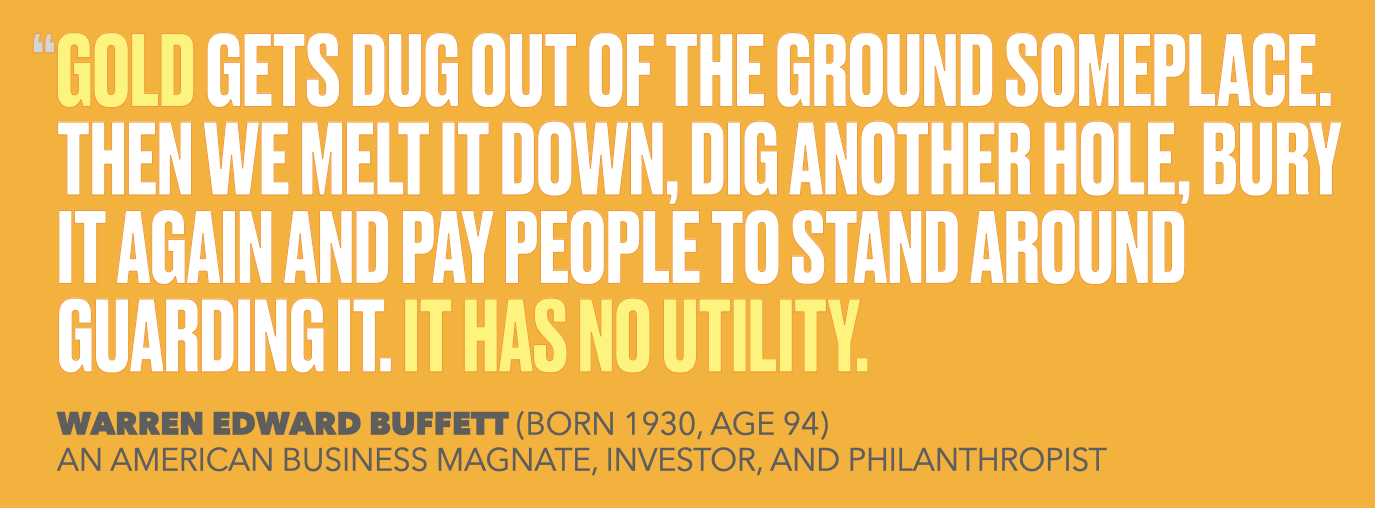
Gold gets dug out of the ground someplace. Then we melt it down, dig another hole, bury it again and pay people to stand around guarding it. It has no utility.
Warren Edward Buffett (born 1930, age 94) an American business magnate, investor, and philanthropist
As Buffett put it - it has no utility. Just a lot of tradition, and very expensive holes.
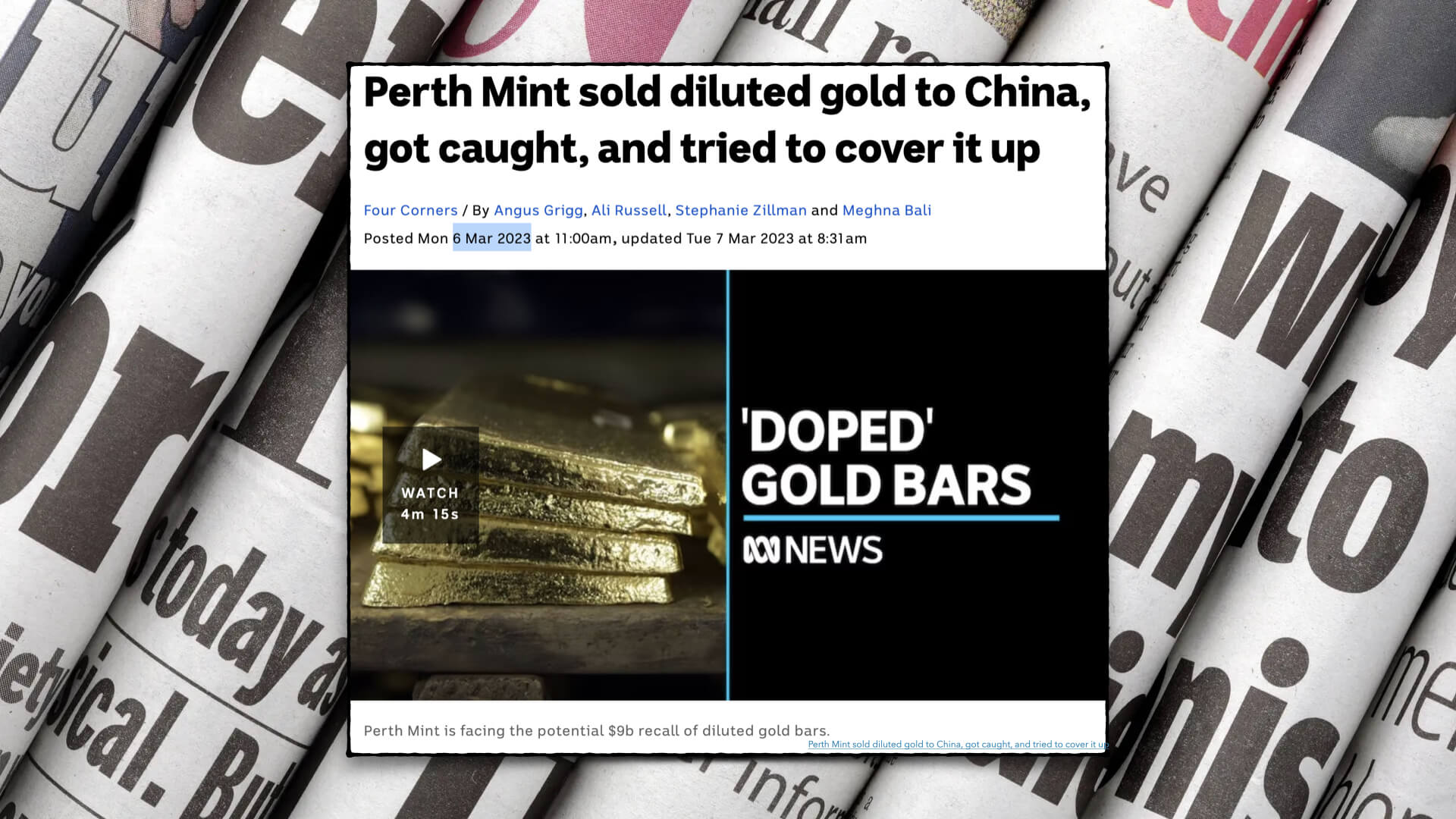
Take the Perth Mint - Australia's official bullion [pronounced bu·lyaan] mint. A government-backed institution trusted globally to refine and certify gold.
In 2023, they got caught selling diluted gold to China and allegedly covering it up.