In the previous chapter, we covered the history of money. Then, in 2009, everything changed. A new kind of money was born. One that didn't rely on governments, gold, or trust in central banks.
In this chapter, we'll see how it works - and what it takes to keep it secure.
Chapter 2: Keeping Money Secure
So... It's one thing to create money. It's another thing entirely to keep it safe.
Let's talk about what it really takes to secure value - whether it's gold, fiat, or something entirely new.
It's not enough to lock money in a vault. If it leaks value every year, you're still being robbed - just more politely.
So if locking it in a vault isn't enough, who do we trust to protect money?
That brings us to the real gatekeepers - the trusted custodians: kings, banks, governments.
They've all secured money with walls, weapons, and the power to enforce.
They don't just guard the vaults - they decide how much money exists in the first place.
We trust them to issue it, protect it, and punish anyone who tries to mess with it.
Banking establishments are more dangerous than standing armies.
Because at the end of the day, money works only if there's someone strong enough to say:
This is money. You will accept it.
And someone even stronger to make sure you do.
At its core, money in the traditional system is secured by force. Not metaphorical force - real, physical, kinetic energy. The kind that breaks down doors, flies fighter jets, and topples regimes.
In other words - a monopoly on violence.
Decentralized Money
But what if there was another way? A system that didn't rely on vaults, borders, or aircraft carriers. A monetary system secured not by violence - but by math.
Plan ₿ wasn't just a new kind of money. It was a declaration of independence.
In the shadow of the 2008 financial crisis, with trust in the system crumbling, a new name appeared online: Satoshi Nakamoto.
No one knows who he, she, or they really were.
But what they left behind was something revolutionary. A white paper. A protocol. A spark.
I've been working on a new electronic cash system that's fully
peer-to-peer, with no trusted third party.

The paper is available at:
https://www.bitcoin.org/bitcoin.pdf

The main properties:
 Double-spending is prevented with a peer-to-peer network.
 No mint or other trusted parties.
 Participants can be anonymous.
 New coins are made from Hashcash style proof-of-work.
 The proof-of-work for new coin generation also powers the
    network to prevent double-spending.

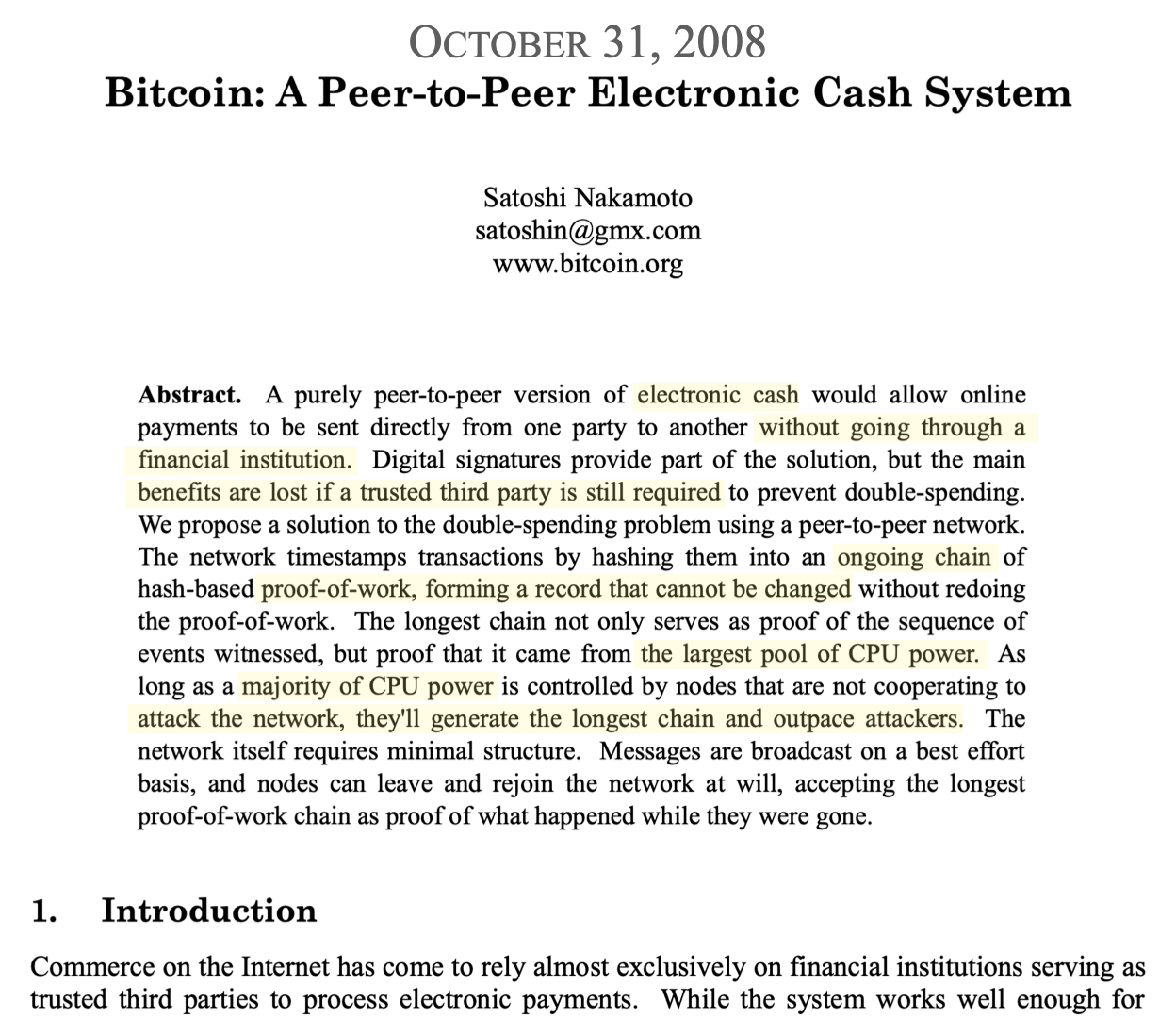
Bitcoin: A Peer-to-Peer Electronic Cash System

Abstract.  A purely peer-to-peer version of electronic cash would
allow online payments to be sent directly from one party to another without the burdens of going through a financial institution.
...
No marketing. No funding. No promises. Just an idea - that money could work without middlemen, banks, or borders.
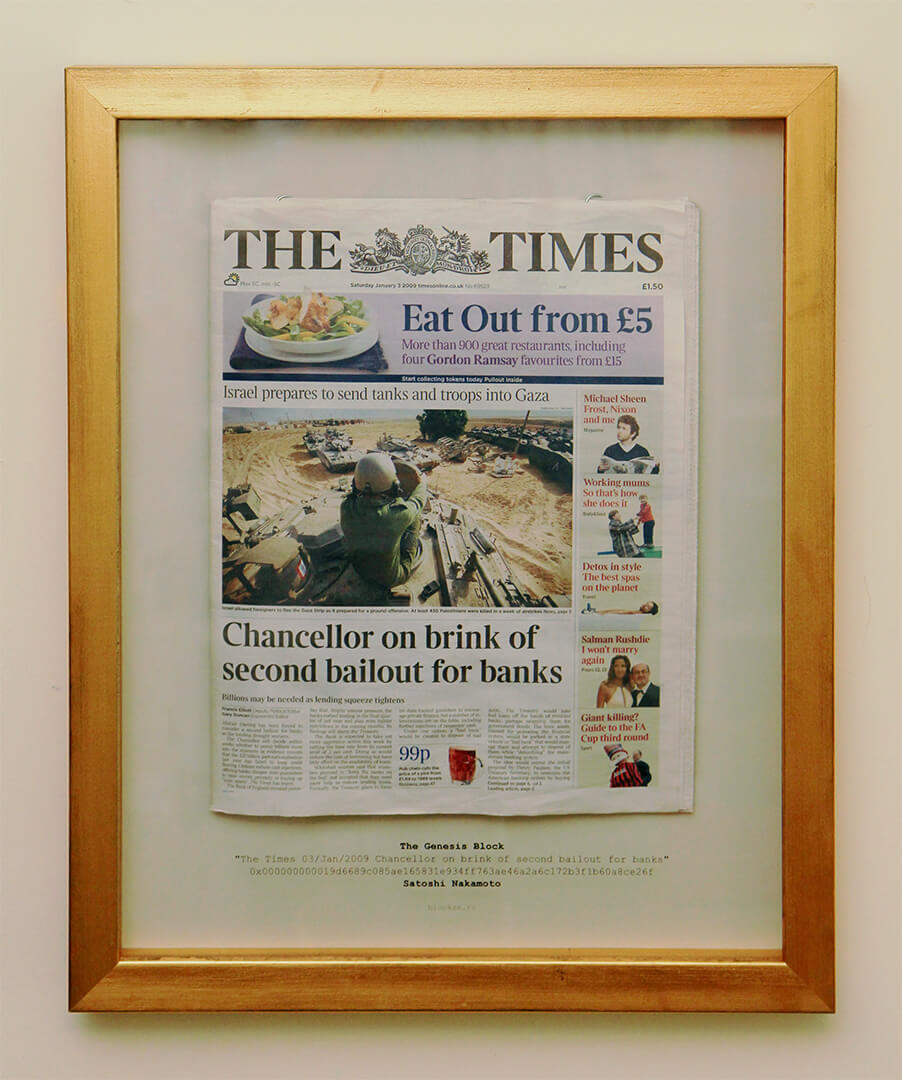
Then, on January 3rd, 2009, the first block was mined - the Genesis Block. Embedded in it was a headline from the front page of The Times:
It wasn't just a timestamp. It was a message. A protest. A warning.
Bitcoin was born as a direct response to the financial system's failures.
And just above that headline?
Israel prepares to send tanks and troops into Gaza.
Because some cycles - economic and political - seem determined to repeat themselves.
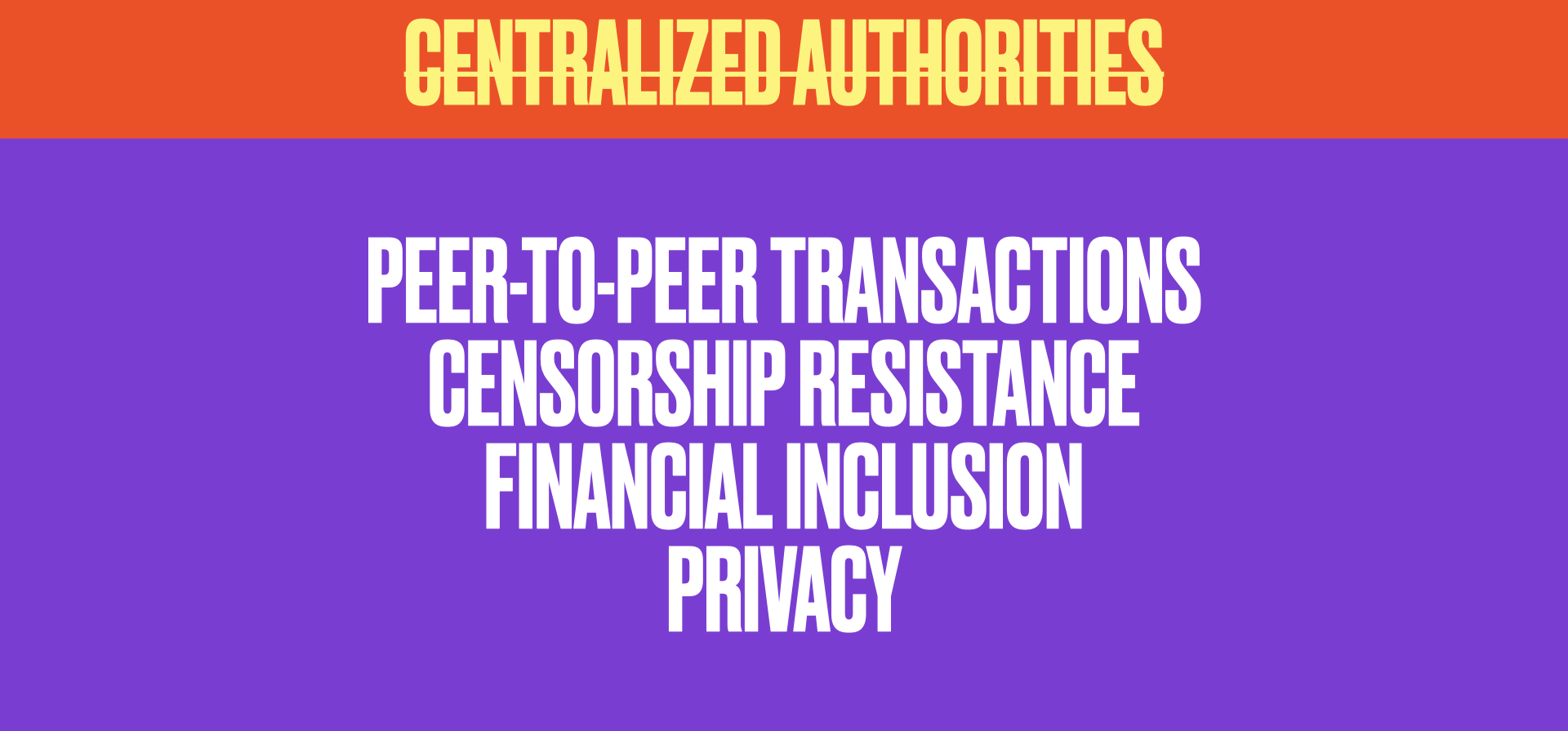
The traditional system relies on centralized authorities - and all the trust, risk, and control that came with them.
Bitcoin flipped that model.
Peer-to-peer transactions - no intermediaries. Censorship resistance - no one to block or reverse your payments. Financial inclusion - no bank account required. And privacy - not perfect, but built into the protocol.
This was money reimagined - for the internet age.
For decades, digital money had a fatal flaw - how to prevent double spending without a central authority.
Most believed it was impossible.
Then Bitcoin came along - and quietly solved it.
Until Bitcoin, digital things weren't scarce. You can copy a file, a song, a photo, infinite times at zero cost.
Bitcoin changed that. For the first time, we had a digital asset that couldn't be duplicated - not by a company, not by a government, not by anyone.
A limited supply, enforced by code - not by a central authority.
Just 21 million coins. Ever. That's it.
Keeping Decentralized Money Secure
Earlier we asked: what does it take to keep money secure? With centralized systems, the answer was easy - vaults, laws, armies. But if no one's in charge - no bank, no government - then how do you secure the money?
That's the real genius of Bitcoin.
So how does Bitcoin keep decentralized money secure?
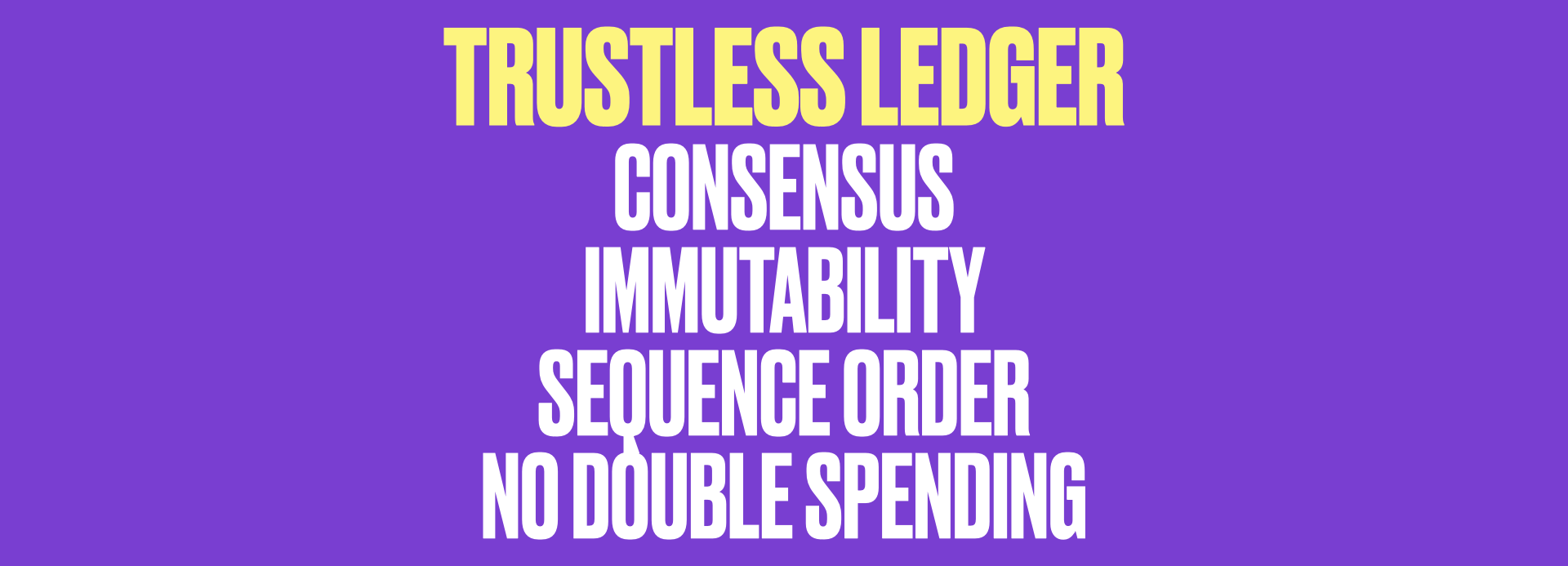
It uses a trustless ledger - meaning: no one needs to trust anyone else, just the system itself.
Every transaction is recorded in a shared history, enforced by consensus - agreed on by thousands of independent nodes.
Once written, that history is immutable - it can't be changed, rewritten, or erased.
Transactions happen in a strict sequence - so no one can spend the same coins twice.
In short: no central authority, and no double spending. Just math and verification.
So why does it work? Why don't people cheat?
Because Bitcoin is built on game theory - and economic incentives.
It's not about trusting people to be honest - it's about making dishonesty too expensive to be worth it.
Miners are rewarded for following the rules - and punished, economically, if they try to break them.
In Bitcoin, the most profitable strategy... is to play fair.
In traditional systems, miners dig for gold - it's slow, energy-intensive, and produces a scarce, valuable resource.
Bitcoin took that model... and made it digital.
In Bitcoin, miners secure the network.
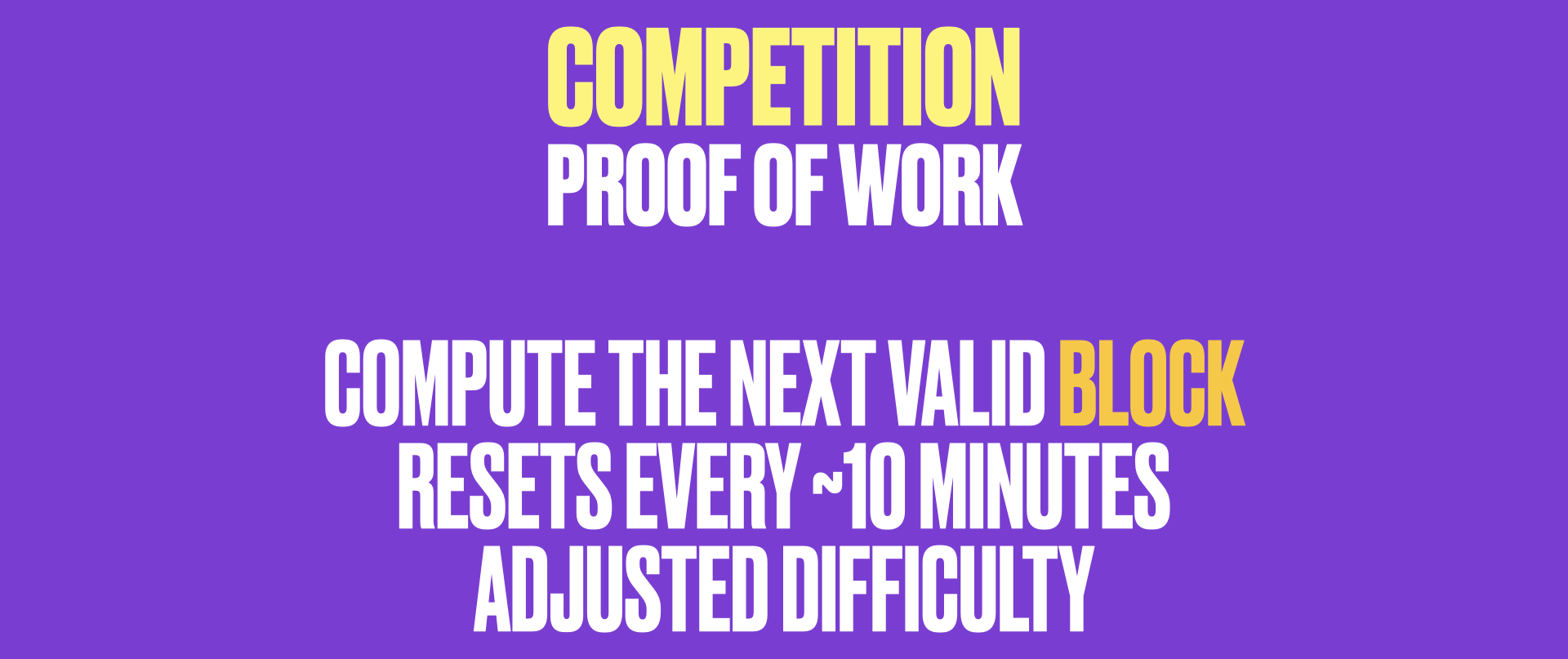
They validate transactions, maintain the ledger, and compete for rewards. Instead of pickaxes, they use computers - racing to solve a cryptographic puzzle.
The first to solve it gets to add the next block... and collect new bitcoin and transaction fees as a reward.
Think of it like a lottery that runs every 10 minutes.
Miners buy their tickets with electricity and computing power - the more you commit, the better your odds.
But you can't just buy your way in - it's all about solving a specific, unpredictable puzzle.
Once someone wins, the network resets, and the race starts again.
And to keep the timing consistent, Bitcoin adjusts the difficulty every two weeks: if more miners join, the puzzle gets harder. Fewer miners? It gets easier.
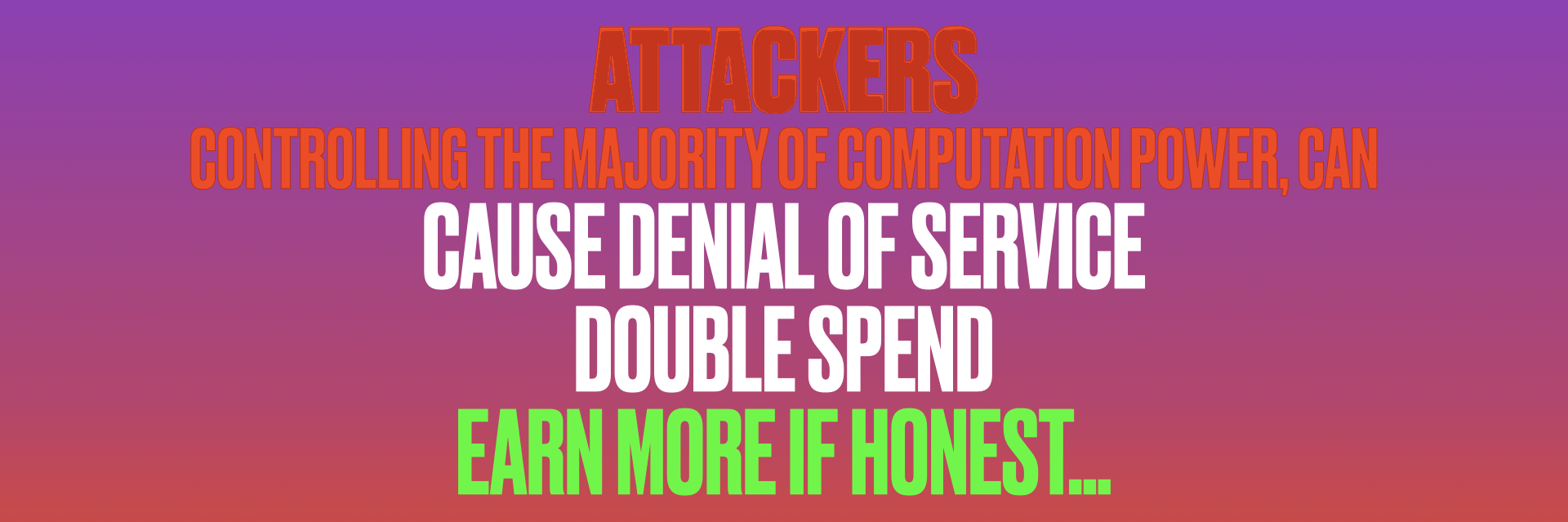
But what happens if someone controls most of the network's computing power?
In theory, they could launch a 51% attack - block transactions, delay confirmations, or try to double spend their own coins.
But even with that much power - they can't steal someone else's bitcoin.
They can disrupt the system, not rewrite ownership.
And here's the twist: doing all that would cost a fortune - and it's still more profitable to follow the rules.
Bitcoin makes honesty the best business model.
As we remember from earlier - in the traditional system, money is secured by kinetic force. The kind that guards vaults, enforces borders, and - when needed - shows up with guns.
Bitcoin rewrites that equation.
The force that powers its security doesn't come from violence - but from electricity.
From distributed effort, not centralized power.
It's a system secured by peaceful collaboration - not coercion.