
Bitcoin's Energy Consumption Lecture: 3. Energy Use and What It Means for the Planet
So... Bitcoin's using all the electricity and killing the planet, right?
I gave a lecture about Bitcoin's energy consumption and its effect on the environment, as part of our renewed, relocated Salon lectures.
In the previous chapters, we covered the history of money, and a new kind of decentralized money that does not rely on trusted custodians.
In this chapter, we'll get to the part that sparks headlines, controversy, and confusion:
Chapter 3: Bitcoin's energy use, and what it means for the planet.
Is it wasteful? Is it necessary?
Let's dig into the numbers - and the nuance.
Back in 2017, headlines like this were everywhere.
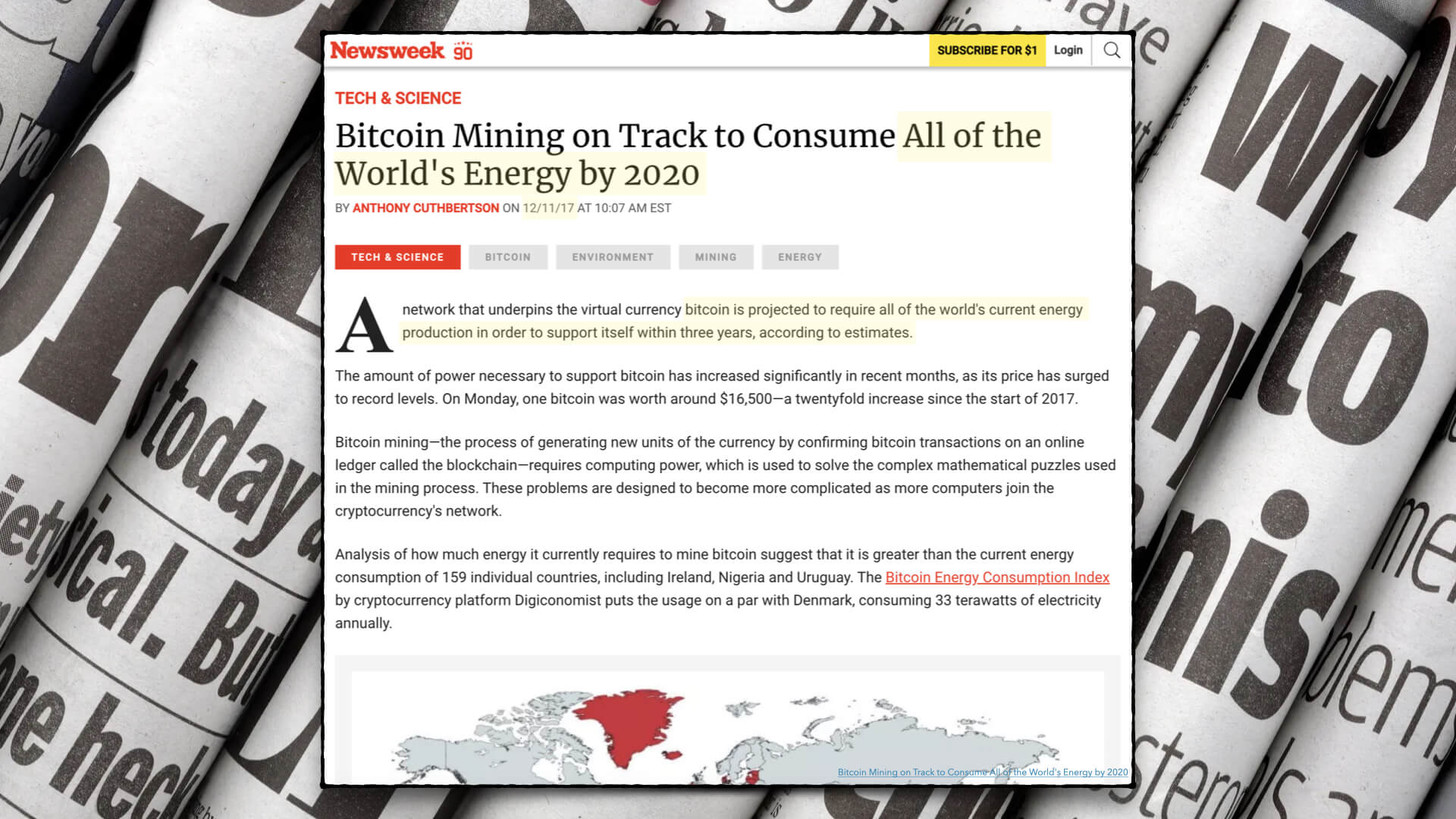
Bitcoin will consume all of the world's energy by 2020.
Spoiler alert: it didn't. Not even close.
But it shows how quickly the conversation around Bitcoin and energy got out of hand - driven by panic, headlines, and some very shaky projections.
This one's from Calcalist, 2021:

A giant Chernobyl exploding in the heart of Silicon Valley.
A headline that captures the fear - and drama - around Bitcoin's energy use.
As mining grew, so did the headlines: warnings of blackouts, carbon footprints, and global catastrophe.
The question was clear: will Bitcoin make the climate crisis worse?
Here's another perspective - this time from Israel's Weizmann Institute of Science, published in early 2020.
It warned that Bitcoin's energy consumption could soon cause more harm than the technology is worth - in both ecological and public health terms.

"A price we all pay," the author writes - pointing to carbon emissions, fossil fuel use, and the strain on global resources.
And then it went truly mainstream.
In May 2021, Elon Musk - who had just put billions of dollars of bitcoin on Tesla's balance sheet - suddenly reversed course.
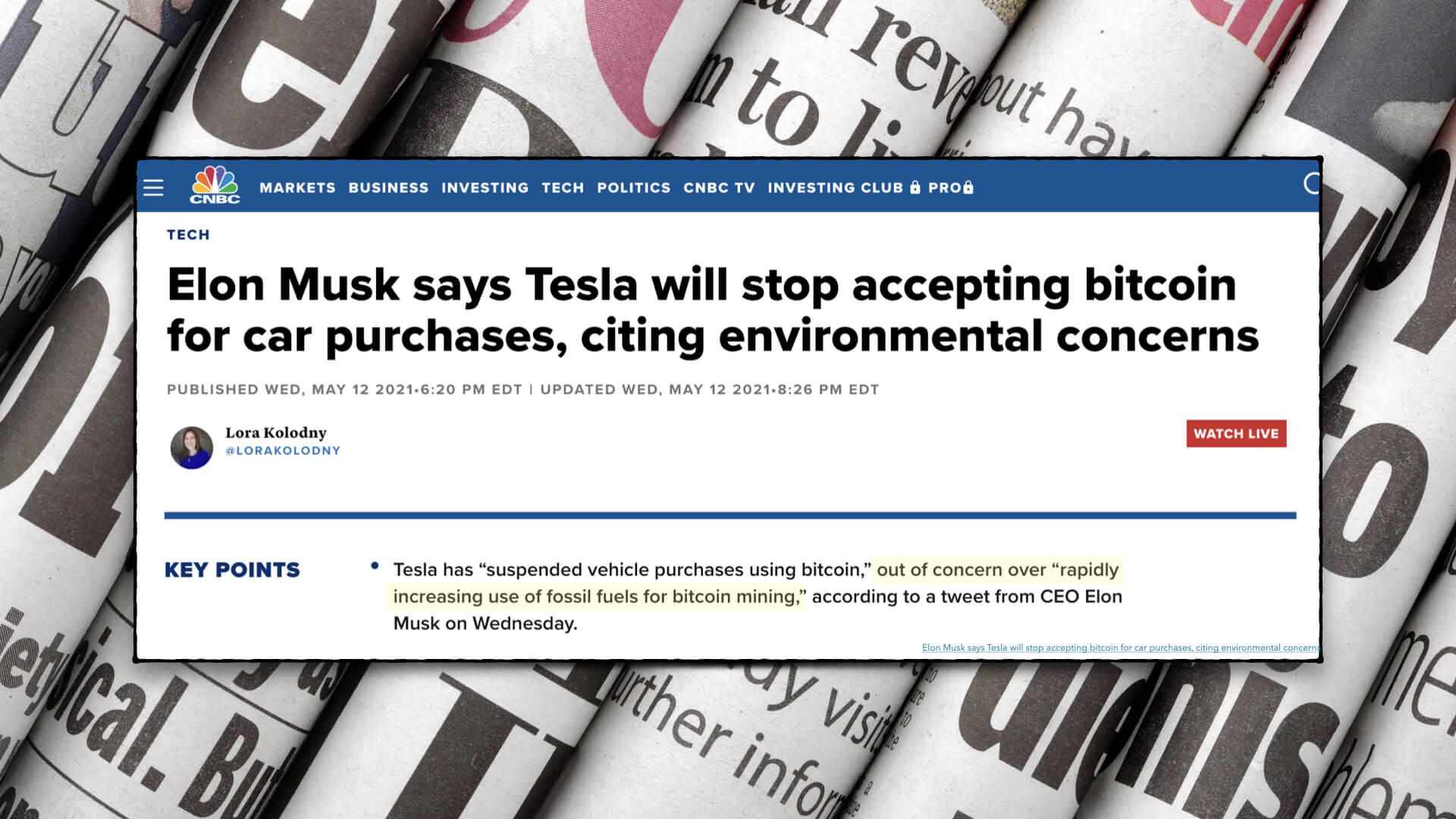
Tesla would no longer accept bitcoin, citing its "rapidly increasing use of fossil fuels" and environmental concerns.
The message was clear: even the most future-focused companies were now questioning Bitcoin's energy footprint.

As of May 2025, the Bitcoin network is performing almost 1 sextillion cryptographic guesses every second - that's a number with 21 zeros.
For comparison, there are about 10 sextillion stars in the observable universe.
Bitcoin is approaching one-tenth of that - every single second.

El Capitan is the most powerful supercomputer ever built - over 1.7 quintillion operations per second.
Impressive? Absolutely.
But the Bitcoin network performs over 500 times more computations every second - not in a lab, but out in the wild... and running 24/7.

According to the Cambridge Bitcoin Energy Consumption Index, as of May 2025, the Bitcoin network consumes approximately 189 terawatt-hours of electricity annually.
To put that into perspective, this is roughly equivalent to the total annual electricity consumption of South Africa.
This significant energy usage underscores the importance of ongoing discussions about the environmental impact of Bitcoin mining and the pursuit of more sustainable practices in the cryptocurrency industry.
So how much energy does Bitcoin really use?
Let's zoom out.
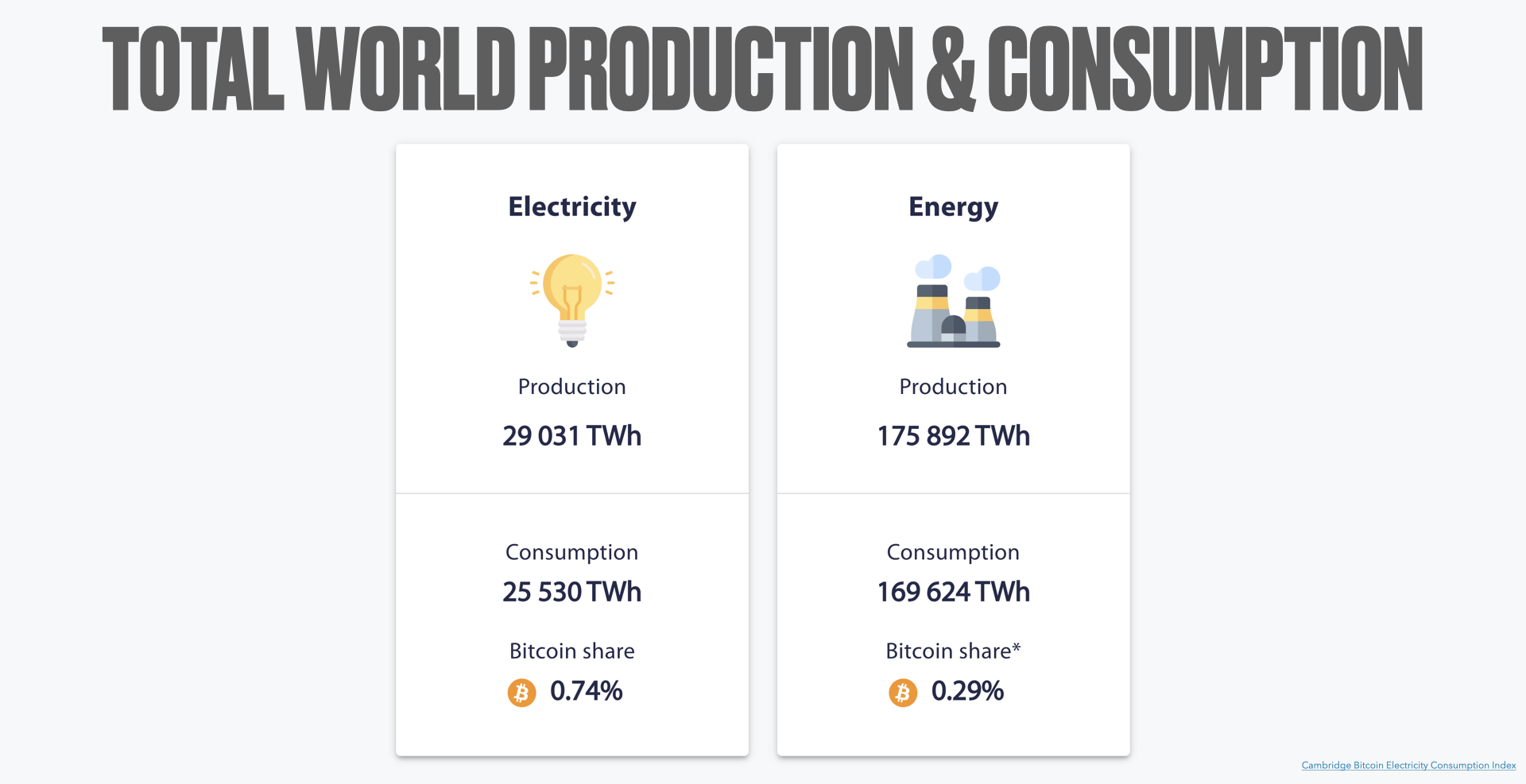
The world consumes over 25,000 terawatt-hours of electricity each year.
Bitcoin's share? Just 0.74%.
And when you include all forms of energy - not just electricity - Bitcoin accounts for only 0.29% of global consumption.
In other words, Bitcoin uses a tiny slice of the world's energy - especially when compared to what it's replacing.
On a planetary scale, Bitcoin's energy use is a rounding error - less than a third of one percent of the energy we burn every year.
So where does Bitcoin stand on the global energy leaderboard?
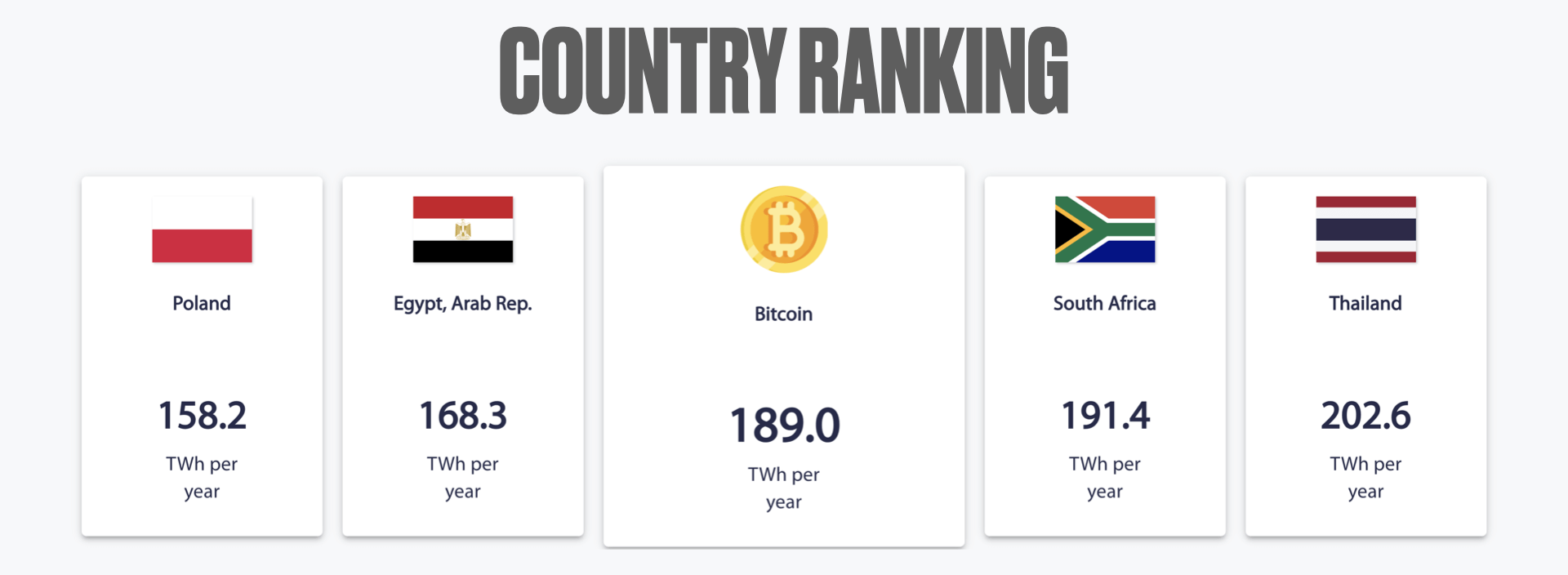
Right between Egypt and South Africa - and just below Thailand.
At around 189 terawatt-hours per year, Bitcoin consumes more electricity than many entire countries.
That sounds huge - and it is. But context matters.
Unlike countries, Bitcoin's energy use is transparent, borderless, and voluntary - and as we'll see soon, it's also uniquely positioned to use stranded, surplus, or renewable power.
Here's a comparison that often gets overlooked.
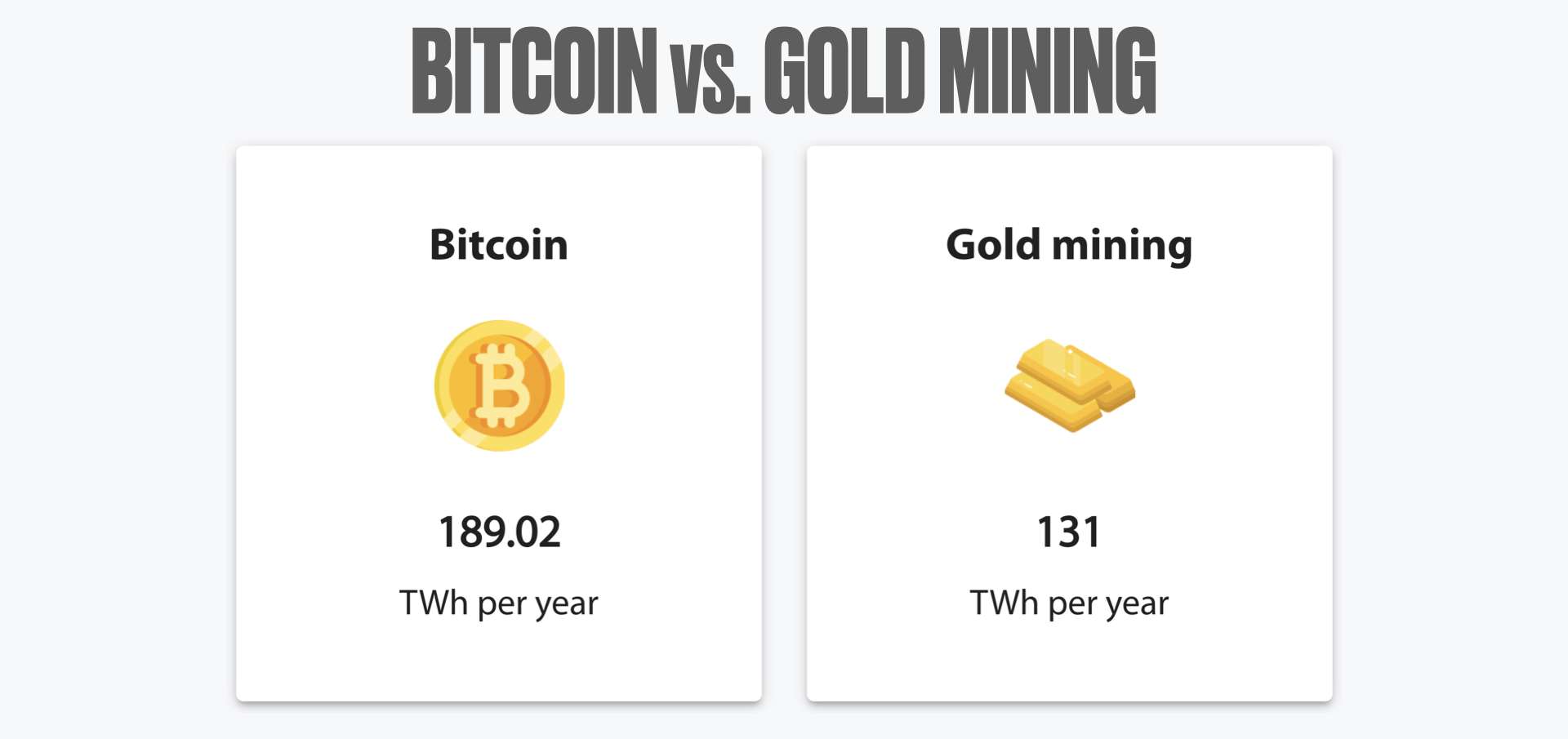
Gold mining - the old standard - uses about 131 terawatt-hours of electricity every year.
Bitcoin? Yes, it's more - but not by much.
And unlike gold, Bitcoin doesn't scar landscapes, use toxic chemicals, or require armed guards and vaults.
Now here's where things get interesting.
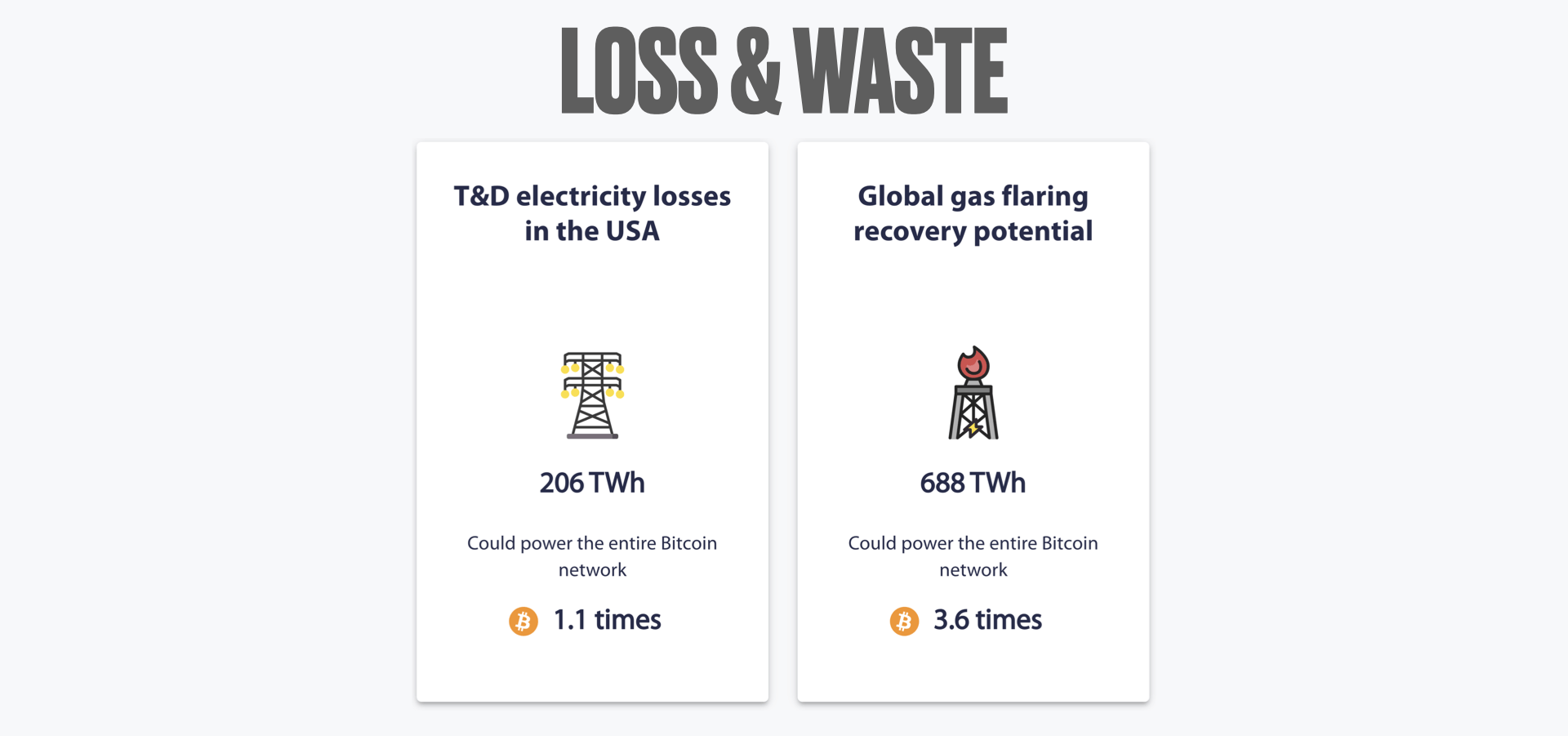
The U.S. alone loses over 200 terawatt-hours of electricity every year... just in transmission and distribution losses.
That's enough to power the entire Bitcoin network 1.1 times.
And globally, gas flaring - where oil fields literally burn off excess methane - wastes nearly 700 terawatt-hours a year.
That could power Bitcoin 3.6 times over.
In other words: Bitcoin doesn't have an energy problem - it has an energy opportunity.
A chance to capture and monetize waste in ways no other technology can.
So where does all this energy come from?
Bitcoin miners don't just use energy - they compete for it.
And they're under constant pressure.

Their hardware is expensive. Their profits depend entirely on how cheap their electricity is.
That creates a built-in incentive: find the lowest-cost power possible.
And increasingly, that means turning to renewables, surplus, or otherwise wasted energy.

The cheapest energy on Earth? Renewables.
Once you've built the solar farm, wind turbines, or hydro plant - the fuel is free. No coal trains. No gas pipelines. Just nature.
That's why more and more miners are setting up operations near abundant, renewable sources.
Not because it's greener - but because it's cheaper.
Bitcoin doesn't care where the energy comes from - but miners do.
Here's what makes Bitcoin mining different from almost any other industrial activity:

It's intermittent - it doesn't need a steady supply of power, just whatever's available.
It's portable - mining rigs can be shipped in a crate and plugged in anywhere.
And it can run off-grid, right at the source.
These properties turn Bitcoin into a kind of energy sponge - able to soak up excess power wherever it's cheapest, cleanest, or most wasted.
That's not a problem. That's an opportunity.
The world doesn't have an energy shortage - it has an energy timing problem.

Energy demand varies by the hour, and renewable production is intermittent - the sun doesn't always shine, and the wind doesn't always blow.
That means we often generate more energy than we can use, especially in remote or underbuilt areas.
And that's where Bitcoin miners come in - as flexible, instant-demand energy buyers.
This isn't just theory - it's already happening.
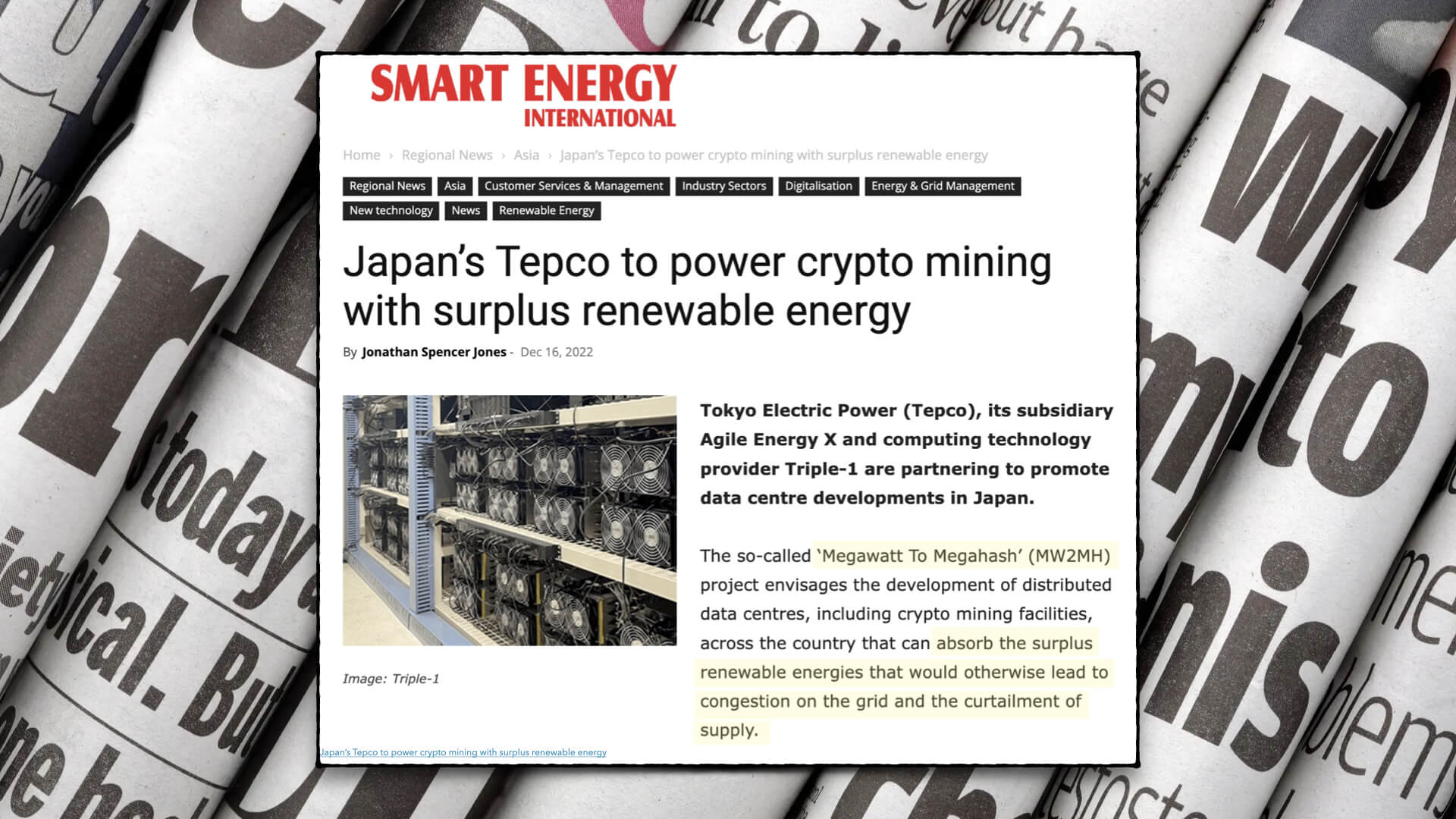
In Japan, the country's largest utility, Tepco, is partnering with data center operators to mine crypto using surplus renewable energy.
The goal? Soak up excess power that would otherwise go to waste, relieve stress on the grid, and make clean energy production more efficient and profitable.
Bitcoin becomes the buyer of last resort - and the grid becomes smarter for it.
This is the Mechanicville Hydroelectric Plant in New York.
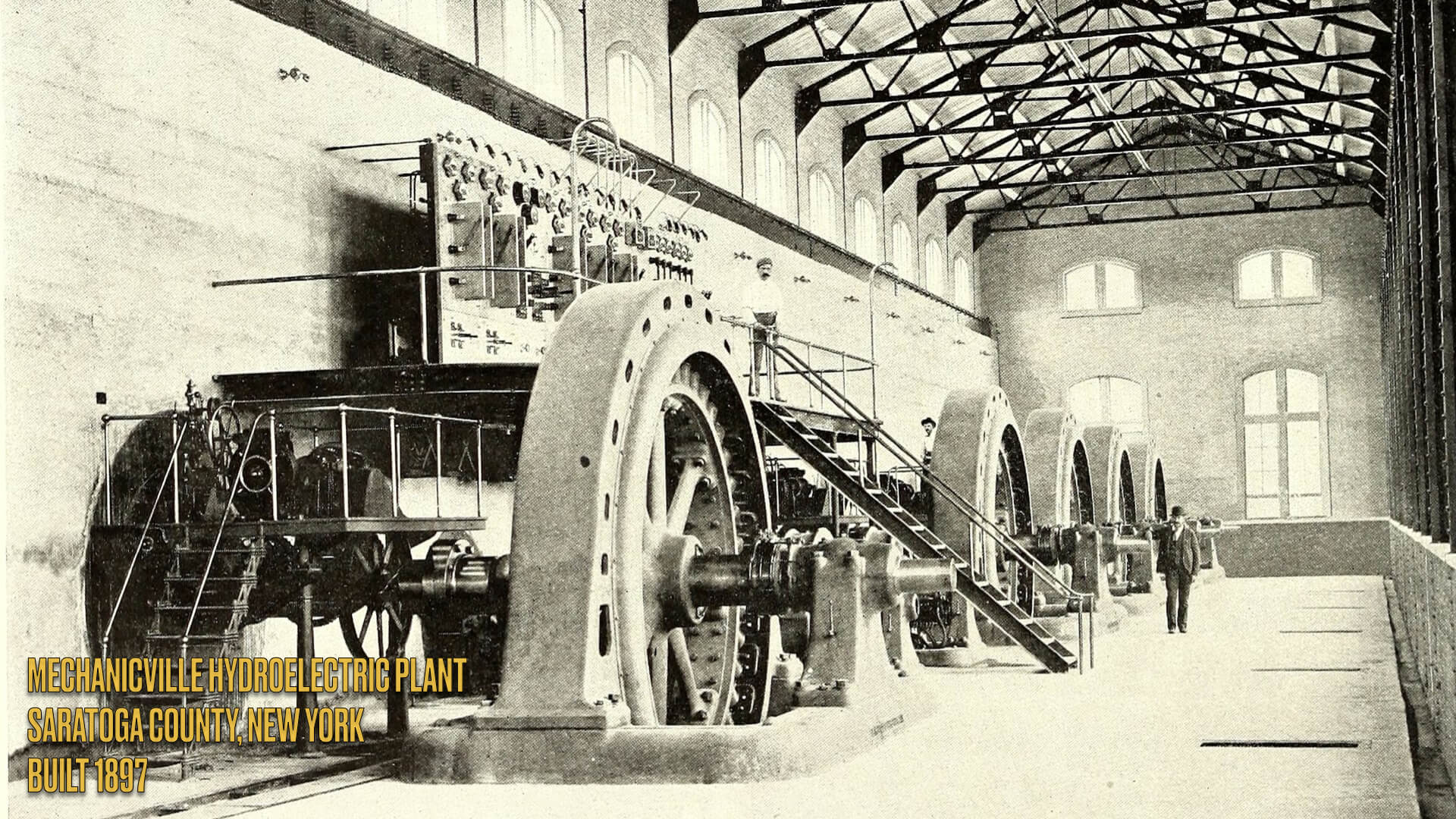
Built in 1897, it's one of the oldest renewable energy plants still in operation anywhere in the world.
It was nearly shut down - left to rot - when the utility broke its contract.
They told the operator, "If you don't like it, take it to the judge."
Instead, he kept the turbines spinning - and found a new buyer: Bitcoin.
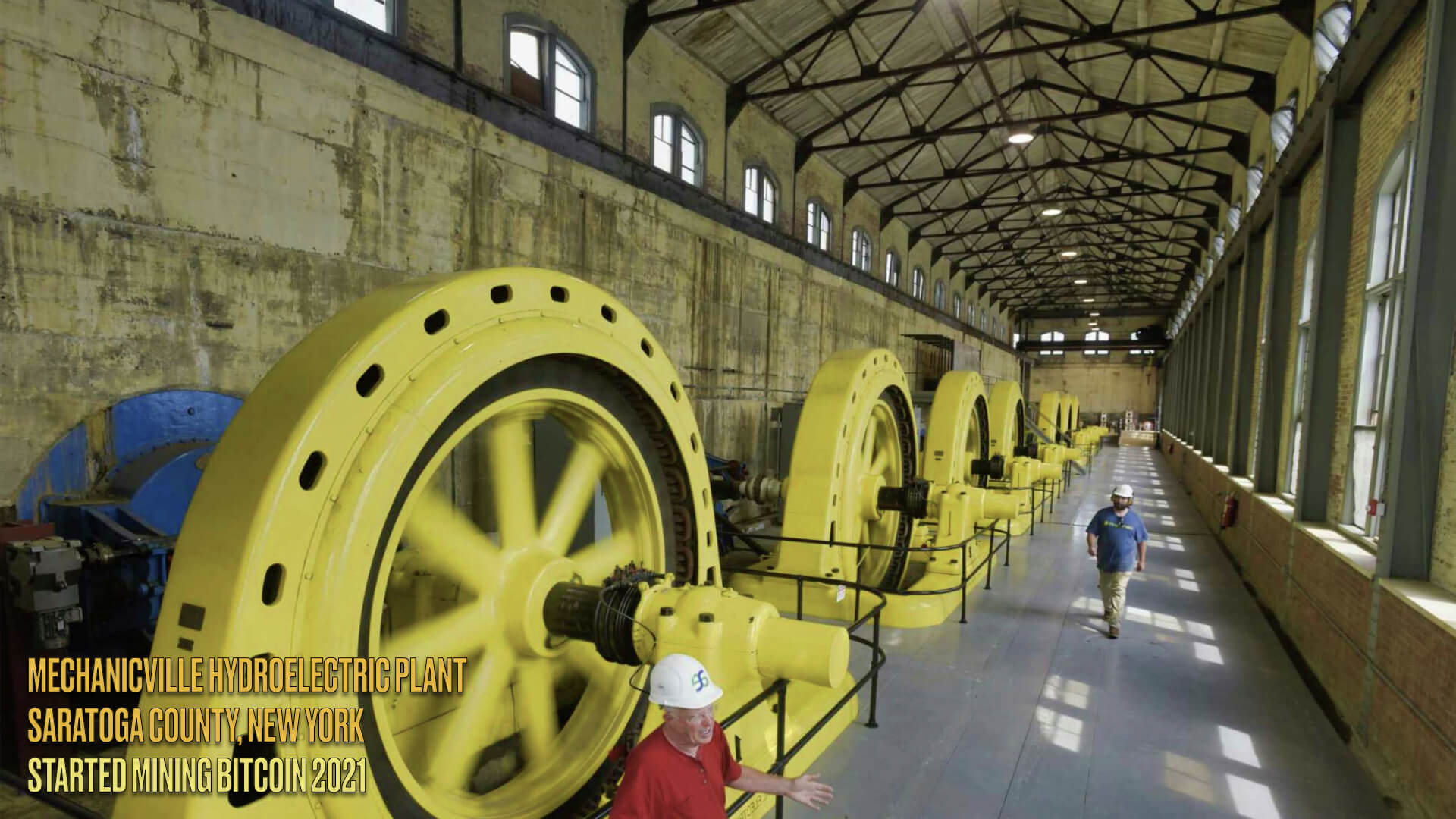
Running 1800s-era machinery, this plant now earns 3× more mining Bitcoin than selling power back to the grid.
A hundred-year-old hydro station... rescued by code.
Past and future, literally generating value together.
Not all clean energy is usable.

Electricity can only travel so far - about 500 miles - before it's lost to heat and resistance.
That means huge amounts of wind, solar, hydro, and geothermal energy are generated in remote areas and simply... go to waste.
This is called stranded energy - and it's a massive untapped opportunity.
And that's where Bitcoin mining comes in.
In places like Iceland, Texas, and El Salvador, miners are already setting up near remote power sources - turning excess energy into a digital asset at the source, without needing expensive new infrastructure.
One of the most overlooked roles Bitcoin can play - is setting a floor price for energy.

When wind, solar, or hydro produce more electricity than the grid can use, that energy usually goes to waste.
But if a Bitcoin miner is nearby, it becomes a paying customer of last resort.
That helps maximize utilization, reduce waste, and even make clean energy projects more economically viable.
In some cases, this has actually promoted investment in new infrastructure - where it wouldn't have made sense before.
And there's another opportunity here: gridless electrification.
Bitcoin mining can support off-grid renewable systems in remote areas - bringing power, connectivity, and economic opportunity to places the grid has never reached.

Over 770 million people still live without access to electricity - many of them in rural Africa, far from the grid.
The challenge? A chicken-and-egg problem.
These communities need electricity to grow - but can't justify the cost of building a micro-grid without reliable demand.
That's where Bitcoin mining comes in.
It provides consistent, flexible demand from day one - even before homes or businesses are connected.
That helps justify the upfront investment in solar, batteries, and distribution - unlocking energy and economic development.
One company doing this right now is Gridless - deploying small-scale miners in East Africa to support off-grid communities.
They build micro-hydro plants - like this one in rural Kenya - that generate far more electricity than the village needs.
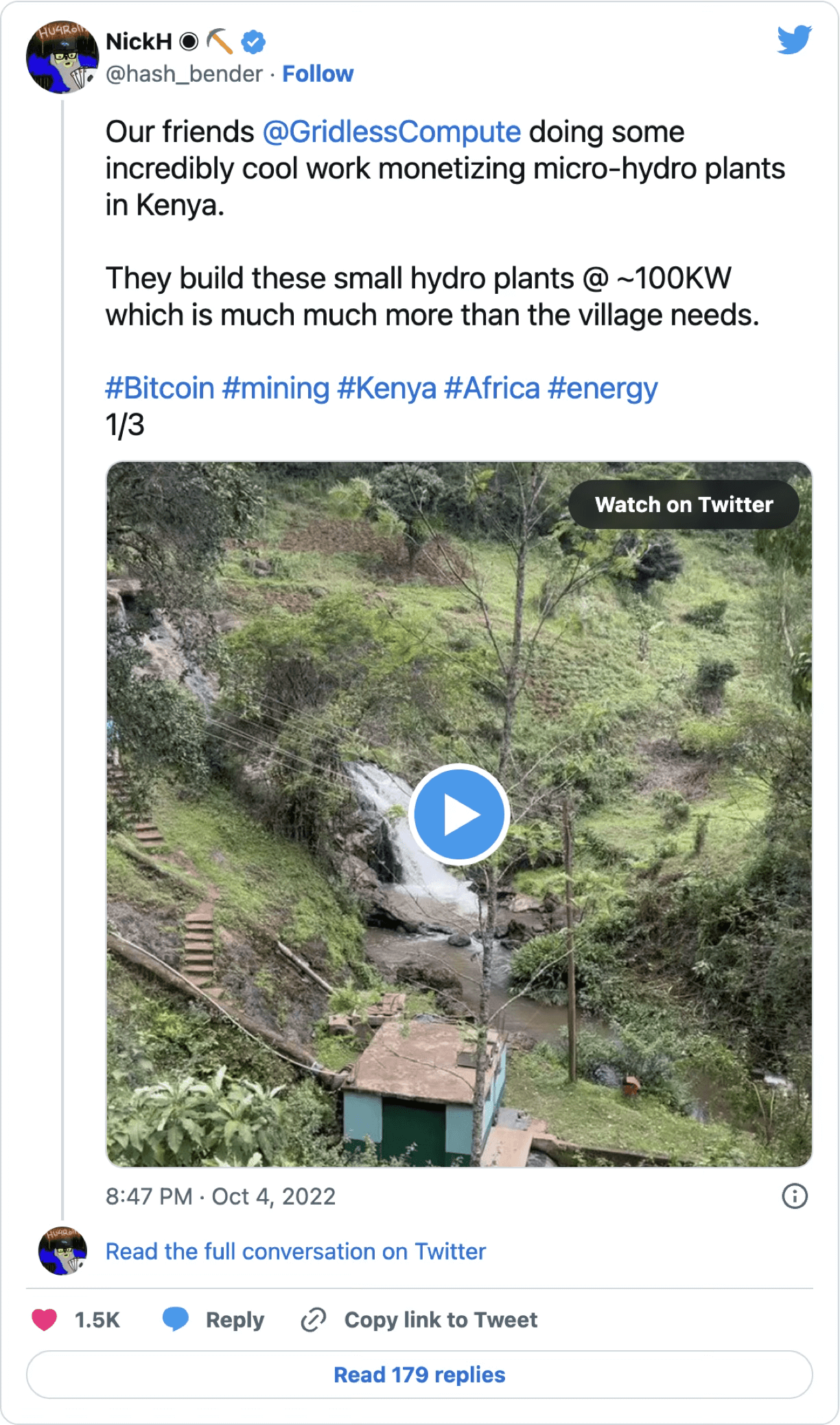
Instead of wasting that surplus, they mine Bitcoin with it.
The result? A revenue stream that keeps costs low, makes infrastructure sustainable, and most importantly - keeps the lights on.

There's a whole category of energy we tend to ignore - energy that's wasted, vented, or burned off simply because we don't have a better use for it.
Flare gas from oil fields. Rotting biomass and agricultural waste.
It's not just pollution - it's lost potential.
But what if that waste could be turned into something of value?
This is what waste looks like.
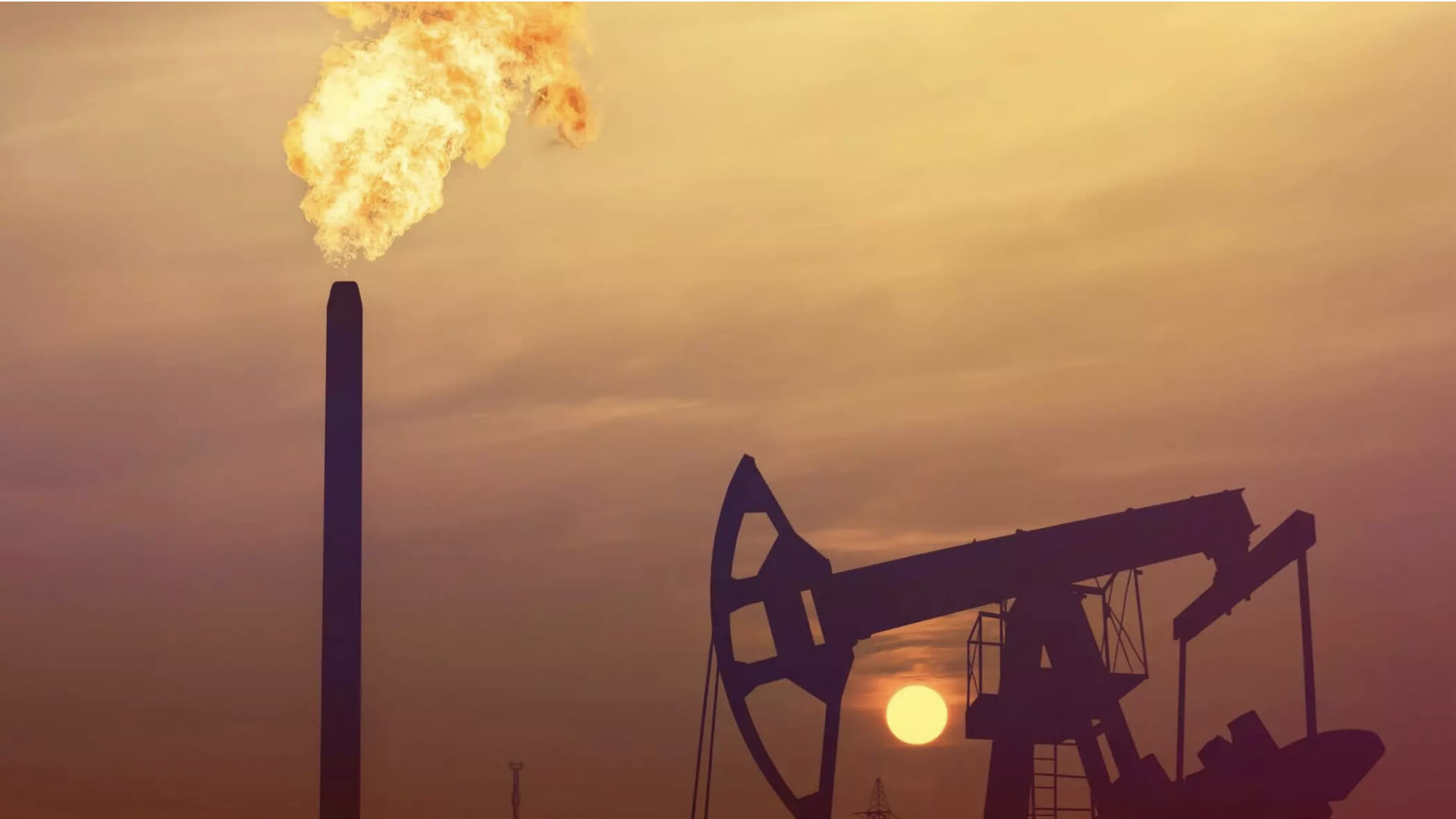
Every second, oil fields around the world burn off excess gas they can't transport or sell.
It lights up the sky, releases methane and CO₂, and does absolutely nothing in return.
Until now.
Here's how it works.
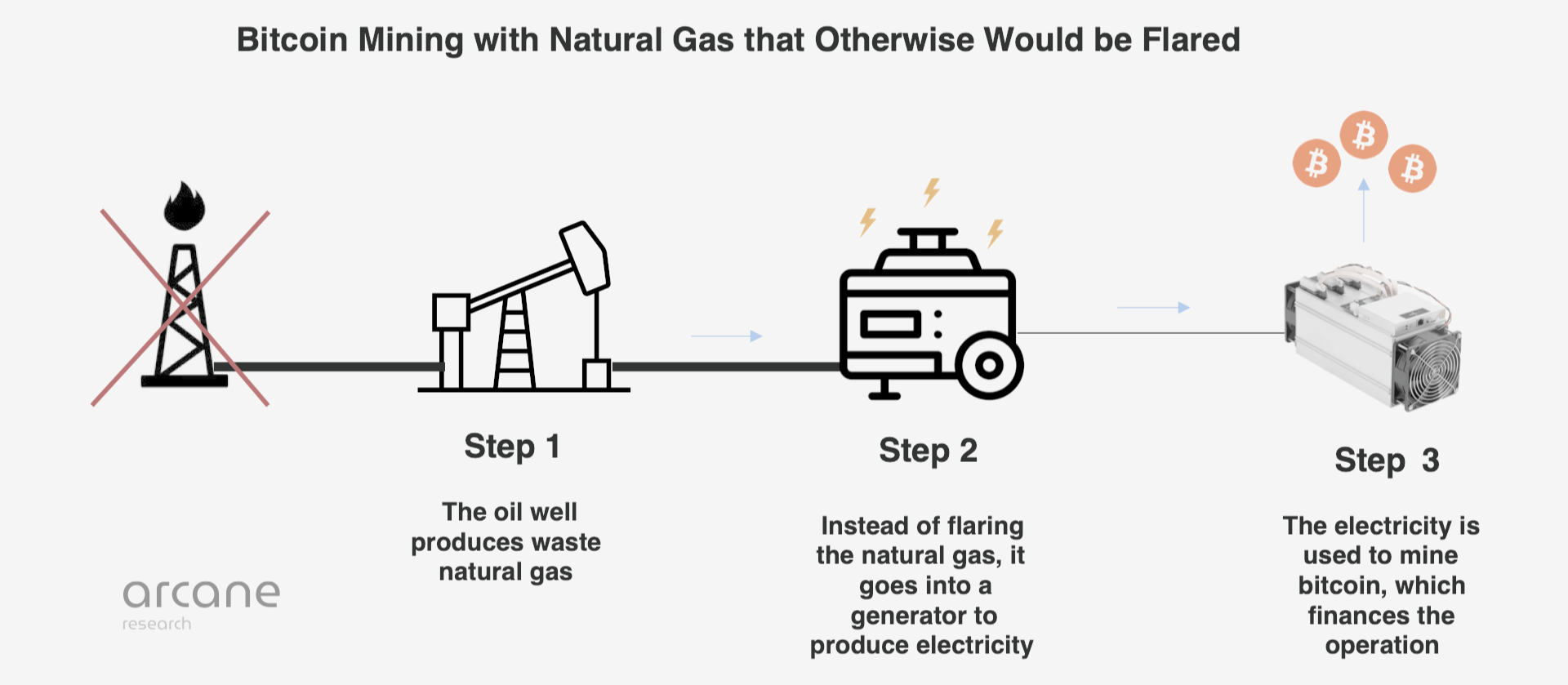
Step one: an oil well releases natural gas that would usually just be burned off.
Step two: instead of flaring it, we capture it and use it to generate electricity - right on site.
Step three: that electricity powers Bitcoin miners, turning waste into economic value.
No pipelines. No pollution. No waste.
This isn't just a concept - it's already happening.
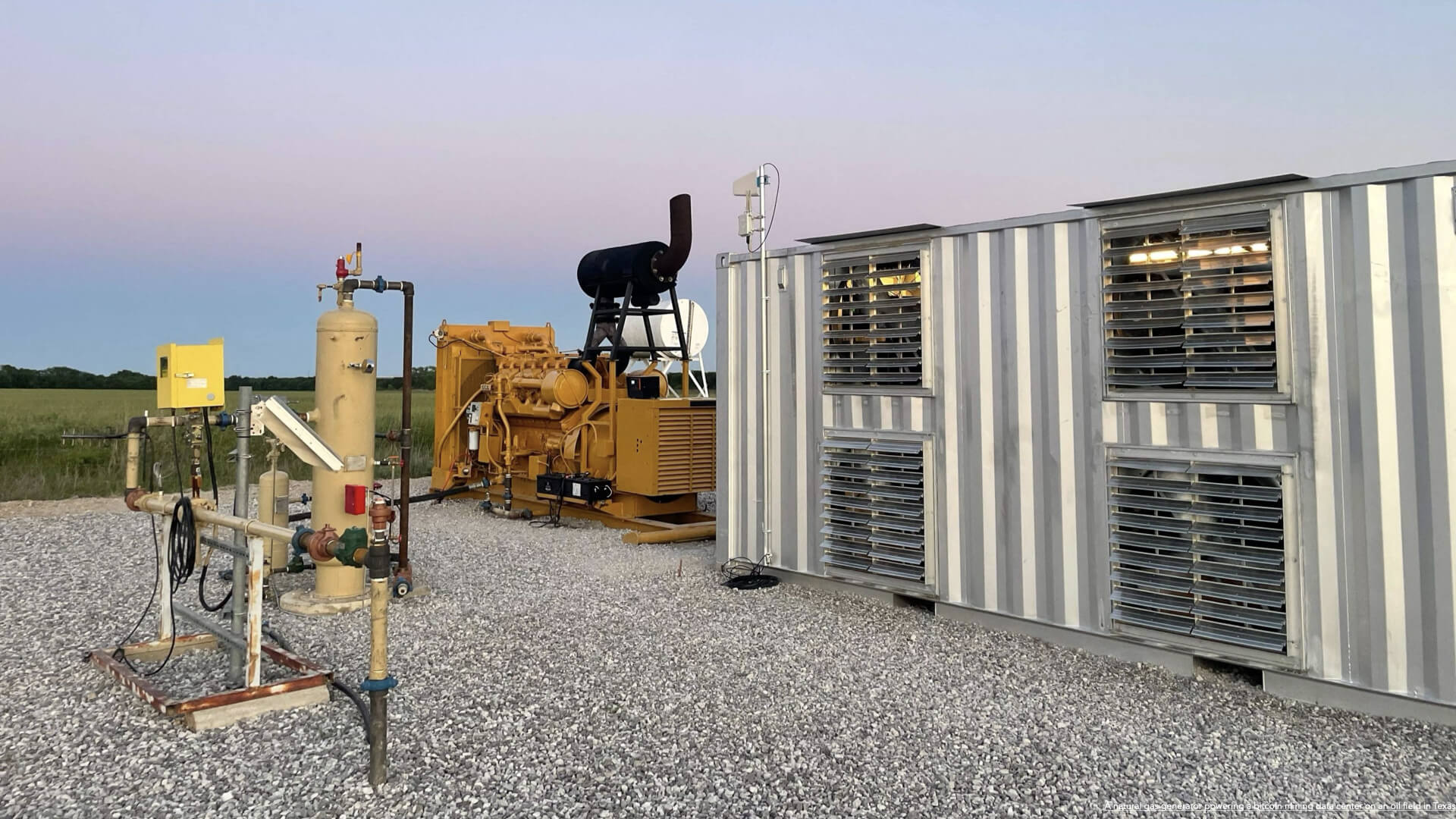
What you're looking at is a real setup: gas from a remote well flows into a generator, and that generator powers a shipping container full of Bitcoin miners.
It's off-grid, self-contained, and turns pollution into profit.
And importantly - burning the gas in a generator is far cleaner than flaring it or letting methane leak.
Methane is over 80 times worse for the climate than CO₂, so this is a step in the right direction.
Even Exxon got in on it.
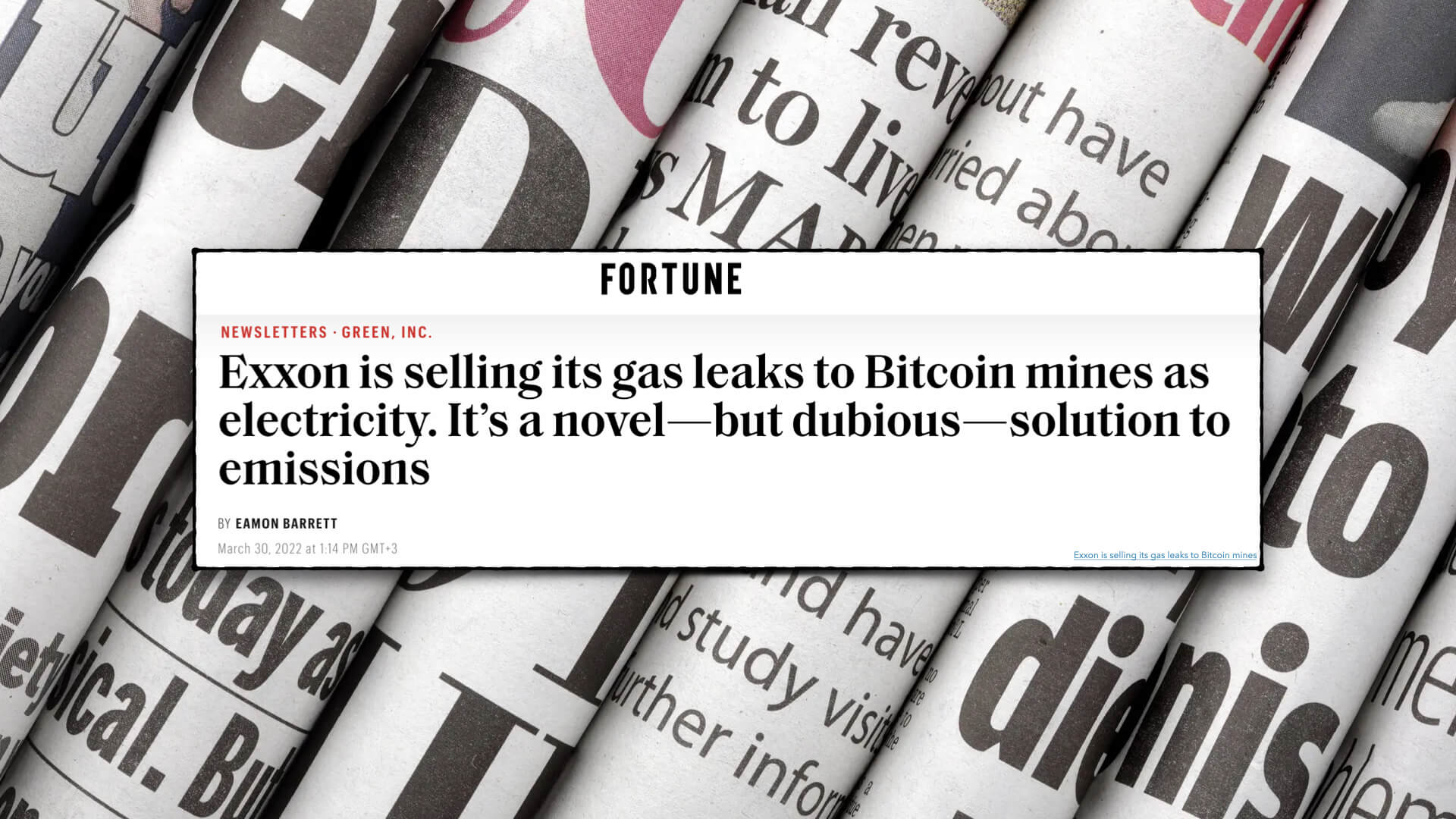
They found that selling their gas leaks to Bitcoin miners was more profitable - and arguably greener - than just burning it off
It's a novel idea... and yes, the irony is thick.
This is what a modern oil field could look like.
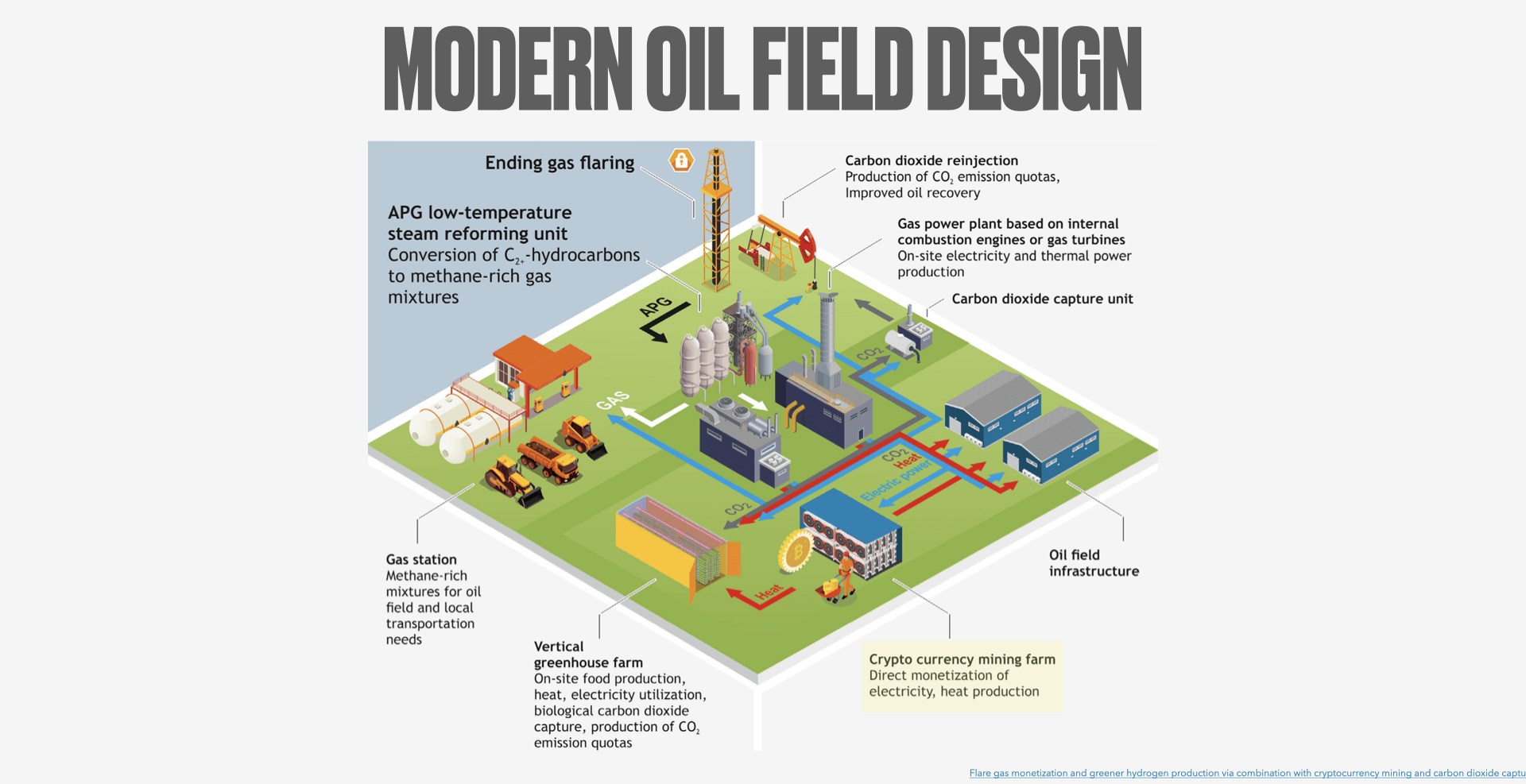
Traditionally, regulations often require flaring when there's no pipeline or infrastructure to safely transport excess gas.
It's considered safer than venting raw methane - but it's still wasteful and polluting.
In this model, that gas is captured and turned into electricity right on-site.
That energy powers more than just pumps - it can run vertical farms, charge electric vehicles, and yes, mine Bitcoin.
Even the carbon dioxide can be recycled or reinjected to reduce emissions or enhance oil recovery.
It's not a fantasy - it's an engineering shift. One that turns liabilities into assets, and emissions into opportunity.
And yet... this is the reality in many places.
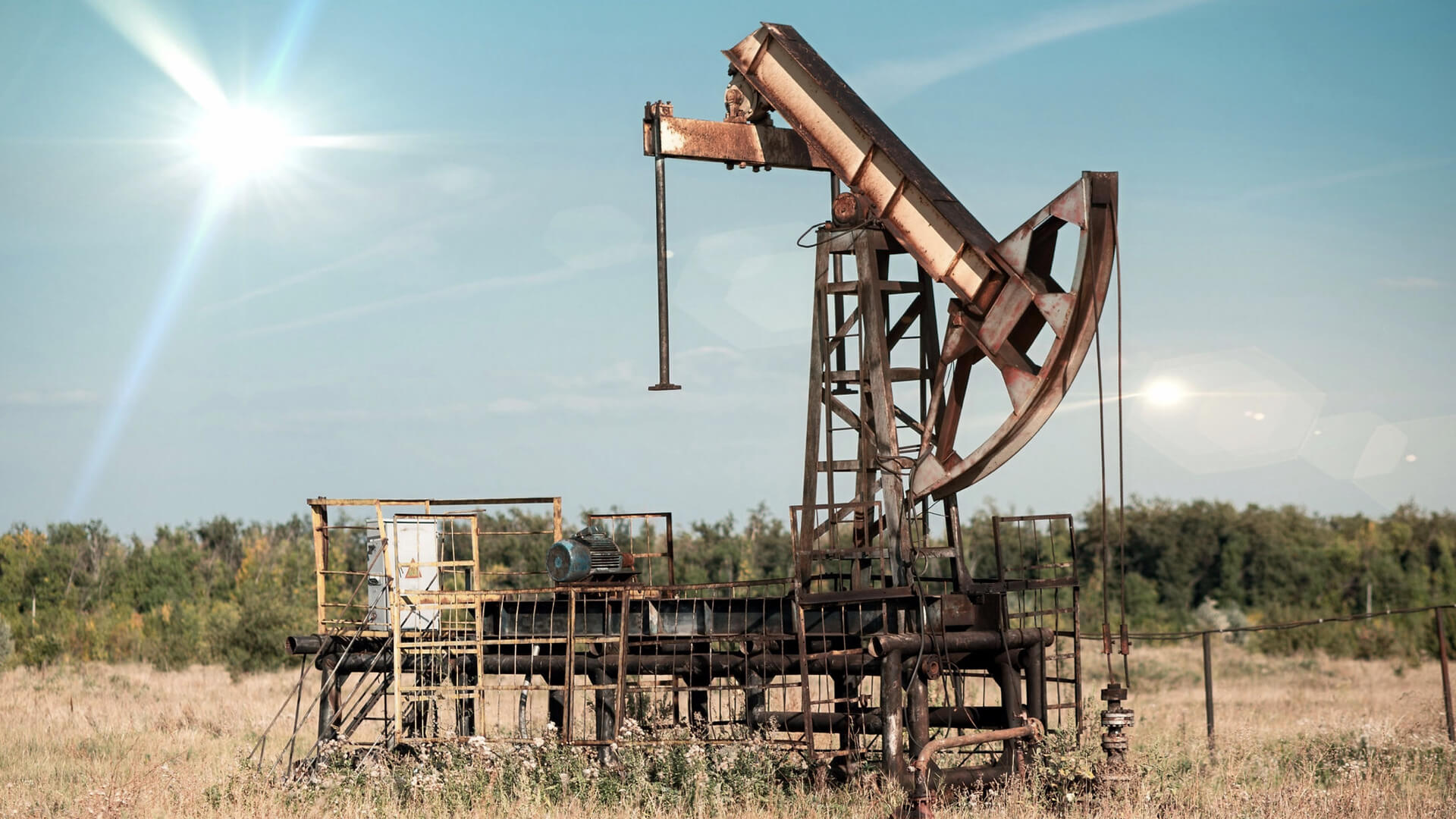
Once the oil or gas runs out - or regulation makes flaring unprofitable - the wells are capped, and the infrastructure is left to rot.
No cleanup. No second act. Just rust, decay, and methane quietly leaking into the atmosphere.
But it doesn't have to end this way.
There are more than 2 million abandoned oil and gas wells across the United States alone.
Many are unplugged. Many are leaking methane.
All of them are forgotten liabilities - scars left behind by a century of extraction.
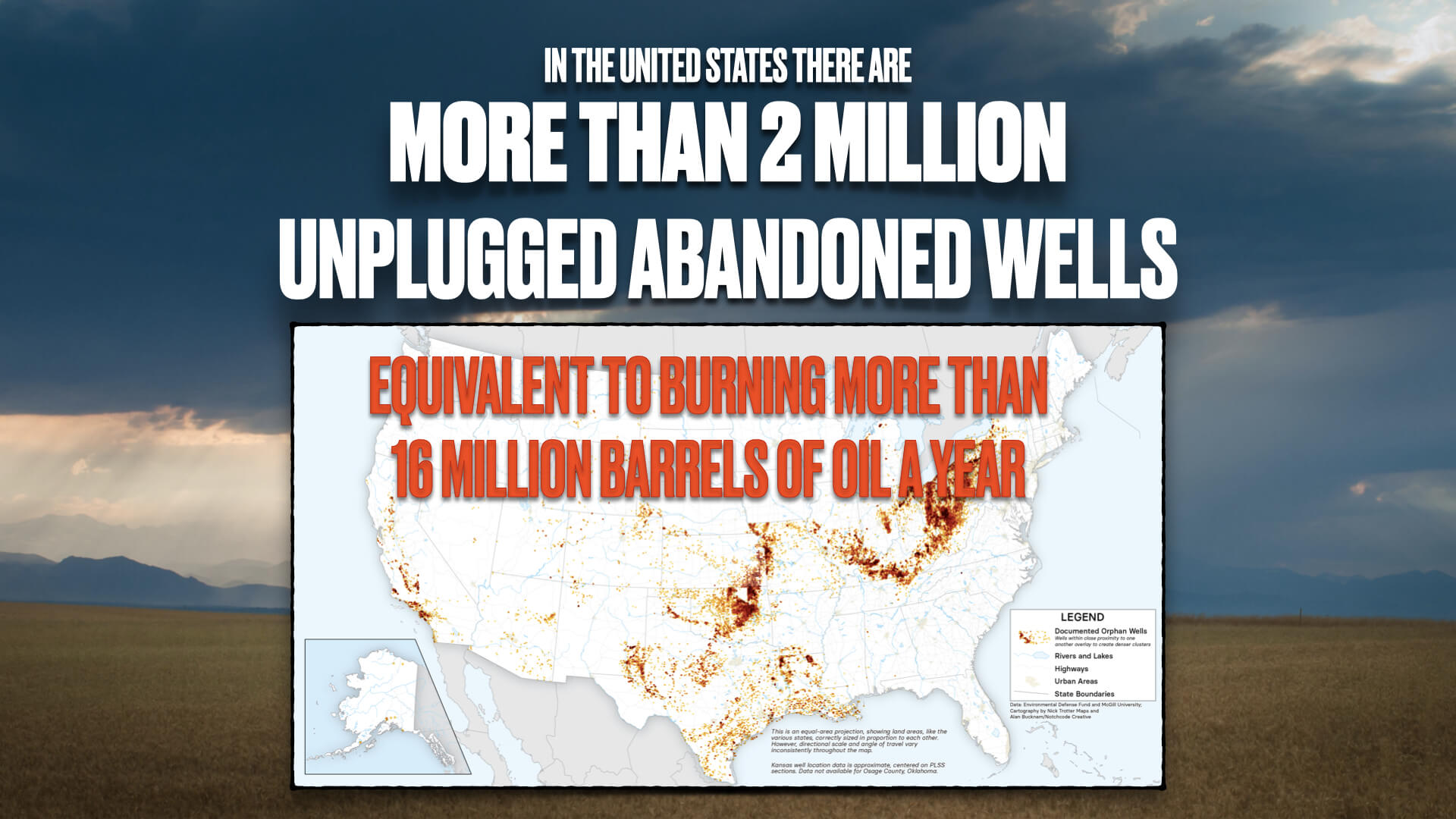
They're not just eyesores.
They're environmental time bombs - leaking methane silently into the air.
A gas over 80 times more potent than CO₂.
Every day, that's like fueling 4,000 cars and setting them on fire.
Enough energy to run 9 million air conditioners, or power 14% of all U.S. data centers - just... wasted.
No electricity. No oversight. No incentive to fix them.
Unless... we give them one.

We've covered a lot - history, energy, economics, and some very unexpected oil field engineering.
But let's bring it all back together.
What's really happening here?
What does Bitcoin's energy use actually mean - in context?
And why might it not be the problem we've been told... but part of the solution?