Hooked on Loops
We've been hooked on Loops.
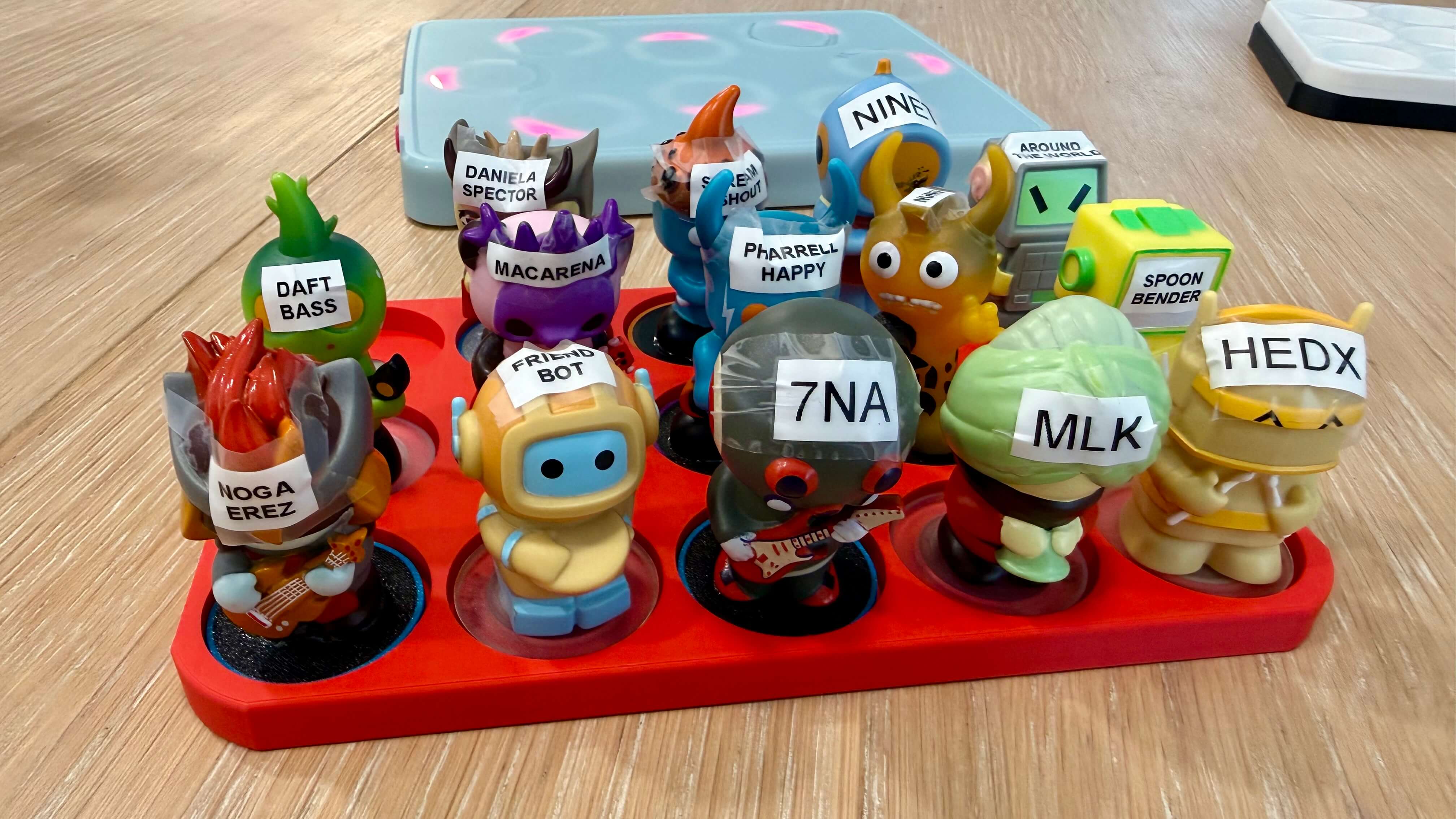
The Starter Set comes with an electronic base "stage" and a "band" - a collection of five small characters, each with its own sound, rhythm, and style. When you place them on the stage, they start to play together automatically. No matter what mix you try, it always sounds surprisingly good. It feels like magic, instantly musical and endlessly creative.
You don't need instructions or know how to compose music. The kids explore combinations, I join in, and sometimes I keep playing after they've moved on.
It's quietly educational. The kids are learning rhythm and pattern recognition without noticing. It's hands-on, beautifully designed, and makes music something you can easily play with.
The Product
Loops Lab is a "phygital" music toy built around collectible figurines. Each character sits on a magnetic base. Place it on the stage and it plays its loop. Tap it twice or three times on the stage and it has two more additional loops, three in total. Stack multiple characters and the sounds layer together. Pull one off and the track shifts. The system connects via Bluetooth to the free Loops Lab app on iOS or Android for playback, but the actual play experience is entirely hands-on and screen-free.
Current bands available:
- The Lax Funkers (Chili Funk, included in the Starter Set)
- Mountain Riders (Blues Fusion)
- Space Mariners (Galactic Rock)
- Fantasimo (Classical music quintet)
- Curly Lines (Neo-funk)
- 8 Bit Allstars (Game Music)
- Dragosonic (Volcano Pop)
Additional genres are in development including K-Pop and Country. In late 2024, Loops Lab also dropped a limited seasonal set: Christmas Duo featuring Santa and a rockin' reindeer.
The Starter Set is $139. Individual bands (5 figurines) are $59.99. I ended up buying all six additional bands - the full collection.
The Founder
Ayal Yona Segev isn't a typical toy entrepreneur. He's an architect trained at both Pratt Institute and the Bezalel Academy of Arts and Design in Jerusalem. He describes himself as a toy maker, cypherpunk, and graffiti artist.
Bitcoin people will recognize the name. Yona founded the Bitcoin Embassy in Tel Aviv, the first Bitcoin Embassy in the world, where he organized conventions, hackathons, and helped bootstrap early crypto startups. It also became the home of Israeli Bitcoin Association, a non-profit whose goal is to cultivate the community and work with the authorities and regulators.
The path from Bitcoin ambassador to toy maker runs through toi.lab, a Tel Aviv-based prototyping studio and shop focused on smart, connected, screen-free toys. Yona founded toi.lab as a facility where toy creators could develop prototypes requiring advanced technology. Loops Lab grew directly out of that work.
Toi.lab is a facility that enables toy creators to develop prototypes and toys that require advanced technology. As the founder of toi.lab, I helped numerous companies develop a wide range of toys. Loops Lab is a part of that vision. Another aspect of toi.lab is that we aim to create technology-driven toys, but without screens.
They have recently announced the opening of a New York City branch in the Village.
The FAO Schwarz Launch Party
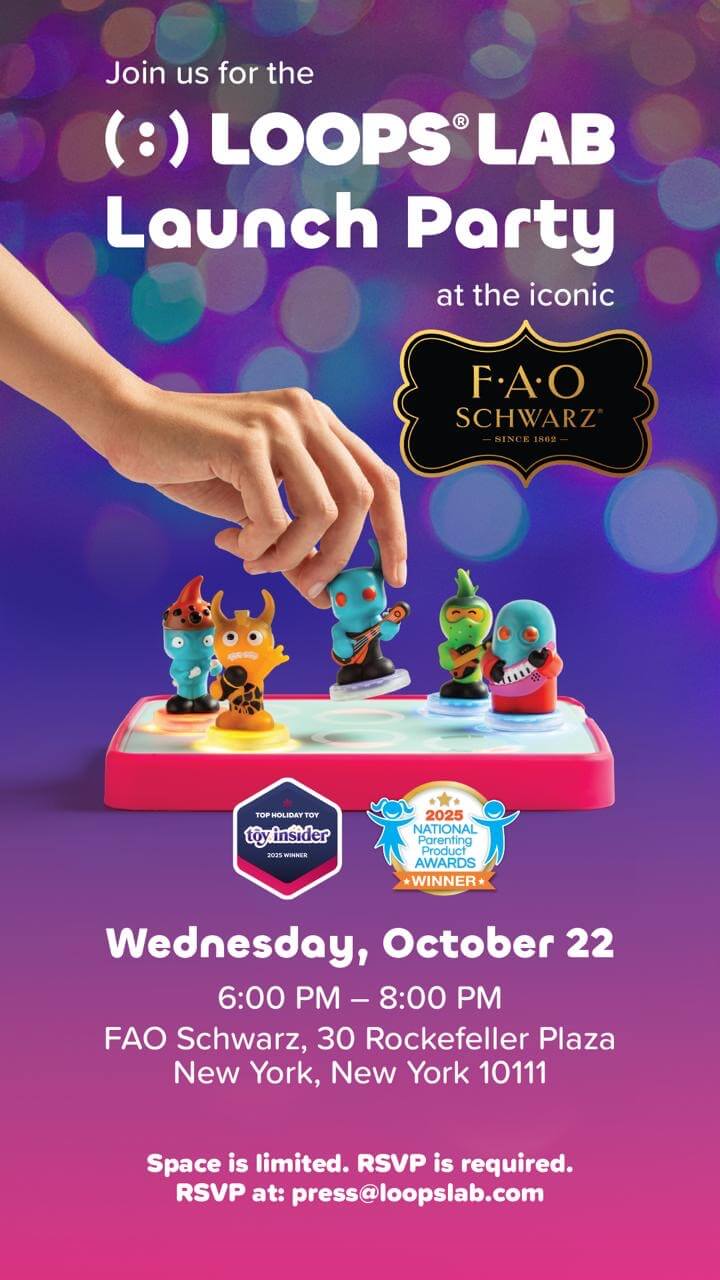
In October 2025, Loops Lab launched at FAO Schwarz - the Tom Hanks piano store - at 30 Rock. Getting shelf space there is serious validation for any toy brand.
Going Deeper: The Figurines Tray
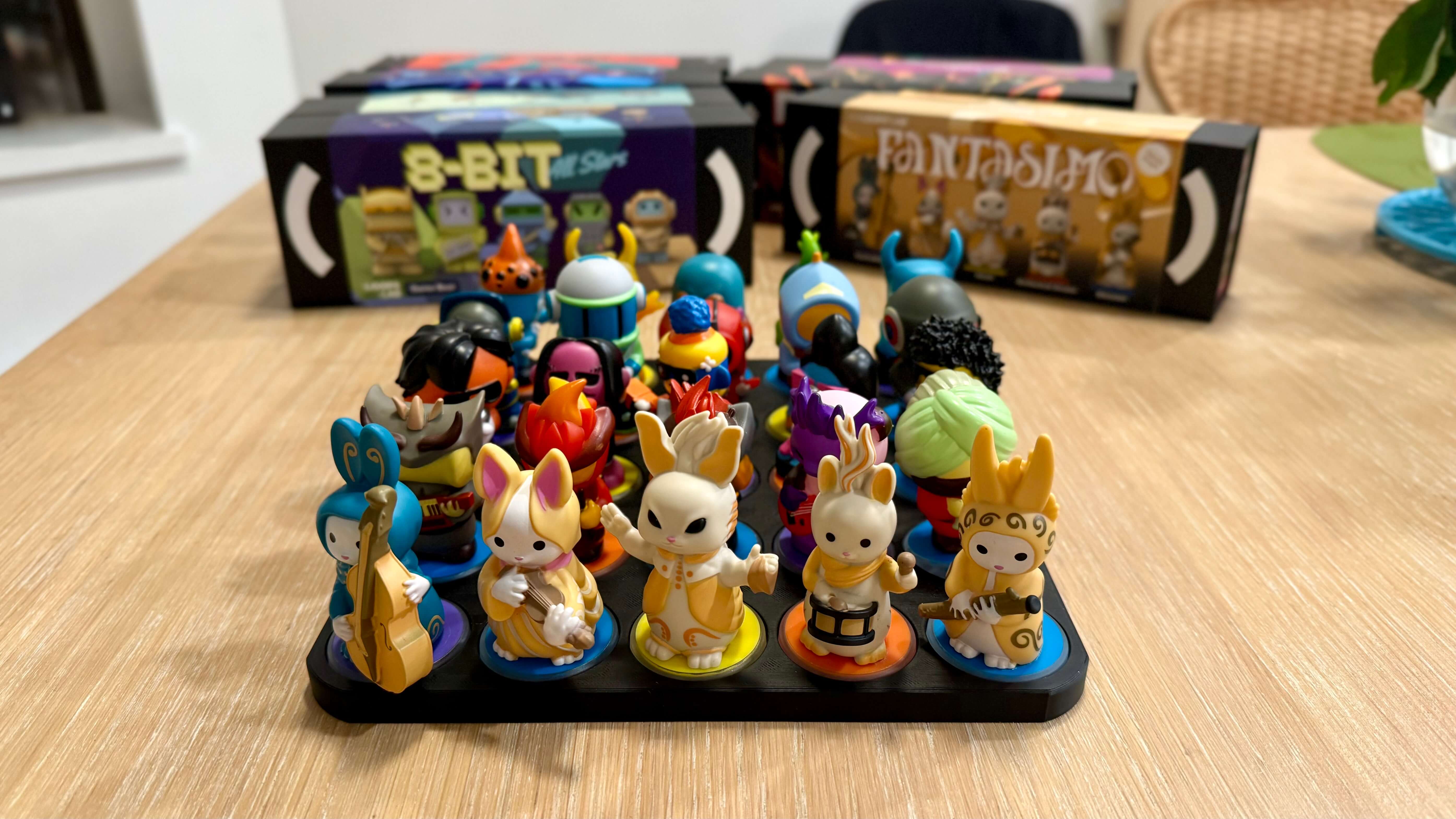
As our figurine collection grew, keeping the bands organized while playing became a challenge. With multiple bands in front of you, it's easy to mix characters up and lose track of which loop belongs where.
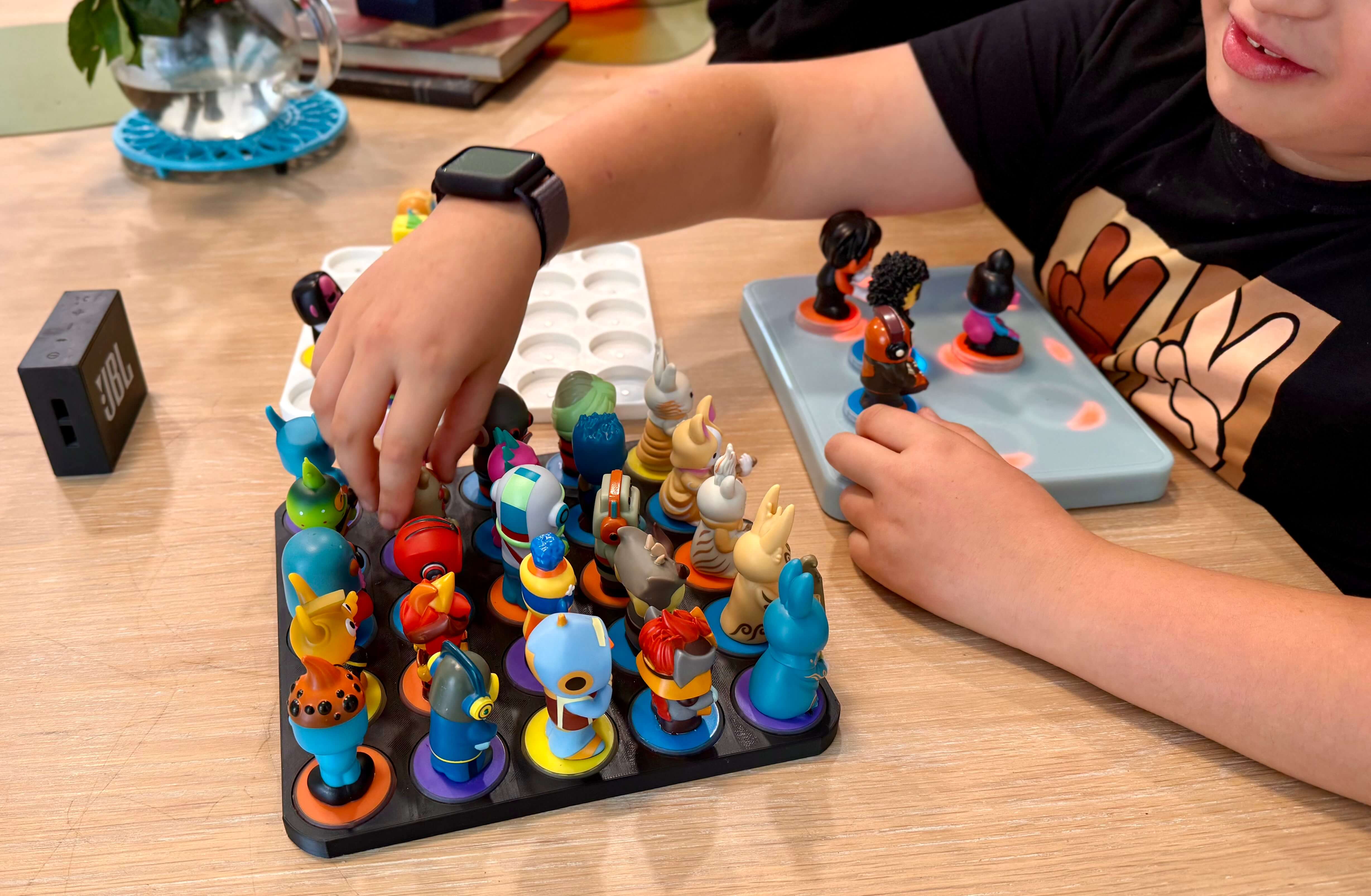
I designed a simple tray in two configurations: a 5x5 grid and a 5x3 grid. Both have embedded magnets that hold the figurines in place. It was quite fun to insert the magnets into the slots when the print was ready, orienting them correctly relative to the polarity of the Loops magnet. The easiest method: let the magnet attach naturally to the figurine, then mark the bottom with a marker before pressing it into the tray.
The model is available for free on MakerWorld.
Going Even Deeper: What's Inside the NFC Tags
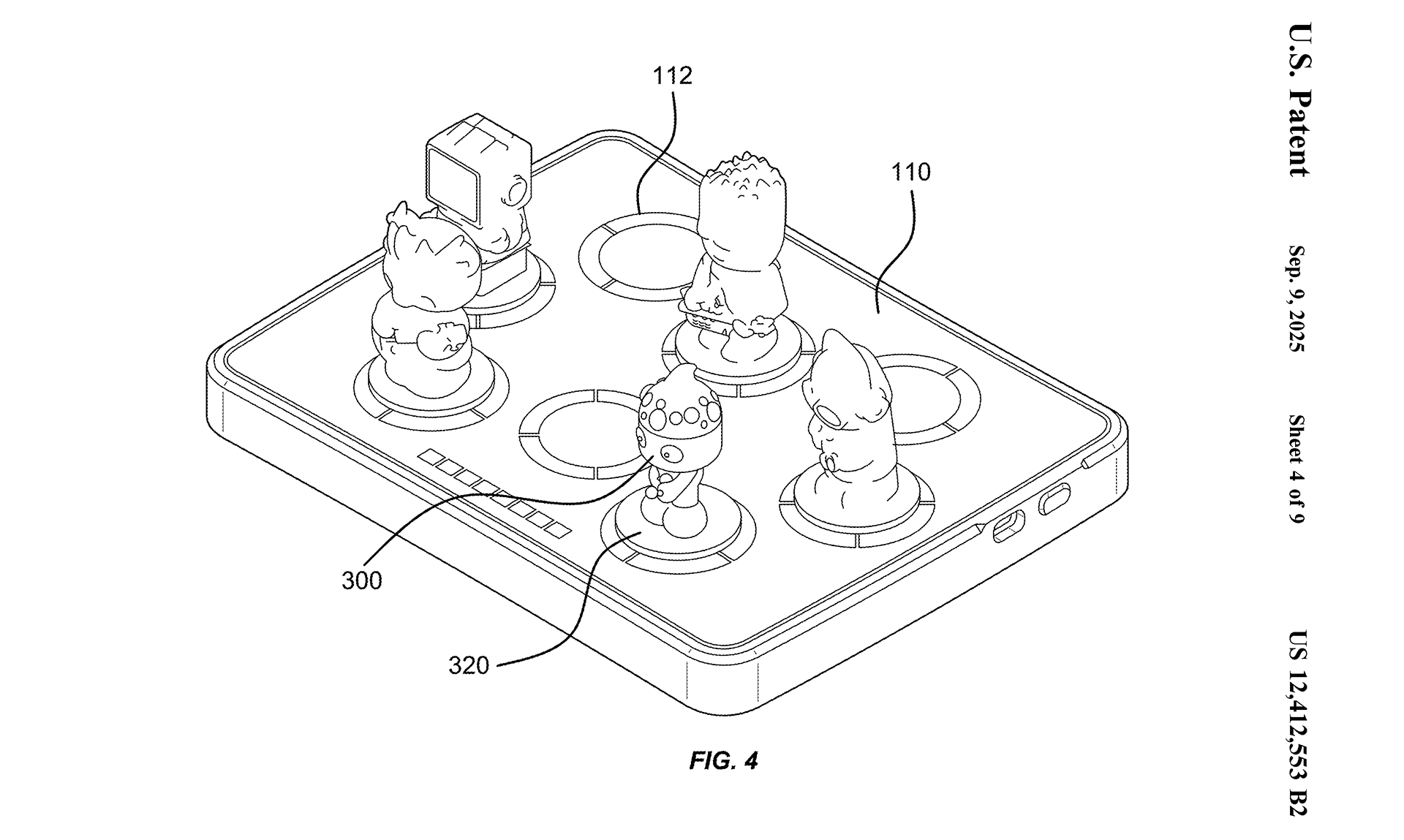
Each Loops figurine contains an NFC tag. When the stage detects a figurine, it reads that tag to identify which sound to trigger. Out of curiosity, I scanned mine with an NFC reader app.
Every tag encodes a URL pointing to lnk.loo9s.io (their shortlink domain - note the "9") with a structured payload in the ?s= parameter. The format breaks down as:
BAND.INSTRUMENT.<32-char hex><base64 payload>
For example, the Lax Funkers guitar figurine, Pittoo Zeelia, encodes:
https://lnk.loo9s.io/app/v1/?s=LXF.GT.<hex><base64>
The band codes are LXF, MTR, SPM, FNT, CRL, 8BT, DRG - all straightforward abbreviations.
The instrument codes are two-letter shortcuts: GT (guitar), BS (bass), DM (drums), KB (keyboard), VC (vocals), SY (synth), SX (saxophone), VL (violin), EG (electric guitar), PN (piano), and a few others I haven't fully mapped.
The 32-character hex string looks like an MD5 hash. The base64 after it is likely a signed payload that the app validates - probably what prevents just printing any URL onto a sticker and having it work. Each one also has an NFC chip UID, hardware-unique per physical tag. Whether the hex is derived from that UID or is static per instrument role, I'm not sure yet. That would require comparing two figurines of the same type.
I 3D-printed some custom figurines and applied custom NFC stickers to make them work on the stage. More on that in a future post - pending a conversation with Yona about what's shareable.