
Hooked on Loops

We've been hooked on Loops.

The Starter Set comes with an electronic base "stage" and a "band" - a collection of five small characters, each with its own sound, rhythm, and style. When you place them on the stage, they start to play together automatically. No matter what mix you try, it always sounds surprisingly good. It feels like magic, instantly musical and endlessly creative.

You don't need instructions or know how to compose music. The kids explore combinations, I join in, and sometimes I keep playing after they've moved on.

It's quietly educational. The kids are learning rhythm and pattern recognition without noticing. It's hands-on, beautifully designed, and makes music something you can easily play with.

The Product
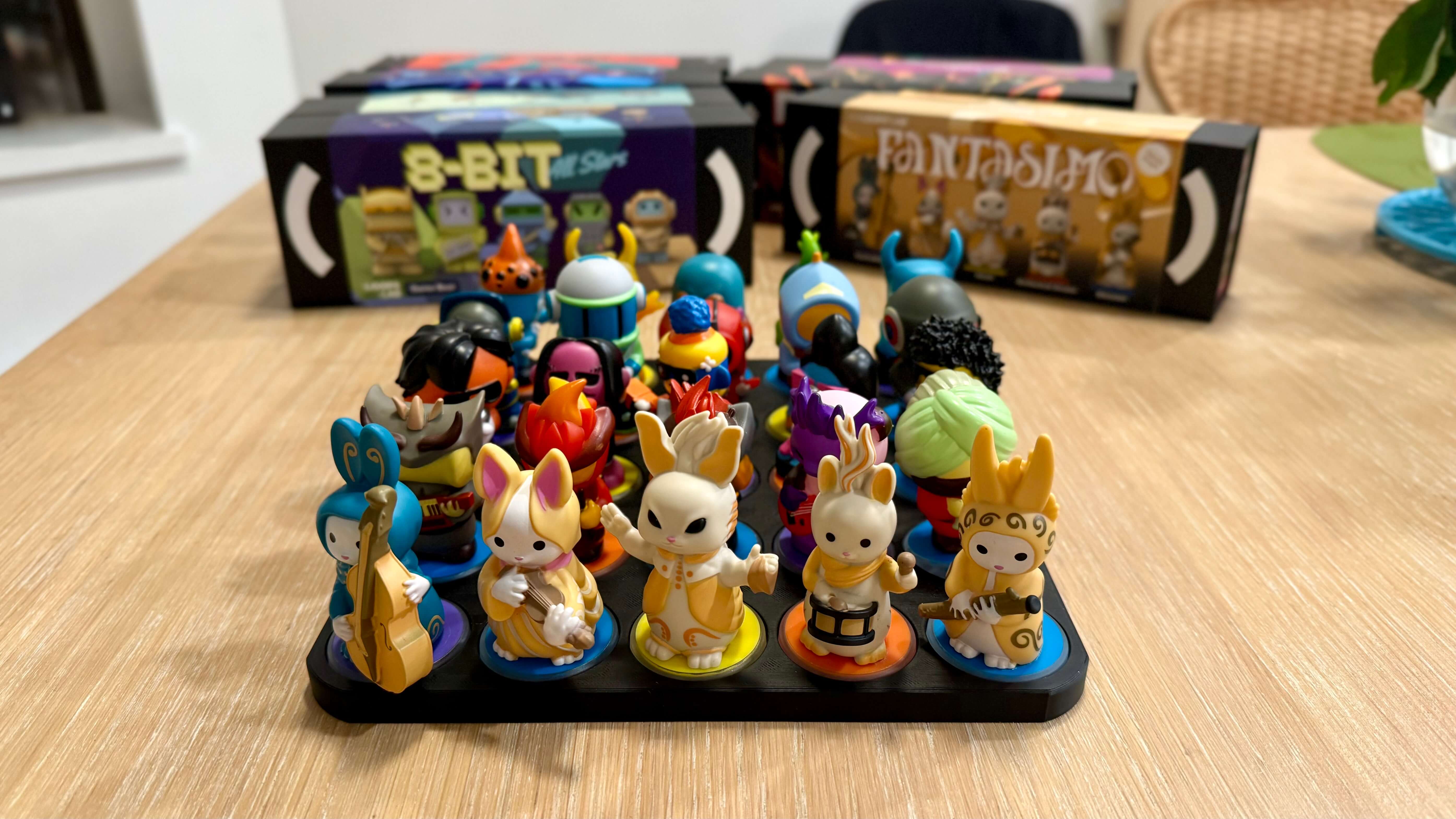
Loops Lab is a "phygital" music toy built around collectible figurines. Each character sits on a magnetic base. Place it on the stage and it plays its loop. Tap it twice or three times on the stage and it has two more additional loops, three in total. Stack multiple characters and the sounds layer together. Pull one off and the track shifts. The system connects via Bluetooth to the free Loops Lab app on iOS or Android for playback, but the actual play experience is entirely hands-on and screen-free.

Current bands available:

Read more →
Spin Doctor

Hard Drive Speakers

Update: See them play the legendary Second Reality demo by Future Crew.

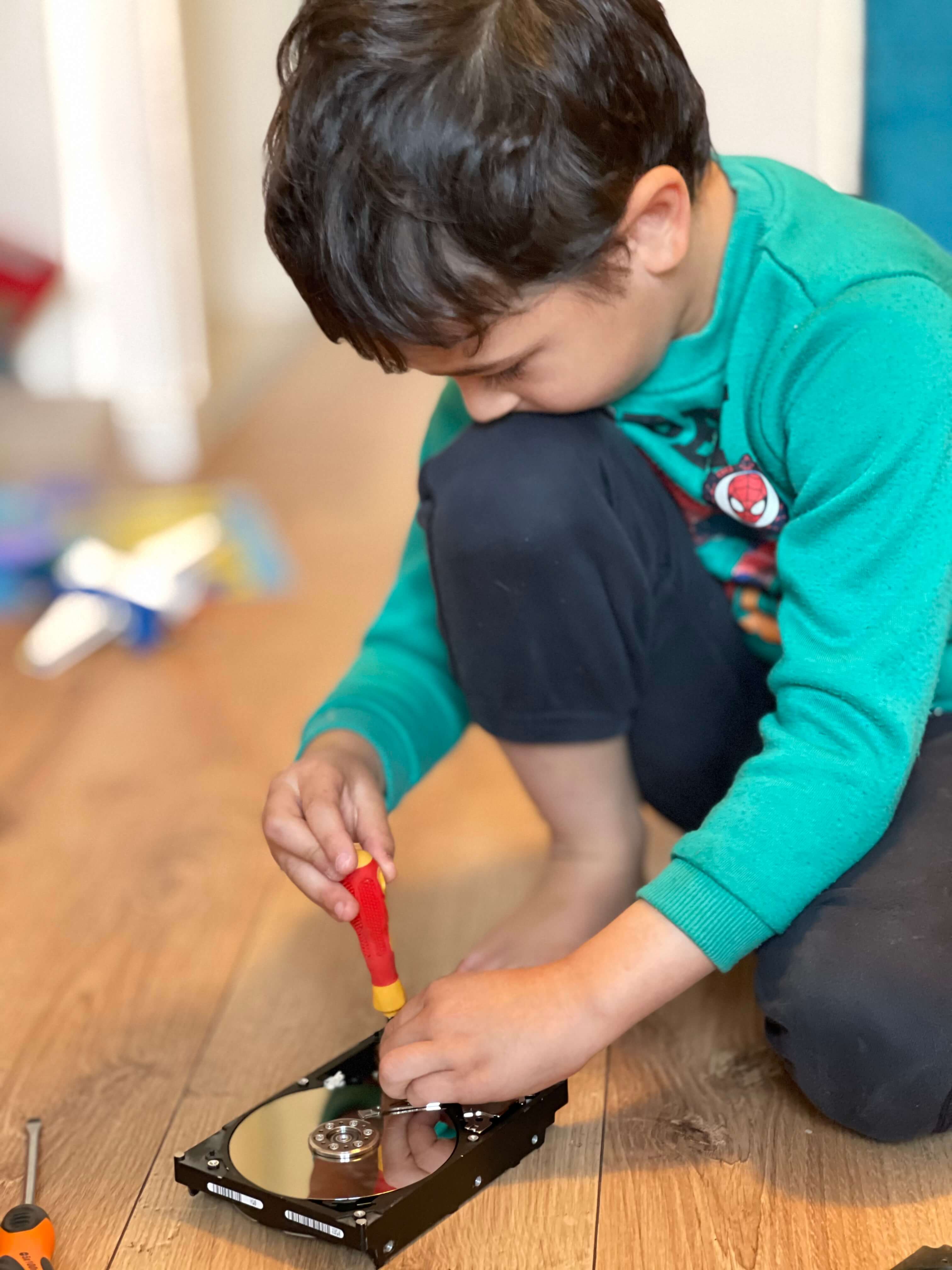
The kids and I disassembled roughly 40 hard drives.

That's where this started. A pile of old drives, a box of Torx screwdrivers, and kids who were absolutely willing to take things apart.

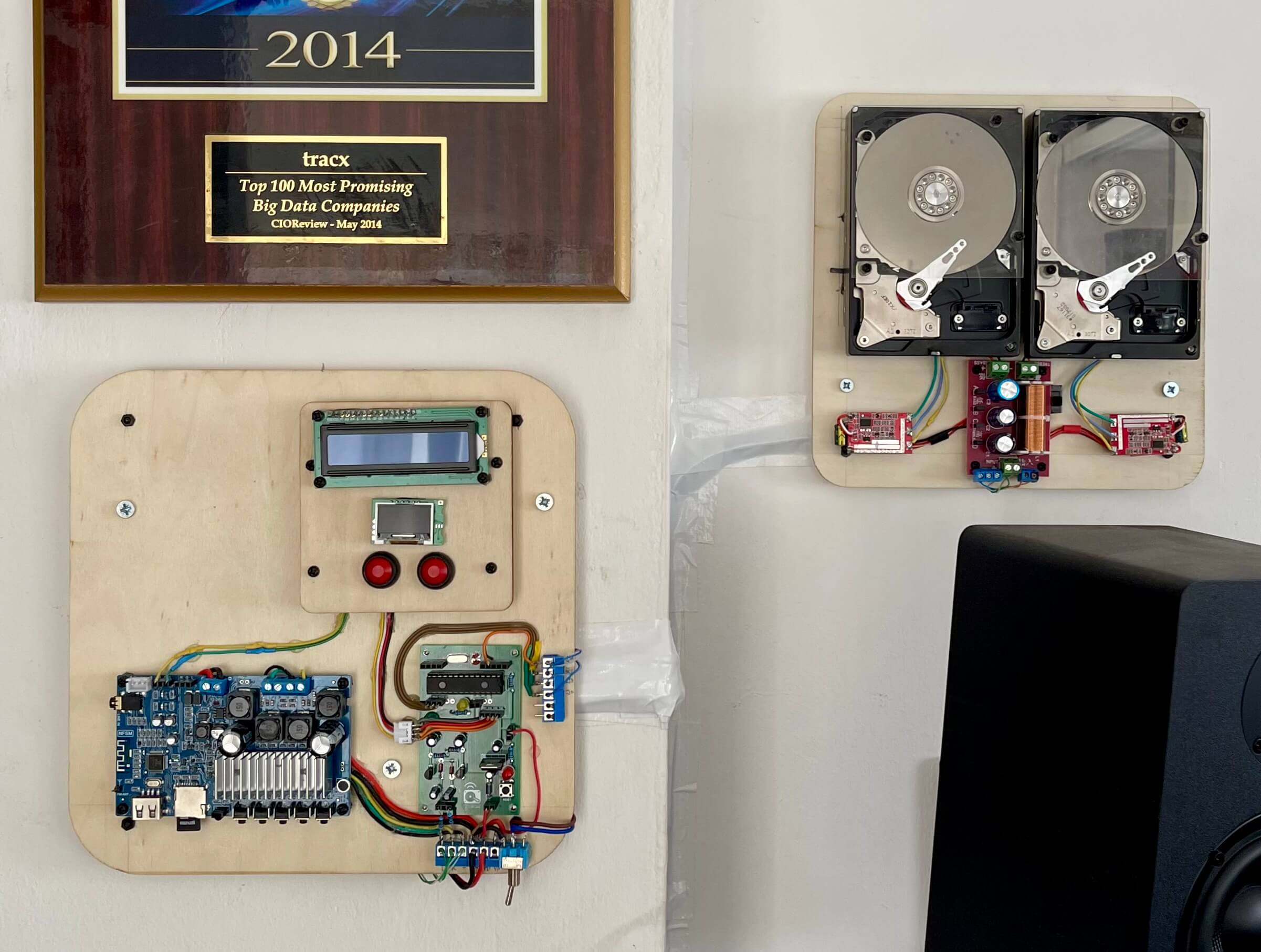
The goal: build speakers from the drives. Actual stereo speakers, using the read/write head coil as a voice coil. Wire it to an amplifier. The actuator arm vibrates. It makes sound.

It works better than it should.


The idea wasn't original. People have been wiring drive coils to amps for years. A quick search turns up dozens of experiments, ranging from quick tests to proper tutorials to someone asking the obvious question out loud. One person even went further and attached a speaker cone to the actuator arm to improve output.


Each speaker is a pair of drives on a panel. One handles bass, one handles treble. A passive crossover splits the signal. The drives are open, covers removed, platters exposed. In the mockup iterations, the panels were wood.

Later, 3D printed enclosures with a cleaner fit and attempted acoustics.

The enclosures were too large to print in one piece, so I split them into sections, connected them with screws hidden below the covers, and filled the gaps with black hot melt glue.

Read more →

Riding the Lightning with RaspiBlitz

I designed a 3D printed chassis for a standalone RaspiBlitz appliance.

RaspiBlitz is a DIY Bitcoin full node running together with a Lightning node on a Raspberry Pi with a touchscreen display. It was created by developer Christian Rotzoll and is backed by Fulmo, a Berlin-based Bitcoin startup that runs Lightning Network hackathons worldwide.

Running your own Bitcoin node means you don't have to trust anyone else as your source of truth. If you accept Bitcoin payments through someone else's node, that data can be spoofed. "Not your node, not your rules", as the RaspiBlitz docs put it. It's the infrastructure layer of financial self-sovereignty.

The Lightning Network runs on top of the full node as a second layer for fast, low-fee payments. Still experimental, but plenty of people are running it anyway out of enthusiasm and a desire to push the network forward.

Named my node Barracuda, a play on the words Barak (ברק) and Lightning.

There were a few non-obvious gotchas. The initial Bitcoin blockchain sync takes days, not hours. A Lightning channel can only be opened after that sync completes. Finding good peers and covering the on-chain fees for opening channels was more involved than expected. To receive Lightning payments, you also need inbound liquidity, channel capacity on the remote side. You can buy funded channels or use a looping service to rebalance. In total, my node forwarded 335,497 sats, for a 21.6 sat fee.

Update, June 2023: For gaining some hands-on experience with Lightning, I established a few channels and sent transactions between my node and a wallet hosted on BlueWallet's LNDHub. They apparently shut down the service, and users were expected to move funds out by end of May. I didn't get the memo. I filled out a form, but have little hope. Yet another reminder - not your keys, not your coins.

Components

Read more →

Elementary School 3D Printing Presentation

A companion video for a 3D Printing lecture I gave at my kids' elementary school.

0:00:00 - Printing Baby Yoda (while setting up; special guest appearance: Mongo)
0:00:47 - How a 3D printer works
0:01:17 - Printing toys at home (computer modeling, printing, assembly)
0:02:54 - 3D printing food: pizza
0:03:23 - 3D printing food: vegan steak
0:03:49 - 3D printing food: maybe in the future we could print whatever food we want?
0:04:27 - 3D printing food: chocolate and candy 🍫
0:05:30 - Giant printers: printing a boat 🚤
0:05:51 - Giant printers: printing a house 🏡
0:07:05 - 3D printing on another planet: NASA's competition to 3D print a base on Mars
0:08:02 - 3D printing in medicine: replacement parts for the body
0:08:37 - 3D printing in medicine: prosthetics
0:09:22 - Nano-printing: printing a castle on the tip of a pencil ✏️🔬
0:10:51 - A few examples of objects we designed and printed at home

Read more →