CryptoKitties Family Graph Visualizer

Writing CryptoKitties: What Happened Next made me want to see the connections between my kittens as a graph.

I thought it would be cool to generate an image of the connections between my kittens, but ended up vibe coding and releasing an open-source interactive family tree visualizer for CryptoKitties which can be used to explore breeding relationships, discover mewtation gems, and visualize a kitty lineage.

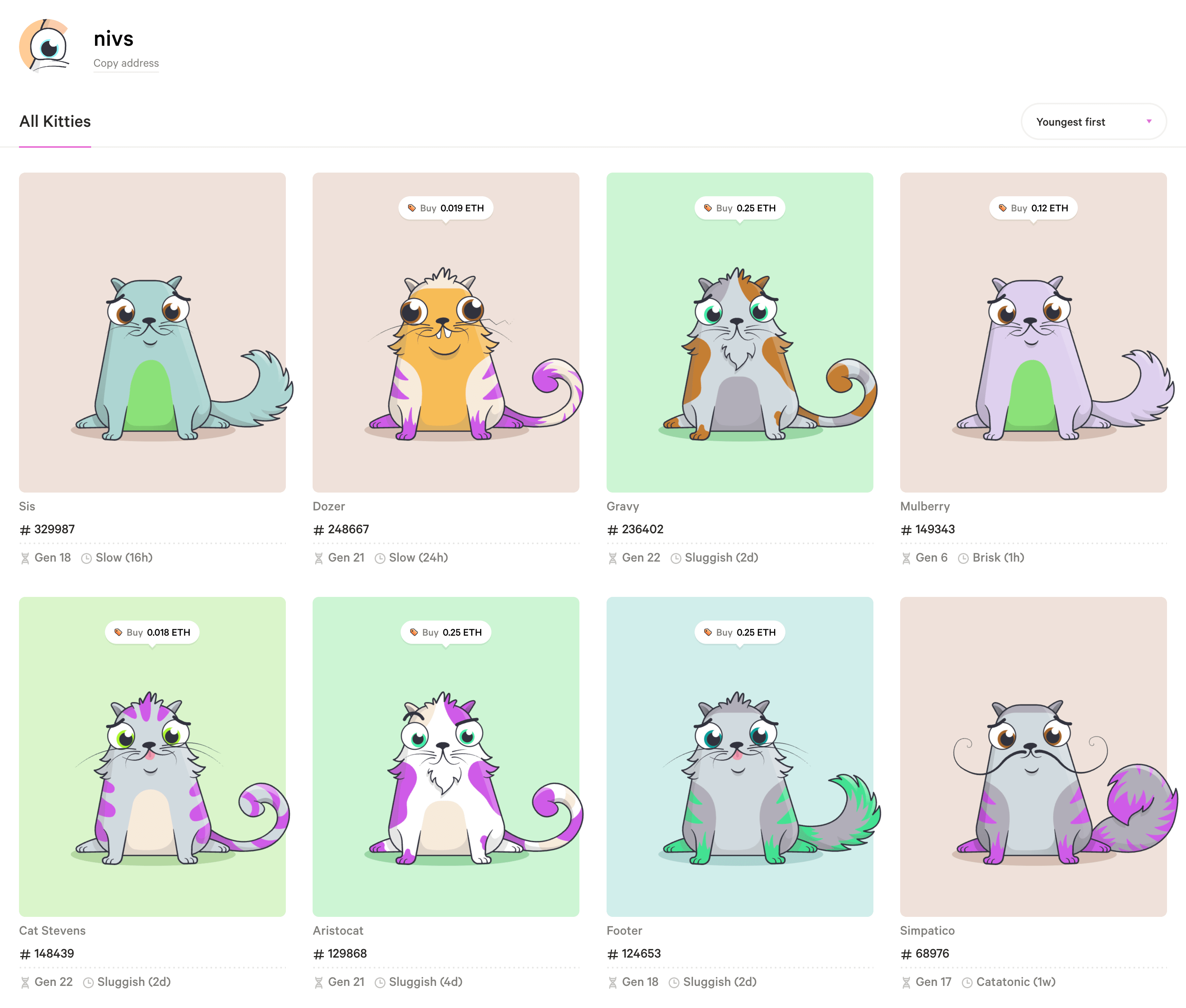
Here's my kitty family:

Click any cat to see details. Double-click to expand its family tree. Pink edges are matron (mother), blue edges are sire (father).

What the graph shows

Zoom out on any large dataset and patterns emerge.

Dragon sold for Ξ600 in September 2018. Load its ancestry alongside my cats and there's exactly one shared ancestor: kitty #1461. Born November 23, 2017, five days before launch. Part of the seed population. Nobody special at the time. Nine generations down one branch, Dragon. Through another, Mulberry, my mauve munchkin.

Read more →
CryptoKitties: What Happened Next

Moving the blog to a new platform meant going through everything I'd written. I hadn't thought about CryptoKitties since early 2018. Reading those posts, I got curious - what actually happened?

Axiom Zen spun off CryptoKitties into Dapper Labs in February 2018. First round: $12M from a16z and USV.

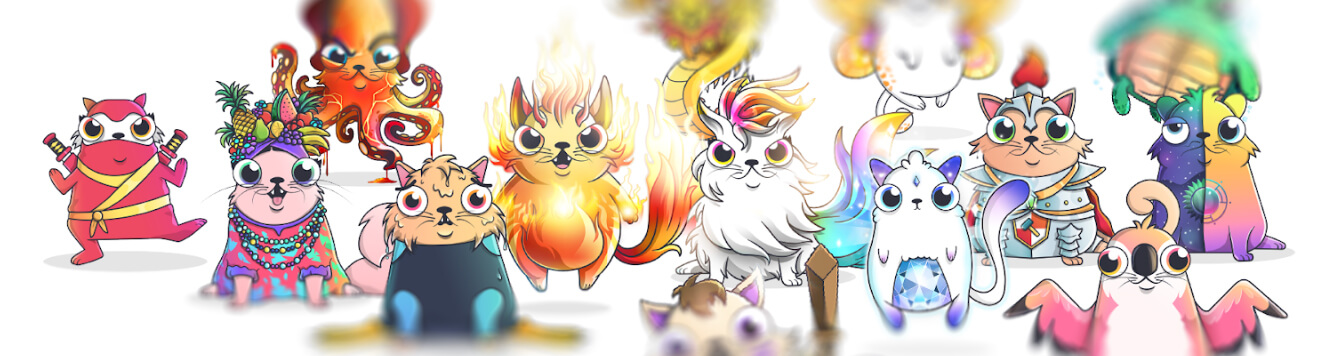
But CryptoKitties didn't just clog Ethereum. It invented the standard. Dieter Shirley, Dapper Labs CTO, authored ERC-721, the token standard that makes each NFT unique and indivisible. Every Bored Ape, every CryptoPunk, every piece of NFT art traces its lineage back to cartoon cats.

For three years, NFTs stayed niche. Dapper Labs built the Flow blockchain to solve the scaling problems CryptoKitties exposed. They launched NBA Top Shot in 2020. Video highlights as NFTs.

Then 2021 happened.

March 11: Christie's sold Beeple's "Everydays: The First 5000 Days" for $69.3 million. A JPG. At a 255-year-old auction house. Bidding started at $100. The final minutes saw jumps of $10 million, then $15 million. Beeple became the third most expensive living artist, behind only Jeff Koons and David Hockney.

Read more →

CryptoKitties: The Genome Project

Someone reverse-engineered the breeding algorithm.

The GeneScience contract was the only part Axiom Zen kept closed. Everything else was open-source: KittyCore, the auction house, the CEO controls. All on Etherscan.

But the breeding logic? Bytecode only. No source code, no comments. Just machine instructions.

The main contract even taunts you:

// Call the sooper-sekret gene mixing operation.
uint256 childGenes = geneScience.mixGenes(matron.genes, sire.genes, matron.cooldownEndBlock - 1);

Makes sense. If you know the breeding math, you can game the market.

Didn't last. The community cracked it in five days.


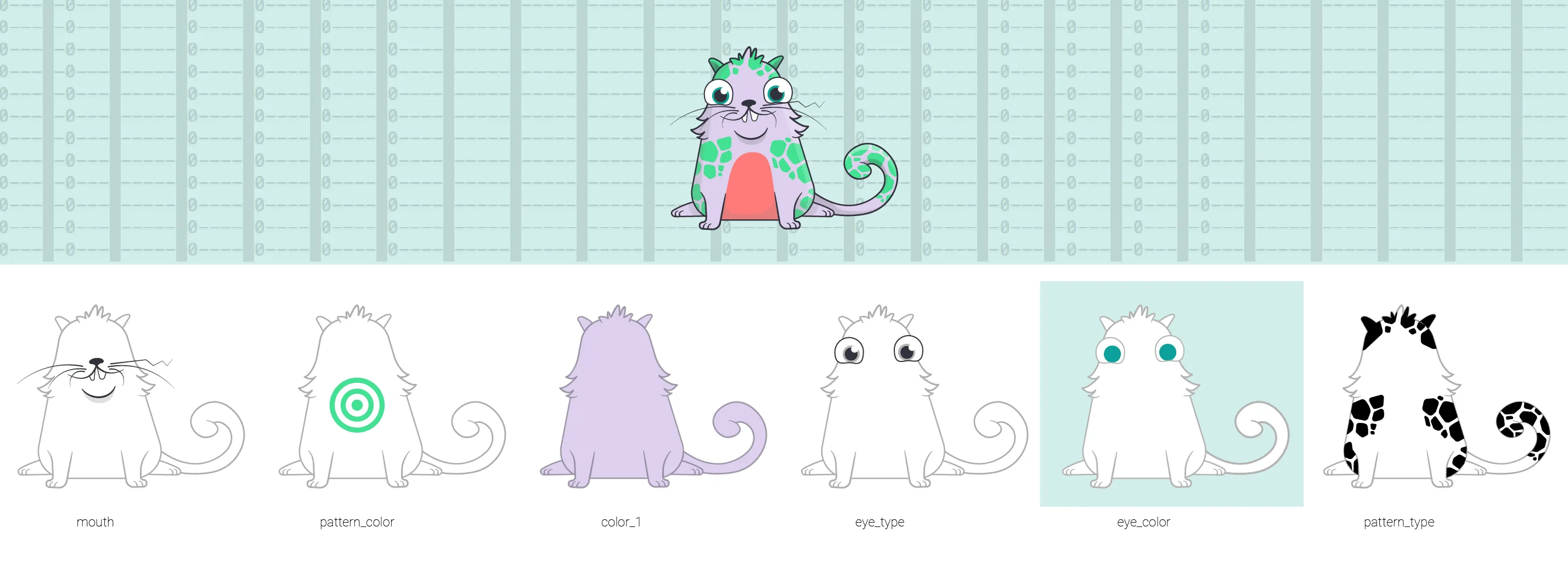
December 18, 2017. Kai Turner figured out the genome structure. Each kitty has a 256-bit integer. Break it into 5-bit chunks and you get 48 genes. Four genes per trait. Primary (visible) plus three hidden recessives.

Read more →

CryptoKitties Breeding Season

CryptoKitties hands-on: Three weeks in. Nine cats.

Update: I built a CryptoKitties graph visualizer.
See my family of kitties here, or in a standalone viewer.

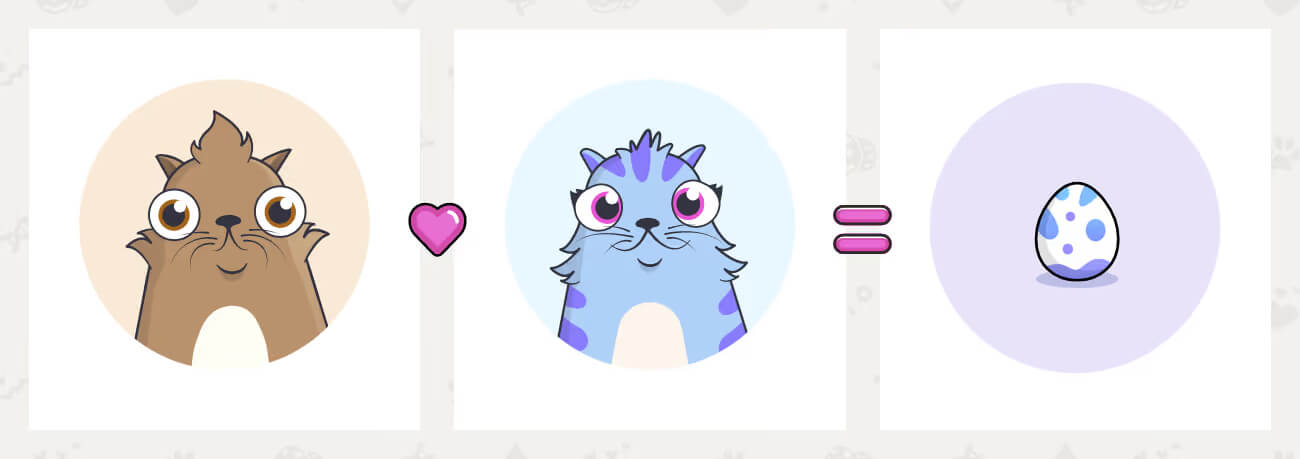
The breeding mechanics are weirder than I expected. CryptoKitties don't have fixed genders. In each breeding, one cat plays the matron (mother - carries the kitten, goes on cooldown) and one plays the sire (father - breeds immediately, no cooldown). The matron's owner gets the offspring, after winning the bid for a Siring auction.

Any cat can play either role.

Read more →

CryptoKitties

Digital Cats on the Blockchain.

Mongo is named after MongoDB.

We were paying customers at Tracx. Pretty rare for a startup to pay for an open-source database. We decided to pay after a catastrophic power outage took down our cluster. MongoDB gave us amazing and around-the-clock support for free that one time. Next time, we were on our own. Unless we paid.

We paid.

Footer has been with us longer. He definitely has 9 lives, gravity proved it.

Now I have digital versions of both.


CryptoKitties launched a week ago. Already clogging the Ethereum network so badly it accounts for 11% of all transactions, up from 4% two days ago.

The premise: buy cats, breed them, trade them. Each one lives on the blockchain as a unique token. Each one has a 256-bit genome - 48 genes across 12 traits. The breeding logic runs entirely on-chain. No central server decides what your kitten looks like. The smart contract does.

Read more →