Three Shadows, One Cube
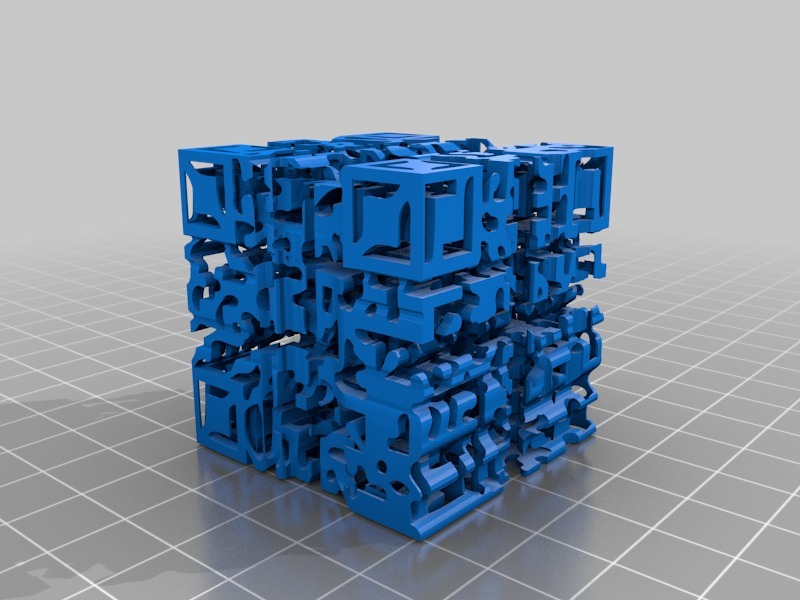
I found it on Thingiverse. A 3D-printable cube whose shadow, depending on the direction of the light, casts three different QR codes. Each one links to a Wikipedia article. Gödel. Escher. Bach.
The designer's note: "Note that QR codes cannot be read in mirror image, so only 3 of the 6 possible cube orientations cast a readable shadow".
I stared at this for a while.
Hofstadter wrote, in the Introduction to GEB, that he eventually realized Gödel, Escher, and Bach "were only shadows cast in different directions by some central solid essence". He tried to reconstruct that solid. The book was the result.
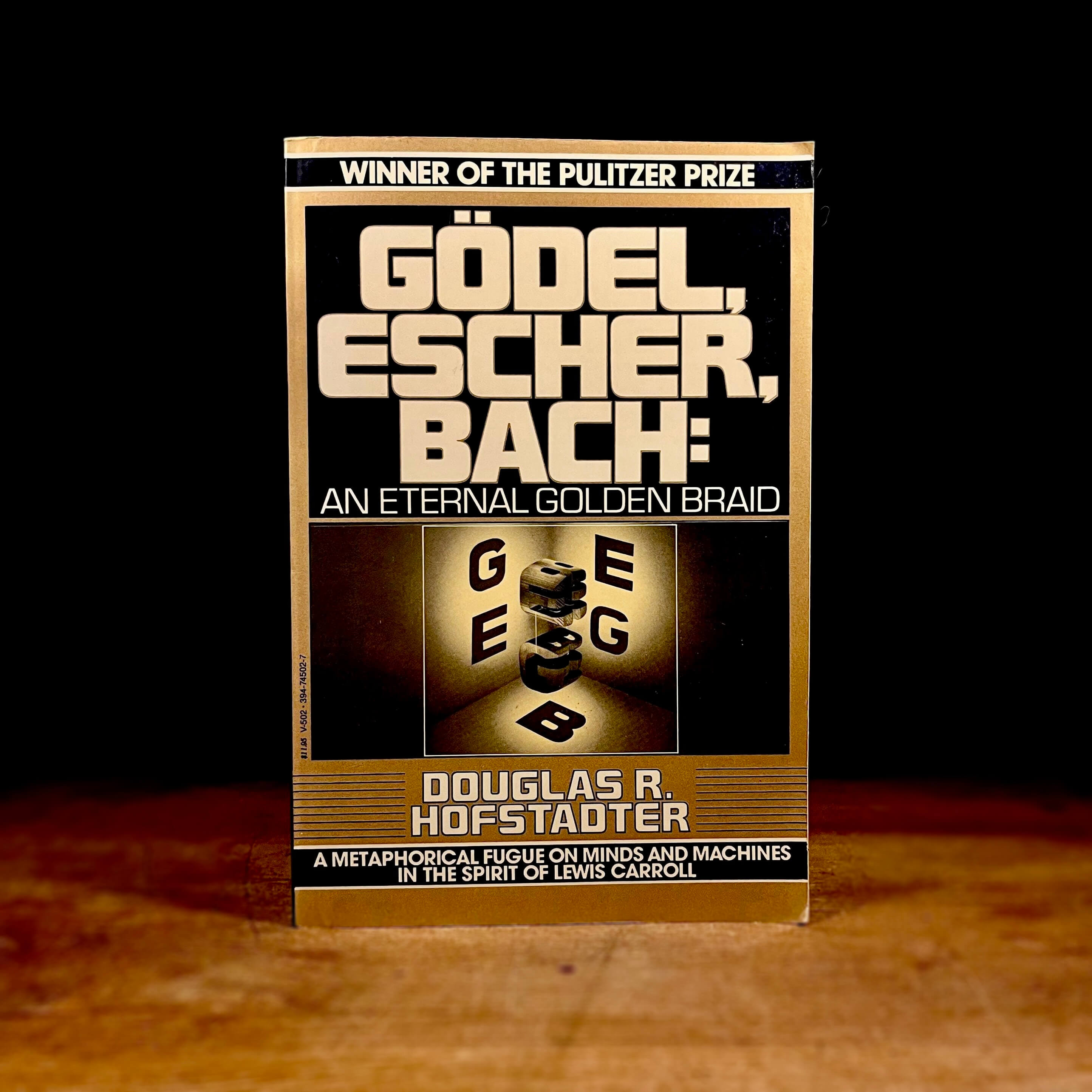
I read GEB in 2011. It took me ten months. The book is 777 pages and doesn't let you skim. Except for the chapter that's just diagram after diagram of visual pattern puzzles. I skimmed that one.
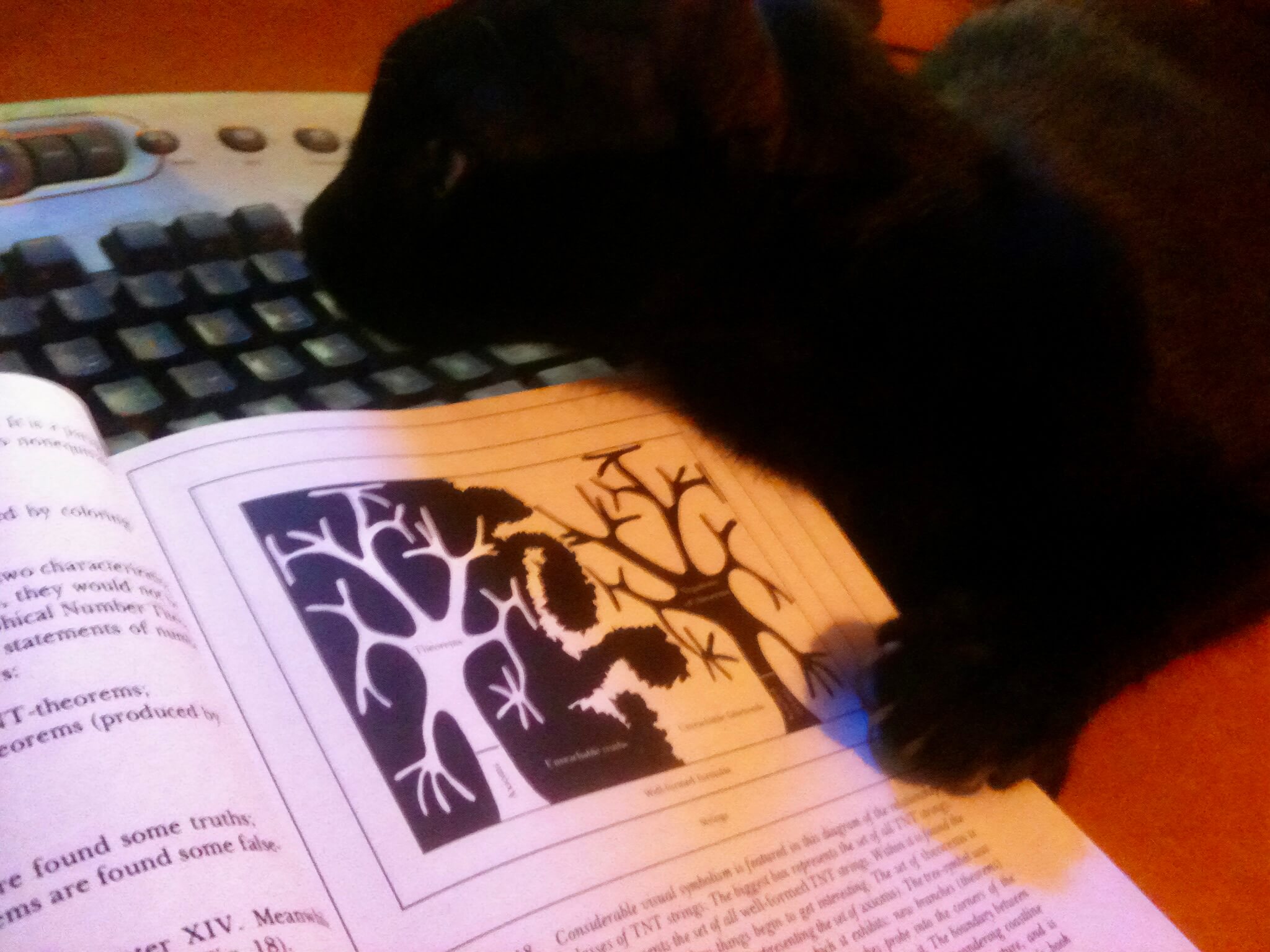
Footer had opinions about the diagrams too.
Formal systems. Strange loops. What it means for a system to talk about itself. The idea that meaning isn't carried in symbols. It emerges when one structure gets mapped onto another, when a decoder shows up and suddenly the marks mean something.
The concepts came fast and kept compounding. I'd finish a chapter and feel like I'd been handed new eyes. Then the next chapter would use those eyes to see something else.
That feeling of being expanded by a book is rare. GEB did it repeatedly.
Shortly after I finished the book, I attended a lecture at Tel Aviv University by Tal Cohen. He had just published the Hebrew translation of GEB, co-translated with Yarden Nir-Buchbinder. The project had taken 16 years.
In the early 90s, when I was a teenager teaching myself Turbo Pascal, I encountered his work: FastVGA, a shareware graphics engine. Precision timing. High-speed graphics primitives. He wrote it in high school. He was, to me, a guru.
That he spent 16 years translating the untranslatable made complete sense.
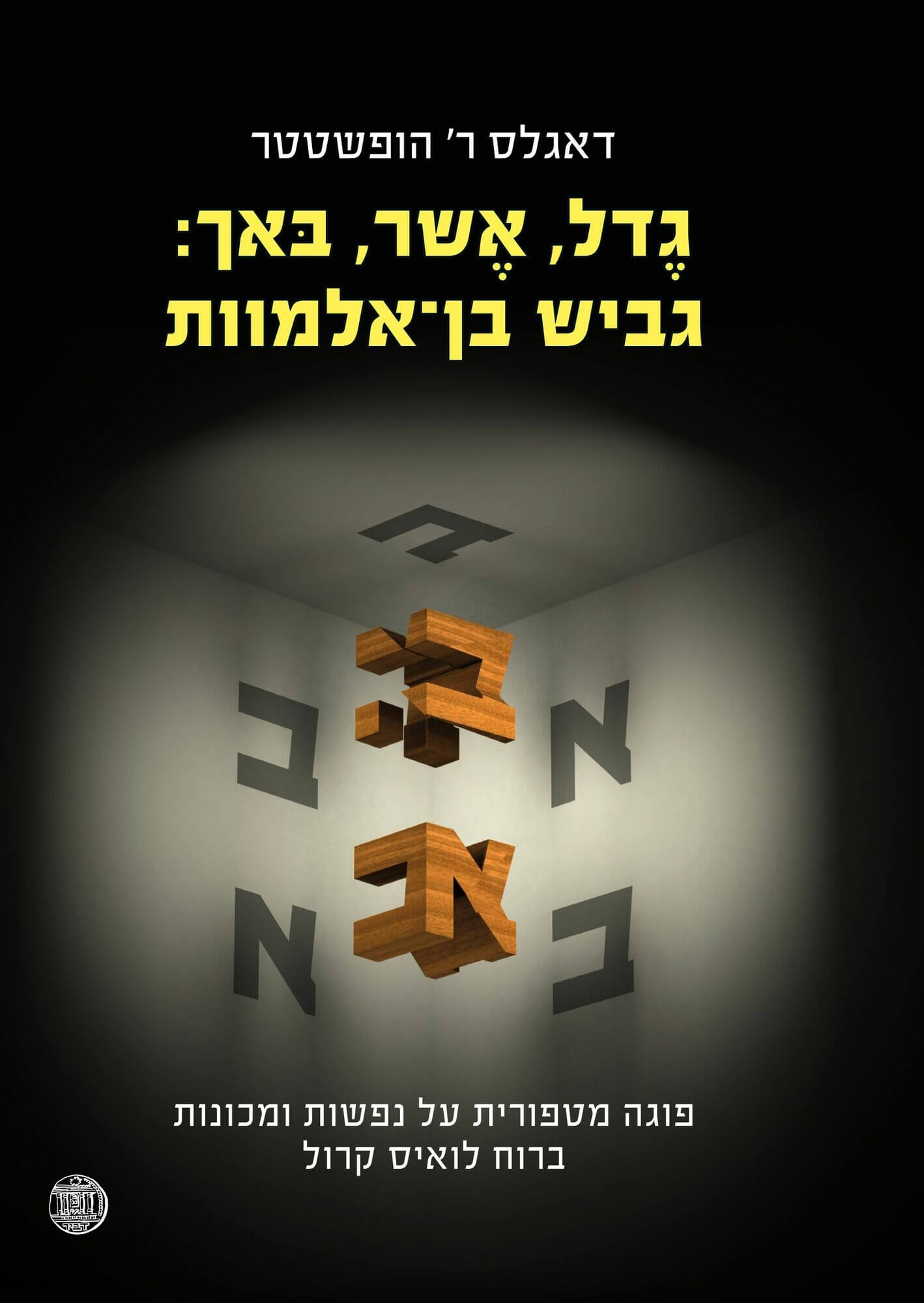
The translation story is its own strange loop.
They started in the conventional way: translate carefully, add footnotes where the wordplay doesn't carry over. Three years of work. Then they encountered Hofstadter's book on translation, Le Ton beau de Marot, and everything changed.
Hofstadter's stated ideal: a translation so good that readers would think the book couldn't possibly have been written in any other language. That reframed the entire problem.
They also learned that Hofstadter had prepared a special annotated copy of GEB for translators, marking every hidden joke, every buried pun, every acrostic. They got the copy. They started over.
Cohen explained what they found: wordplay that wasn't throwaway wit, but load-bearing structure. Acrostics layered on acrostics. A joke that starts on page 50 and resolves on page 500. "Without that copy," he said, "there are things we would never have discovered ourselves".
Nir-Buchbinder described the work as solving puzzles: "There's no guarantee of a good solution, but often, if you think enough, you arrive at a solution no less good than the original. Here and there you get lucky and can be better than the original, and that's not a contradiction".
Hofstadter has spent 30 years frustrated by how people read his book. People tell him the book is about how music, math, and art are all the same thing. He published I Am a Strange Loop partly to say: that's not the point. The point is self-reference. The point is how consciousness emerges from a system that can talk about itself.
But maybe that frustration is the cube in action. People don't see the book. They see the shadow it casts on whatever wall they're facing.
The cube doesn't mean anything. It sits inert until you set up the light source far enough away to cast a flat shadow. Then a QR code appears.
Your phone reads it. A URL resolves.
Wikipedia loads. Gödel.
Rotate it. Bach.