Language Is Made of Rubber

GEB turns 40 this year. Seven hundred and seventy-seven pages about how meaning works. And one of my favorites is about how it shouldn't. Language is magic.

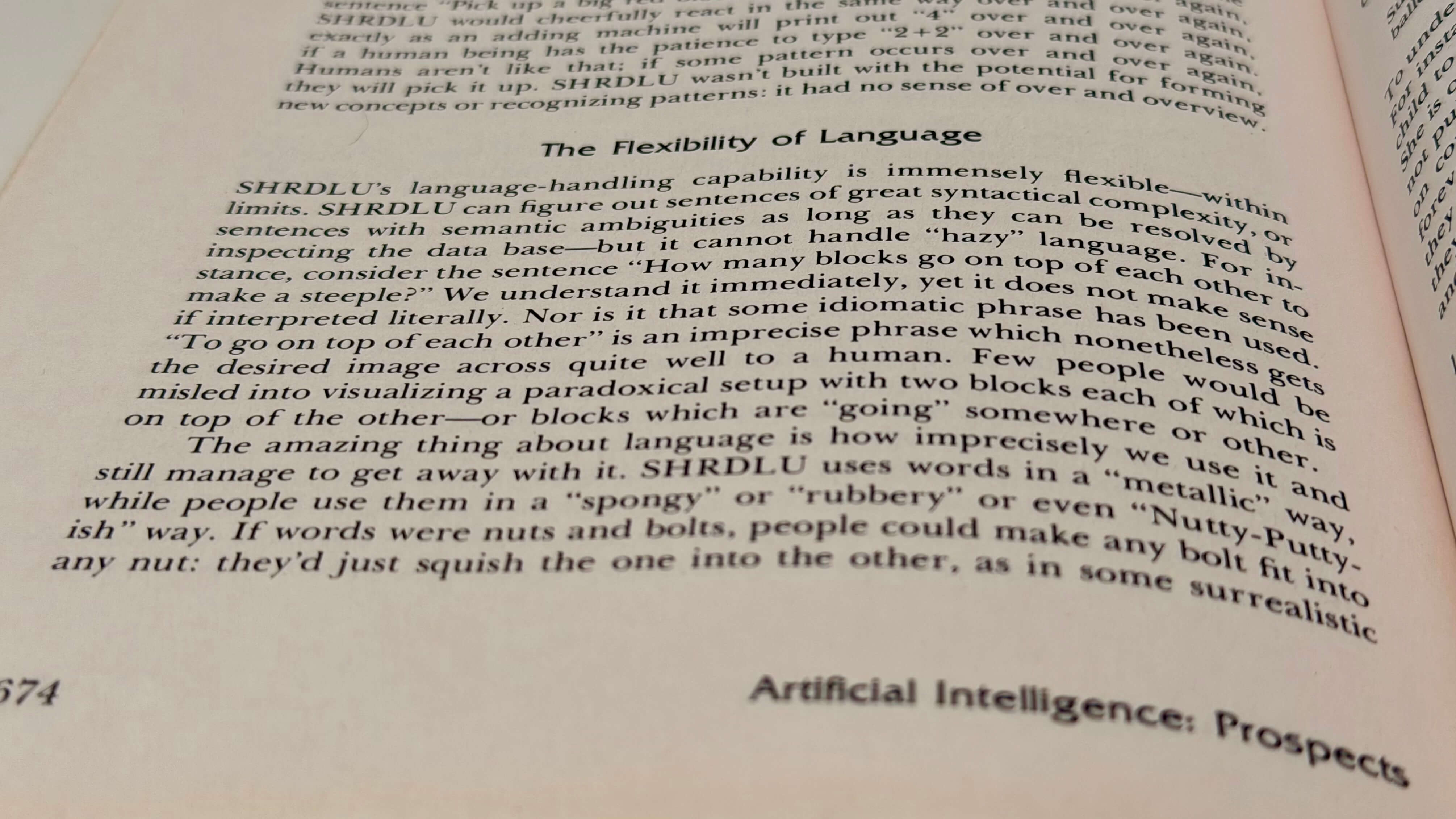
The amazing thing about language is how imprecisely we use it and still manage to get away with it. People use words in a "spongy" or "rubbery" or even "Nutty-Puttyish" way. If words were nuts and bolts, people could make any bolt fit into any nut; they'd just squish the one into the other, as in some surrealistic painting where everything goes soft. Language, in human hands, becomes almost like a fluid, despite the coarse grain of its components.

Read more →

The Fourth Transformation

Instagram

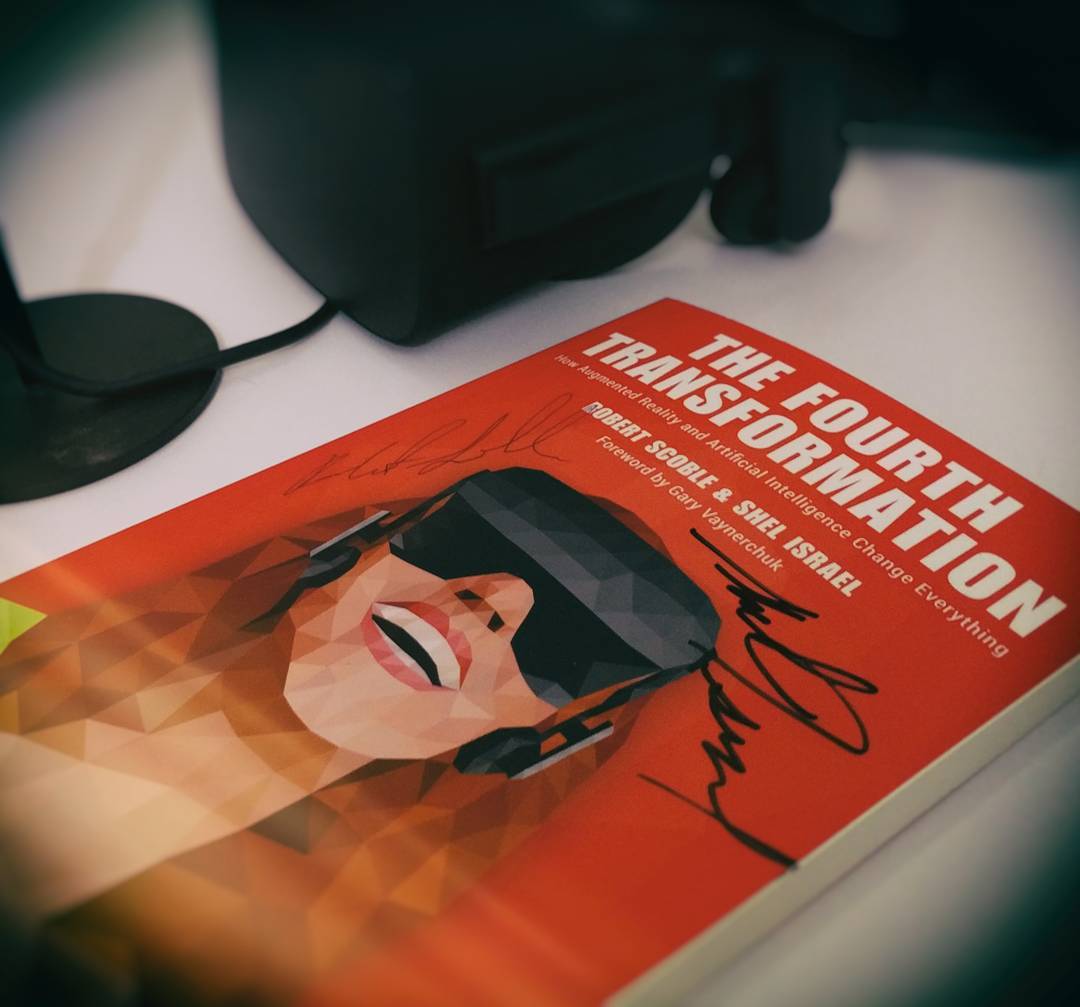
My signed copy of Robert Scoble and Shel Israel's The Fourth Transformation.

The premise: We've had three interface transformations - text (1970s), GUI (1984), touch (2007). The fourth is AR glasses with AI. Ten years from now, the smartphone won't be the center of your digital life. Glasses will.

I backed the Oculus Rift in 2012. Got Glass in 2014. Walked around Yarkon Park with it during morning stroller walks with my son. Awkward. Not very useful. The Oculus sits mostly unused - hard to disconnect from the surroundings, from what's going on at home, even for games.

Still believe in the trajectory. When the form factor is regular glasses, it'll work. Then contact lenses. Then direct brain interface.

Read more →

Re: NetTrax: You can run, but you can’t hide…

Following the recent news regarding leaked documents that uncovered the US PRISM surveillance program, Prof. Ken Homa of GU wrote in a blog post:

NetTrax: You can run, but you can't hide ...

Been reading a book called Big Data, Big Analytics ...

Given the flap over the Feds grabbing phone and Internet info, this caught my eye.

Book quotes a guy named Niv Singer, Chief Technology Officer at tracx, a social media intelligence software provider.

Niv says:

"It can sometimes be a real challenge to unify social profiles for a single user who may be using different names or handles on each of their social networks ...

... so we've built an algorithm that combs through key factors including content of posts, and location, among others, to provide a very robust identity unification."

Singer explained that they are combining social check-in data from Facebook, Foursquare, and similar social sites and applications over maps to show information ... down to the street level where conversations are happening.

English translation: You can run, but you can't hide ...they'll find you.

Hi Ken!

Let me start by saying how honored I am to be mentioned in your writings, and happy to know that my contribution to the book was thought provoking. I am Niv Singer, "the guy" you quoted in your post above.

Read more →

Big Data, Big Analytics

I had the honor to be interviewed for Michael Minelli, Michele Chambers and Ambiga Dhiraj's book "Big Data, Big Analytics: Emerging Business Intelligence and Analytic Trends for Today's Businesses" (also on amazon).

Here is an excerpt (pp. 31-34):


Empowering Marketing with Social Intelligence

We also spoke with Niv Singer, Chief Technology Officer at Tracx, a social media intelligence software provider. Niv had quite a bit to say about the big data challenges faced in the social media realm and how it's impacting the way business is done today - and in the future.

Read more →

Three Shadows, One Cube

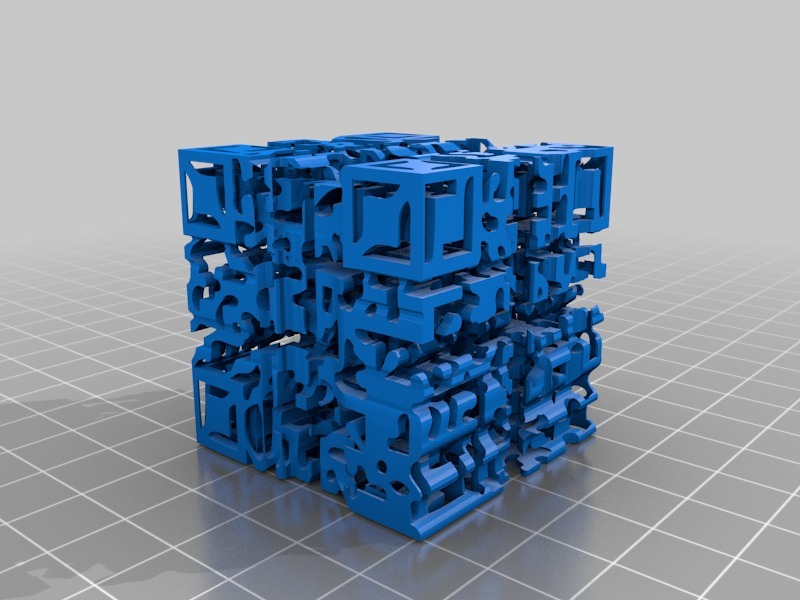
I found it on Thingiverse. A 3D-printable cube whose shadow, depending on the direction of the light, casts three different QR codes. Each one links to a Wikipedia article. Gödel. Escher. Bach.

The designer's note: "Note that QR codes cannot be read in mirror image, so only 3 of the 6 possible cube orientations cast a readable shadow".

I stared at this for a while.

Hofstadter wrote, in the Introduction to GEB, that he eventually realized Gödel, Escher, and Bach "were only shadows cast in different directions by some central solid essence". He tried to reconstruct that solid. The book was the result.


I read GEB in 2011. It took me ten months. The book is 777 pages and doesn't let you skim. Except for the chapter that's just diagram after diagram of visual pattern puzzles. I skimmed that one.

Footer had opinions about the diagrams too.

Formal systems. Strange loops. What it means for a system to talk about itself. The idea that meaning isn't carried in symbols. It emerges when one structure gets mapped onto another, when a decoder shows up and suddenly the marks mean something.

The concepts came fast and kept compounding. I'd finish a chapter and feel like I'd been handed new eyes. Then the next chapter would use those eyes to see something else.

Read more →