Patent US7028023 - Linked list

Today I wanted to write a new software module, and considered using Linked Lists. To my surprise, while searching for Software Patents (which is common practice before writing a new module), I realized I have to either give up using such lists (and go over the existing code base to make sure no else does), or start paying royalties to LSI Logic.

"Congratulations are in order to Ming-Jen Wang of LSI Logic Corporation who, in patent #10260471 (filed Sep 26, 2002 and granted Apr 11, 2006) managed to invent the linked list. From the abstract, "A computerized list is provided with auxiliary pointers for traversing the list in different sequences. One or more auxiliary pointers enable a fast, sequential traversal of the list with a minimum of computational time. Such lists may be used in any application where lists may be reordered for various purposes." Good-bye doubly linked list. We should also give praise to the extensive patent review performed by Cochran Freund & Young LLP." (Slashdot)
Read more →

Dr. Aubrey de Grey in Israel

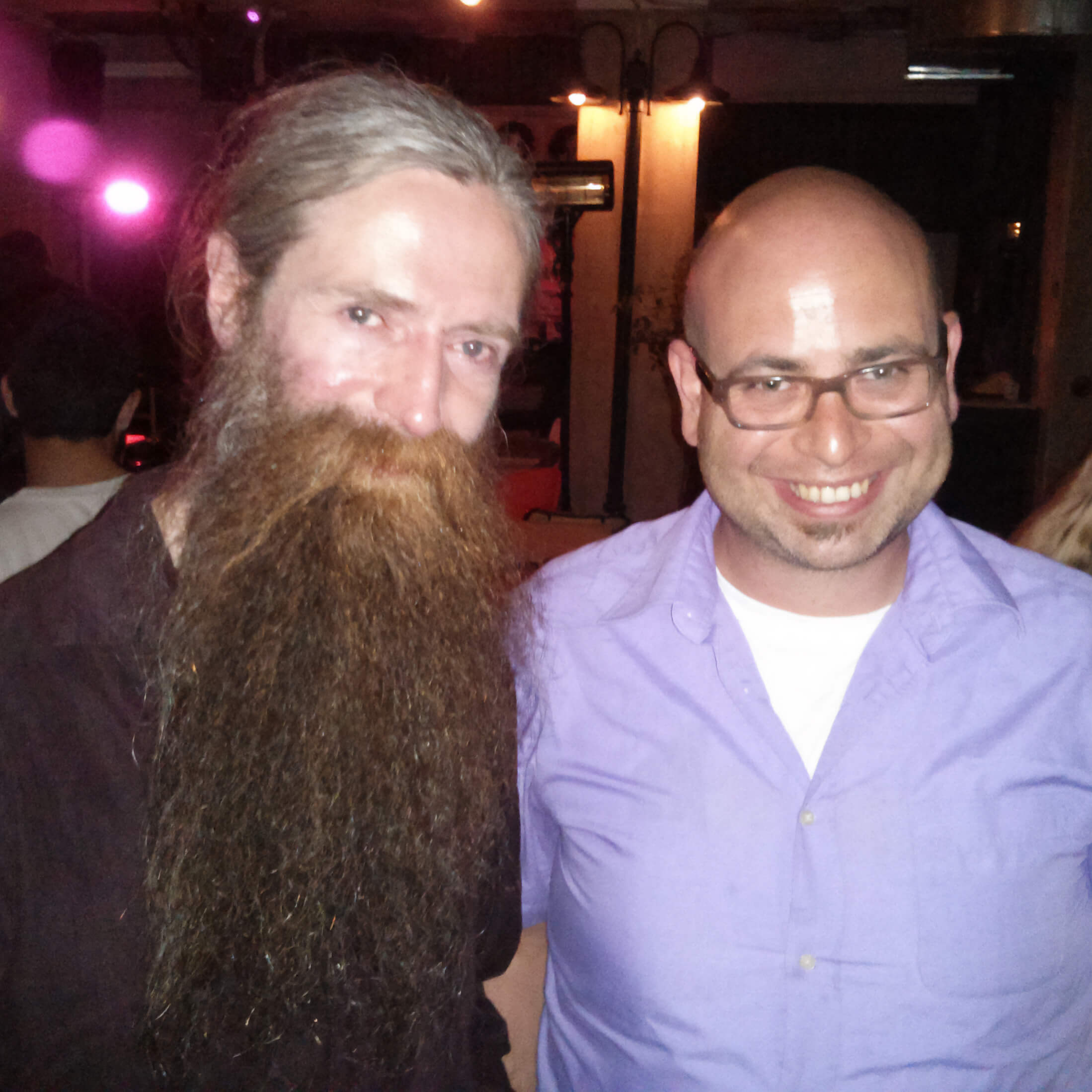
Dr. Aubrey de Grey (Aubrey David Nicholas Jasper de Grey to be exact, age 50) came to Israel for the first time to take part in the 8th European Congress of Biogerontology organized this year by Ben Gurion University of the Negev.

Utopia, the Tel-Aviv International Festival for Science Fiction, Imagination and the Future, organized an informal lecture and Q&A session with de Grey in Tel Aviv, to which I had the privilege to join.

Instagram

The first part of the lecture was dedicated to a short description of de Grey's research on regenerative and preventative medicine to thwart the aging process (his work at the SENS Research Foundation). The rest of the lecture was based on questions from the crowd about radical life extension.

Read more →

Re: NetTrax: You can run, but you can’t hide…

Following the recent news regarding leaked documents that uncovered the US PRISM surveillance program, Prof. Ken Homa of GU wrote in a blog post:

NetTrax: You can run, but you can't hide ...

Been reading a book called Big Data, Big Analytics ...

Given the flap over the Feds grabbing phone and Internet info, this caught my eye.

Book quotes a guy named Niv Singer, Chief Technology Officer at tracx, a social media intelligence software provider.

Niv says:

"It can sometimes be a real challenge to unify social profiles for a single user who may be using different names or handles on each of their social networks ...

... so we've built an algorithm that combs through key factors including content of posts, and location, among others, to provide a very robust identity unification."

Singer explained that they are combining social check-in data from Facebook, Foursquare, and similar social sites and applications over maps to show information ... down to the street level where conversations are happening.

English translation: You can run, but you can't hide ...they'll find you.

Hi Ken!

Let me start by saying how honored I am to be mentioned in your writings, and happy to know that my contribution to the book was thought provoking. I am Niv Singer, "the guy" you quoted in your post above.

Read more →

Spring is Coming

I'm hearing of more and more people starting up new businesses with cool, innovative ideas. Spring season in the Start-up Nation is coming.

The differences from the years 2000 and 2008, I think, are:

  1. Crowdfunding (Kickstarter, Headstart)
  2. Affordable IT Infrastructure (AWS, Google)
  3. Affordable and idiot-proof (read: hackable by software engineers) hardware platforms (Raspberry Pi, Arduino) and sensors (Oculus Rift)
  4. Affordable Manufacturing (3D Printing, CNC, PCB)
  5. New, disruptive, open-source software and hardware technologies (Bitcoin, DIY 3D Printing, Flying Machines)

Don't let the Waze deal fool or blind you - most chances are: you will fail. But you might just be one of the lucky ones. Starting up is less risky than ever before. If you're committed to be the Pig, and you have a solid business model, I say go for it!

PRO TIP: Put your ego aside, and build a team of superstars who complement each other, a team of people who know one another's strengths and weaknesses.

TED MED: How will nanobots change medicine?

"One word of notice before we begin, all the the technologies you're going to see here, now, are real..."

- Dr. Ido Bachelet: The emergence of nanobot society, TEDMED Israel 2013

Nano-robots that fix tissues and control drugs have been envisioned for over 30 years. Now, using DNA origami and molecular programming, they are reality. These nanobots can seek and kill cancer cells, mimic social insect behaviors, carry out logical operators like a computer in a living animal, and they can be controlled from an Xbox. Ido Bachelet from the bio-design lab at Bar Ilan University explains this technology and how it will change medicine in the near future.