What if it could Think?

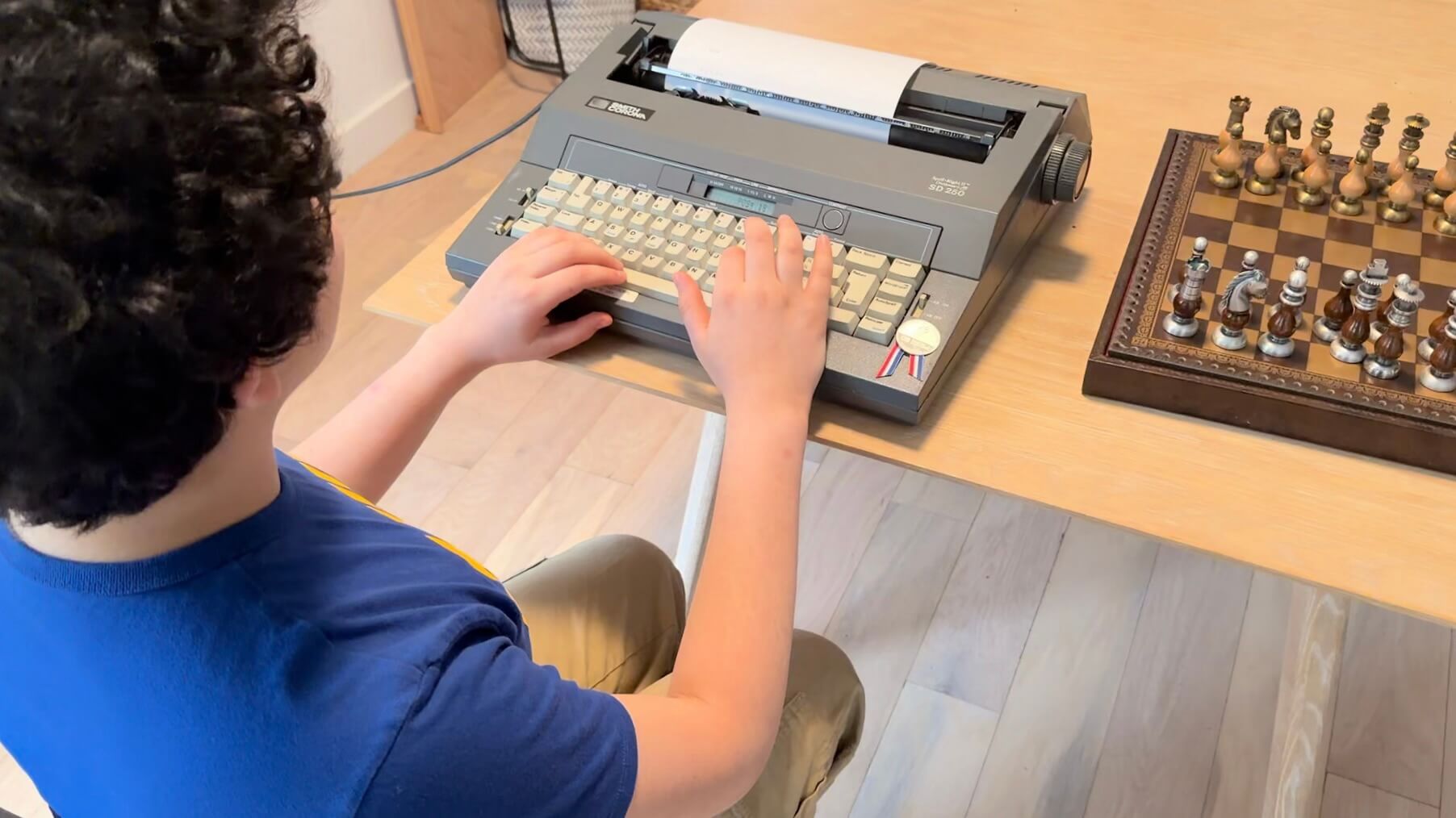
SD-265 arrived from eBay yesterday. Spacebar torn out. Suboptimal, but usable for developing and testing.

While the replacement was in transit, I had time to think.

FozzTexx's documentation proved the typewriter could have a two-way conversation with a computer. Not RS-232. Something proprietary. But documented. Solvable.

So: what if the computer on the other end was ChatGPT?

Type a message on the typewriter. An ESP32 reads the keystrokes, sends them to the ChatGPT API over WiFi, and prints the response. Character by character. On paper.

A 1986 typewriter. Talking to an AI.


That was the simple version. It lasted about a day.

Read more →
Blue Smoke Rising

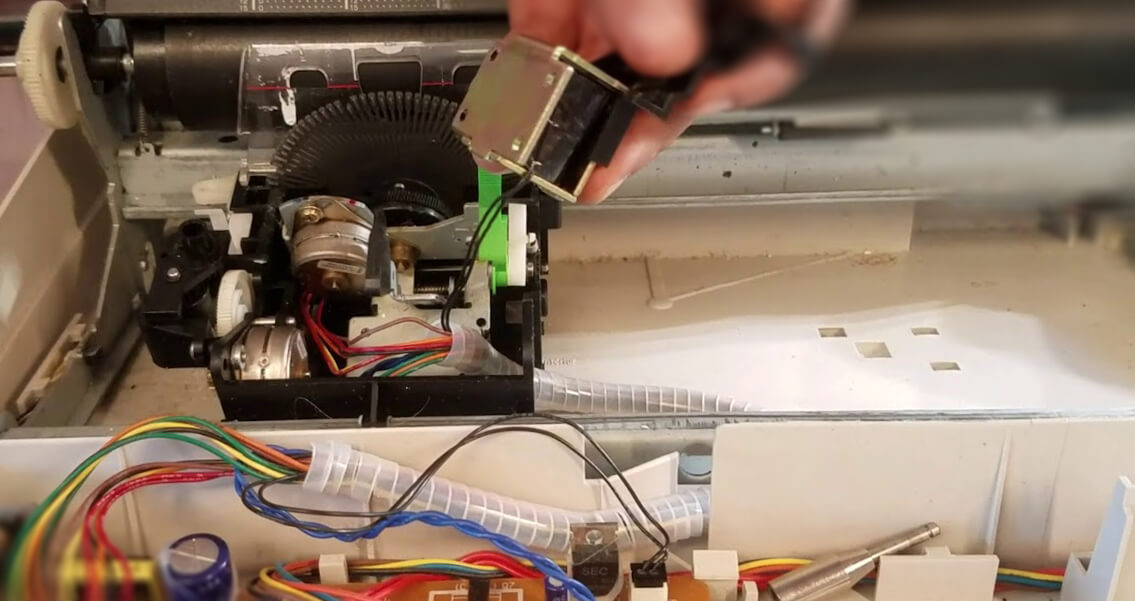
Inside of a Smith Corona typewriter with the print mechanism exposed, showing the pinwheel, solenoid, motor, and colored wiring.
Anything is a smoke machine if you operate it wrong enough.

The RS-232 adapter arrived from Amazon. Connected it. Nothing.

Tried different baud rates. Different settings. Nothing.

The DB-9 connector looked like a serial port. It wasn't. Smith Corona used a proprietary protocol. The connector shape lied.


Finding Smith Corona documentation is hard. The company closed in 2013. 127 years of making typewriters, then gone.

Most of what remains online: eBay listings, repair manuals, nostalgia forums. Not protocol specs.

But people document obscure things. Found a trail. Reddit post linking to a Twitter thread linking to a Mastodon account. All leading to one person: FozzTexx.

He'd already done the hard work and very meticulously. Years ago. Reverse-engineered the entire protocol. Built a working BBS terminal out of a Smith Corona. Published everything on the Mastodon thread in real time.

I learned things I didn't know existed. Electric typewriters had PWP modules that turned them into word processors. An entire era of technology between manual typewriters and PCs.

And FozzTexx documented what every pin on the DB-9 does. Data in, data out, clock, request. And pin 3: +36 volts, to provide power to the PWP module.

Read more →

Hooked on Loops

We've been hooked on Loops.

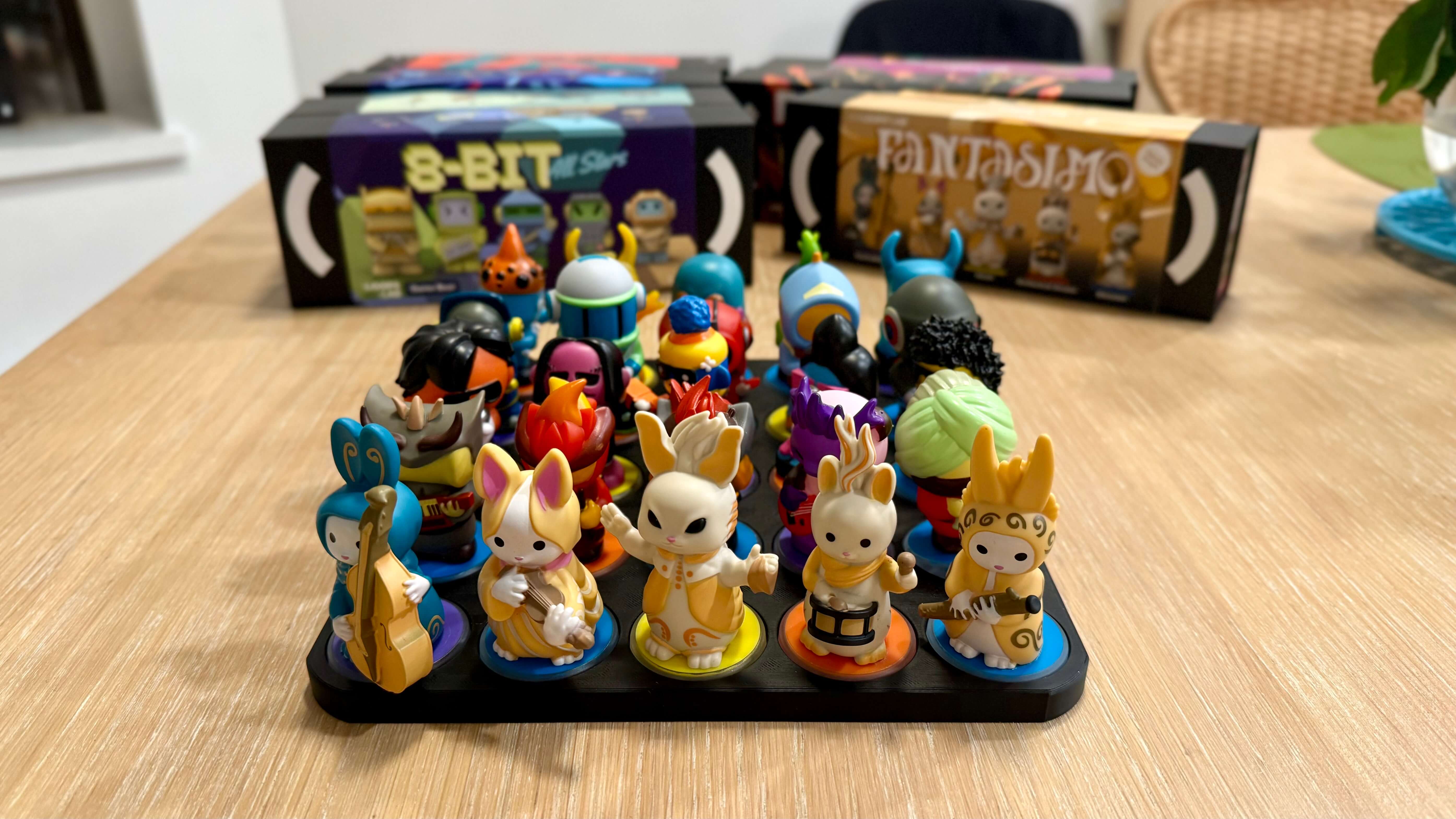
The Starter Set comes with an electronic base "stage" and a "band" - a collection of five small characters, each with its own sound, rhythm, and style. When you place them on the stage, they start to play together automatically. No matter what mix you try, it always sounds surprisingly good. It feels like magic, instantly musical and endlessly creative.

You don't need instructions or know how to compose music. The kids explore combinations, I join in, and sometimes I keep playing after they've moved on.

It's quietly educational. The kids are learning rhythm and pattern recognition without noticing. It's hands-on, beautifully designed, and makes music something you can easily play with.

The Product

Loops Lab is a "phygital" music toy built around collectible figurines. Each character sits on a magnetic base. Place it on the stage and it plays its loop. Tap it twice or three times on the stage and it has two more additional loops, three in total. Stack multiple characters and the sounds layer together. Pull one off and the track shifts. The system connects via Bluetooth to the free Loops Lab app on iOS or Android for playback, but the actual play experience is entirely hands-on and screen-free.

Current bands available:

Read more →

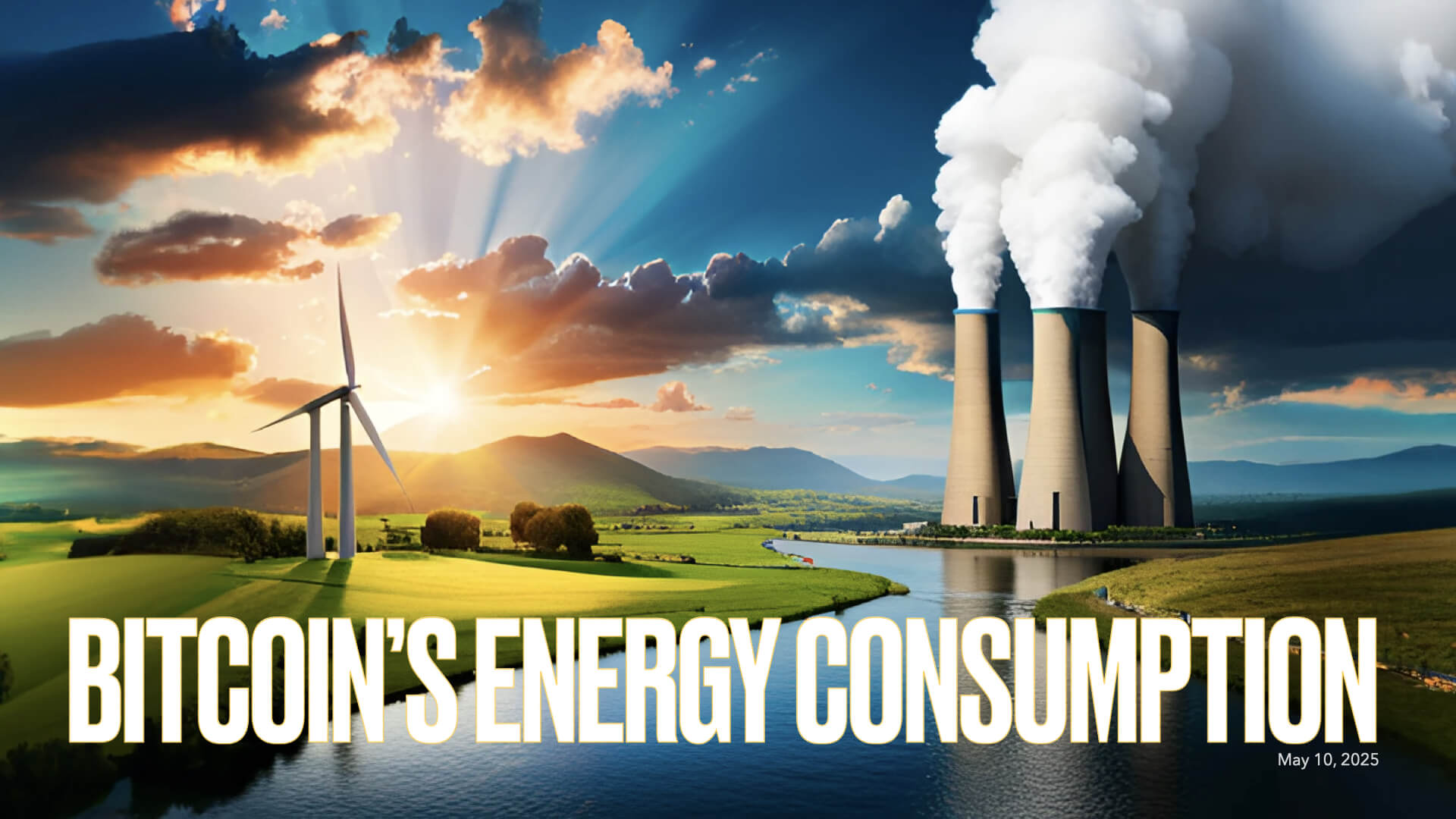
Bitcoin's Energy Consumption - Waste or Opportunity?

So... Bitcoin's using all the electricity and killing the planet, right?

I gave a lecture about Bitcoin's energy consumption and its effect on the environment, as part of our renewed, relocated Salon lectures. These are my speaker notes.

Chapters:

  1. What is Money?
  2. Keeping Money Secure
  3. Bitcoin's Energy Use and What It Means for the Planet

Summary below.

Slide deck: Google SlidesKeynote

© 2025 Niv Singer
Licensed under Creative Commons Attribution 4.0 International (CC BY 4.0)
https://creativecommons.org/licenses/by/4.0/
Also available as a Deep Dive

I generated an audio conversation about this lecture using NotebookLM.

Two AI hosts, one of them walking through the session as if they'd been in the room. Then I spent way too many hours editing it. Transcribing, cutting, re-cutting, syncing it back to the slides. The result isn't AI slop. It's a produced episode.

What I didn't expect was how much the format adds. Having two hosts discuss and dissect the material, highlight what stands out, and build on each other's reactions brings a dimension the slides alone can't. It's a different way into the same content.

In this eye-opening deep dive, hosts Alice and Bob break down a fascinating presentation on Bitcoin's energy consumption and its surprising relationship with renewable energy.

While Bitcoin has faced criticism for its electricity usage, this conversation explores how mining operations are increasingly powered by renewable sources, can monetize otherwise wasted energy, and might actually accelerate the clean energy transition. From reviving century-old hydroelectric plants to capturing methane from abandoned wells, discover how Bitcoin's economic incentives are creating unexpected environmental opportunities.
Read more →

Sleeptalking

A friend started using an app that records him while he sleeps. When he listened to the recordings, he was surprised to discover himself talking in his sleep, and recalled a hazy dream where he was confronting a criminal (the words below are actually what was recorded from his sleep-talking).

I wanted to experiment a bit with all this AI music generation stuff, and boom - a song and music video in about 12 hours of work over a long weekend. Science fiction until about two years ago, especially by someone who doesn't know how to play an instrument or how music works beyond an instinctive level.

SUNO did a great job getting things started, but the output wasn't exactly what I was looking for. I generated several songs in different styles and settings. I liked the vocals in one variation but not the rest, and liked most of another variation. So I started mixing and matching.

Read more →

Spin Doctor

Hard Drive Speakers

Update: See them play the legendary Second Reality demo by Future Crew.

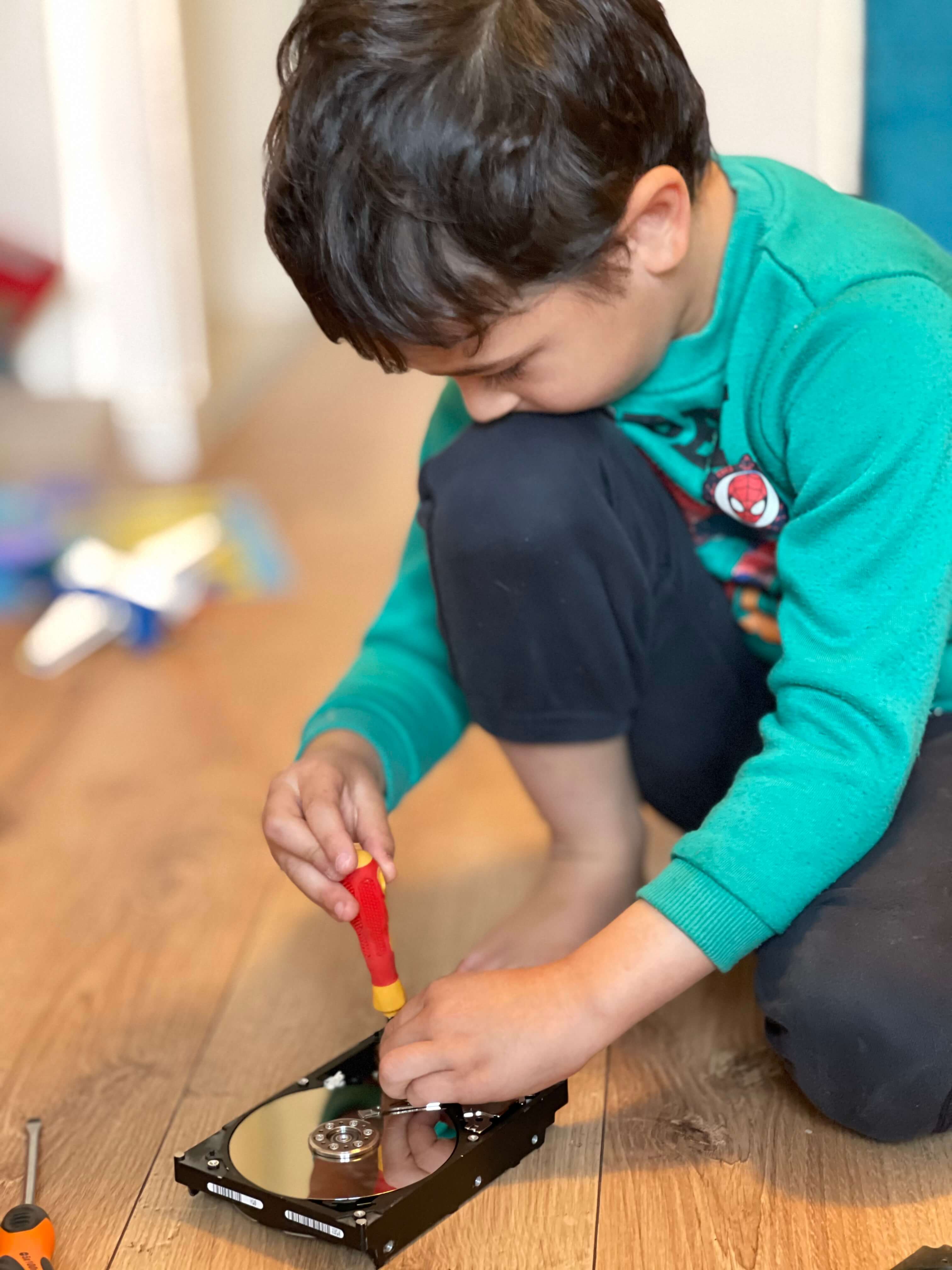
The kids and I disassembled roughly 40 hard drives.

That's where this started. A pile of old drives, a box of Torx screwdrivers, and kids who were absolutely willing to take things apart.

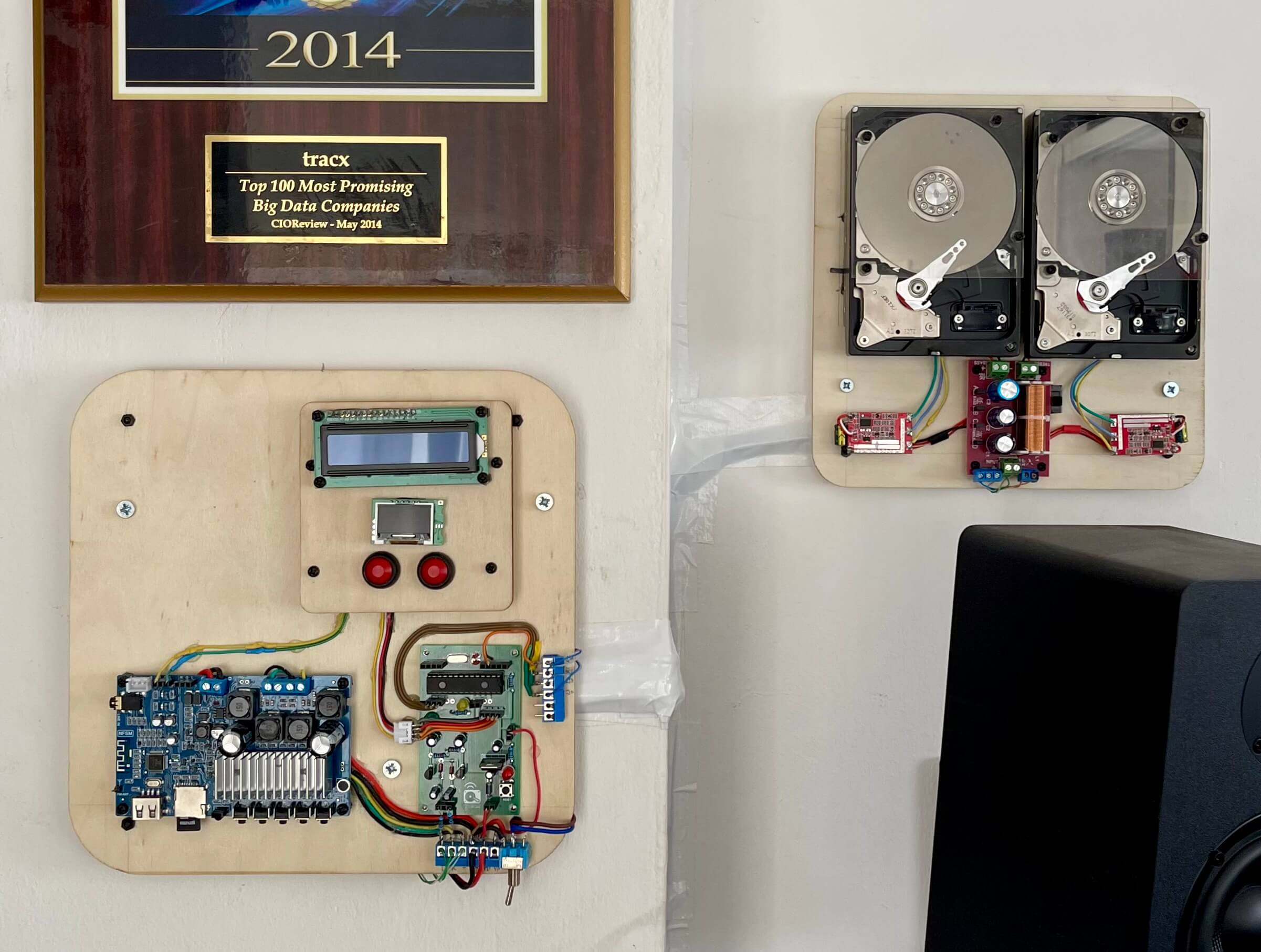
The goal: build speakers from the drives. Actual stereo speakers, using the read/write head coil as a voice coil. Wire it to an amplifier. The actuator arm vibrates. It makes sound.

It works better than it should.


The idea wasn't original. People have been wiring drive coils to amps for years. A quick search turns up dozens of experiments, ranging from quick tests to proper tutorials to someone asking the obvious question out loud. One person even went further and attached a speaker cone to the actuator arm to improve output.


Each speaker is a pair of drives on a panel. One handles bass, one handles treble. A passive crossover splits the signal. The drives are open, covers removed, platters exposed. In the mockup iterations, the panels were wood.

Later, 3D printed enclosures with a cleaner fit and attempted acoustics.

The enclosures were too large to print in one piece, so I split them into sections, connected them with screws hidden below the covers, and filled the gaps with black hot melt glue.

Read more →